
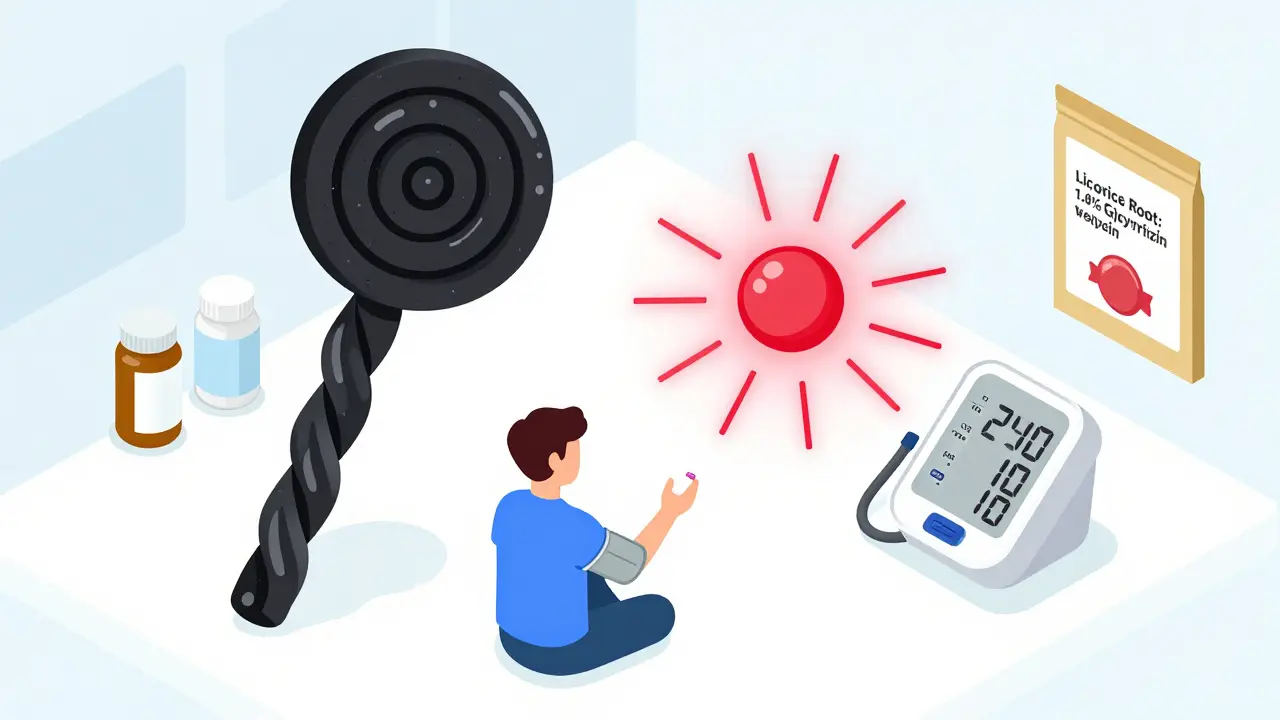
Most people think of licorice as a sweet, chewy candy-something harmless, maybe even nostalgic. But if you’re taking blood pressure meds, diuretics, or heart drugs, that black licorice twist might be doing more than satisfying a craving. It could be messing with your meds in ways you’d never expect.
What’s Really in Licorice Candy?
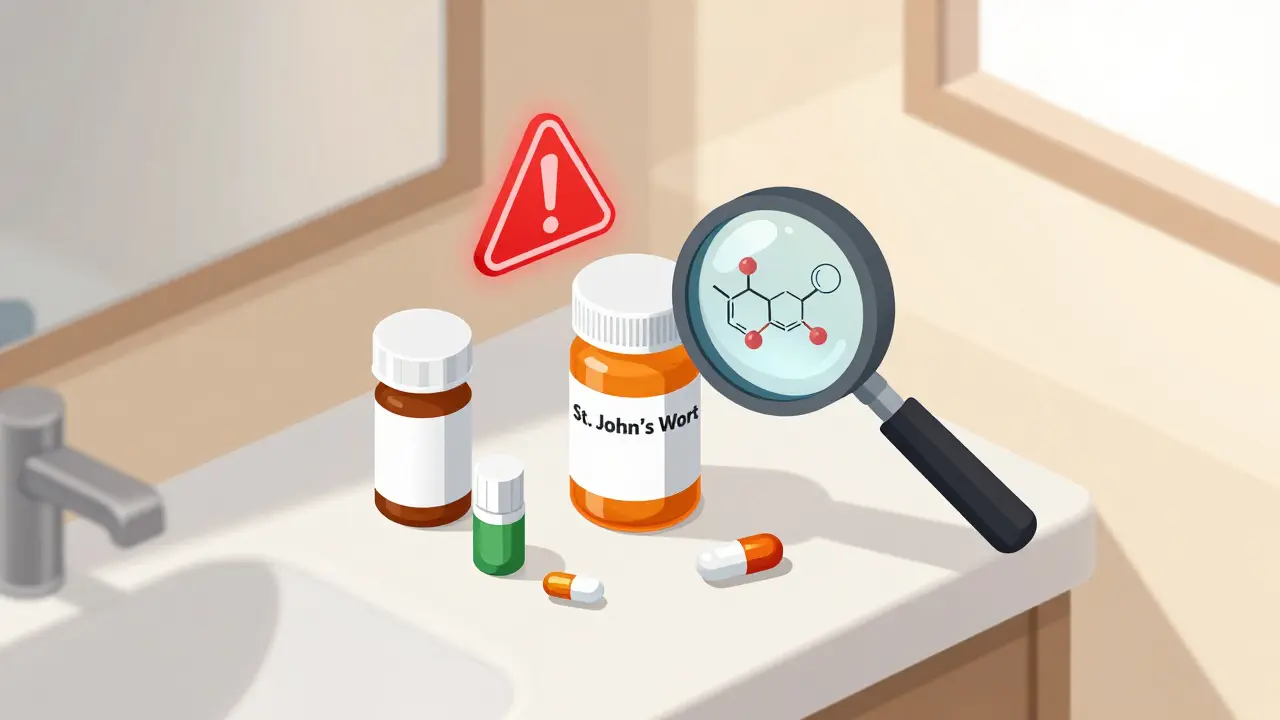
Not all licorice is the same. The real stuff comes from the root of Glycyrrhiza glabra, a plant used for centuries in traditional medicine. What makes it dangerous for some people? A compound called glycyrrhizin. This is the active ingredient that gives licorice its distinct flavor-and its powerful effects on your body’s chemistry.Traditional black licorice candy usually contains between 0.5% and 2% glycyrrhizin. That means eating just 50 grams (about two small bags) of strong licorice candy can give you close to 100 mg of glycyrrhizin. The European Food Safety Authority says that’s the max you should have in a day. But here’s the catch: most labels don’t tell you how much glycyrrhizin is in the product. A 2023 Consumer Reports survey found 78% of black licorice products didn’t list glycyrrhizin content at all.
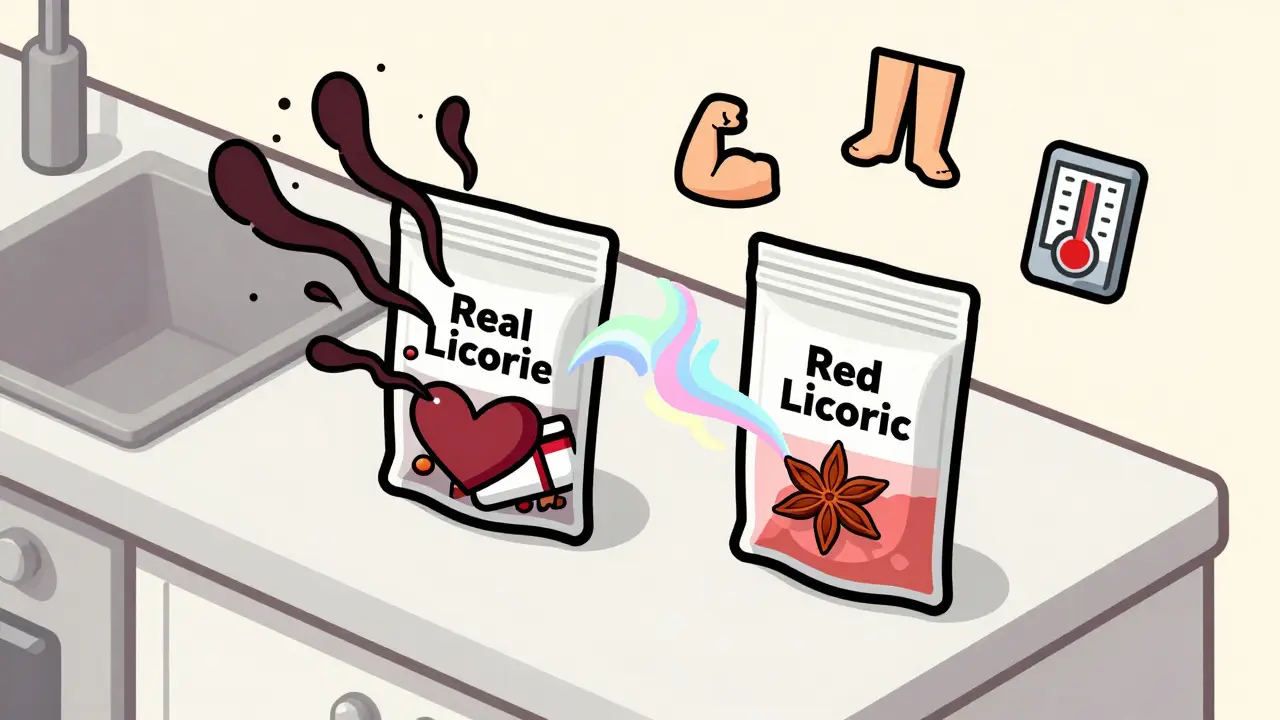
And don’t be fooled by red licorice or anise-flavored candies. Those often contain no licorice root at all-just artificial flavoring. If you’re worried about interactions, you need to know whether you’re eating real licorice or just something that tastes like it.
How Licorice Changes How Your Body Handles Medications
Glycyrrhizin doesn’t just make things taste sweet. It acts like a hormone mimic. It blocks an enzyme called 11β-hydroxysteroid dehydrogenase type 2, which normally keeps cortisol from overstimulating mineralocorticoid receptors. When that enzyme is blocked, cortisol starts acting like aldosterone-a hormone that tells your kidneys to hold onto sodium and kick out potassium.This leads to three big problems:
- Sodium builds up → fluid retention → swelling and high blood pressure
- Potassium drops → muscle cramps, fatigue, irregular heartbeat
- Water retention → weight gain, headaches, even carpal tunnel syndrome
These aren’t theoretical risks. A 2012 case study in PubMed Central tracked a 47-year-old man who ate 200 grams of licorice daily. Within three weeks, his blood pressure spiked to 210/120 mmHg and his potassium level crashed to 2.6 mmol/L-dangerously low. He needed hospitalization.
Another patient taking fludrocortisone (a steroid that already raises blood pressure) developed panic attacks and BP readings of 205/110 after eating licorice-even though his dose hadn’t changed. The licorice didn’t just add to the problem. It turned a manageable situation into a medical emergency.
Medications That Can Turn Dangerous with Licorice
If you’re on any of these, you need to know the risks:- Diuretics (water pills) like hydrochlorothiazide or furosemide: These already lower potassium. Licorice makes it worse. One study showed potassium levels dropping below 3.0 mmol/L in patients taking both.
- High blood pressure meds like lisinopril, losartan, or amlodipine: Licorice counteracts their effects by raising blood pressure. Reddit users have reported BP jumps from 120/80 to 165/95 after just a few days of daily licorice candy.
- Heart drugs like digoxin: Low potassium from licorice increases digoxin toxicity. A 2002 case report showed digoxin levels rising to dangerous levels after licorice use, even when digoxin doses stayed the same.
- Warfarin and other blood thinners: Some studies suggest licorice may increase warfarin’s effect, raising bleeding risk. Others show the opposite-licorice may lower INR. Either way, it’s unpredictable. The Memorial Sloan Kettering Cancer Center advises checking INR within 7-10 days of starting or stopping licorice.
- Corticosteroids like prednisone: These already cause fluid retention and potassium loss. Adding licorice is like pouring gasoline on a fire.
Even if you’re not on these meds, you might be. Many people take blood pressure pills without realizing it-especially if they were prescribed years ago and never got off them. If you’ve noticed unexplained swelling, muscle weakness, or sudden high blood pressure, ask yourself: have I been eating licorice?
DGL vs. Real Licorice: What’s Safe?
You might see products labeled “DGL” on the shelf-Deglycyrrhizinated Licorice. These are specifically made to remove glycyrrhizin. They’re often sold for stomach issues like acid reflux or ulcers. DGL products contain less than 1% glycyrrhizin, so they don’t cause the same hormonal effects.If you’re taking medications and want to enjoy licorice flavor safely, DGL is your best bet. But read the label carefully. Not all “licorice root” supplements are DGL. Some still pack in the glycyrrhizin. A 2022 ConsumerLab.com survey found 68% of licorice supplement users didn’t know about interaction risks. Don’t be one of them.
How Much Is Too Much?
There’s no universal “safe” amount, but here’s what we know:- 100 mg of glycyrrhizin per day is the upper limit for healthy adults, according to the European Food Safety Authority.
- That’s roughly 50 grams of traditional black licorice candy.
- But if you’re on meds, even 25 grams a day for more than two weeks can be risky.
- Herbal supplements? They can contain 4-24% glycyrrhizin. A single capsule might equal half a bag of candy.
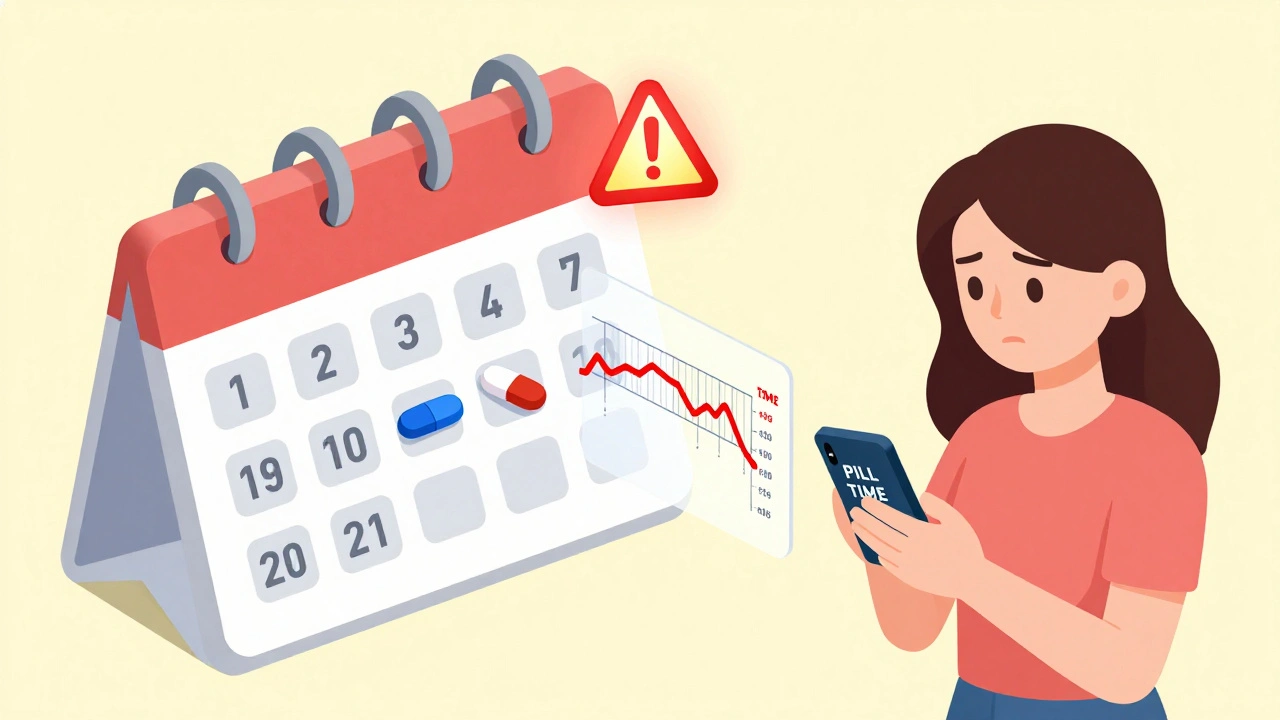
And it’s not just about quantity-it’s about time. Most problems show up after 2-4 weeks of daily use. You might feel fine at first. Then, slowly, your blood pressure creeps up. Your legs swell. You get weak. By the time you feel sick, the damage is already there.
What Should You Do?
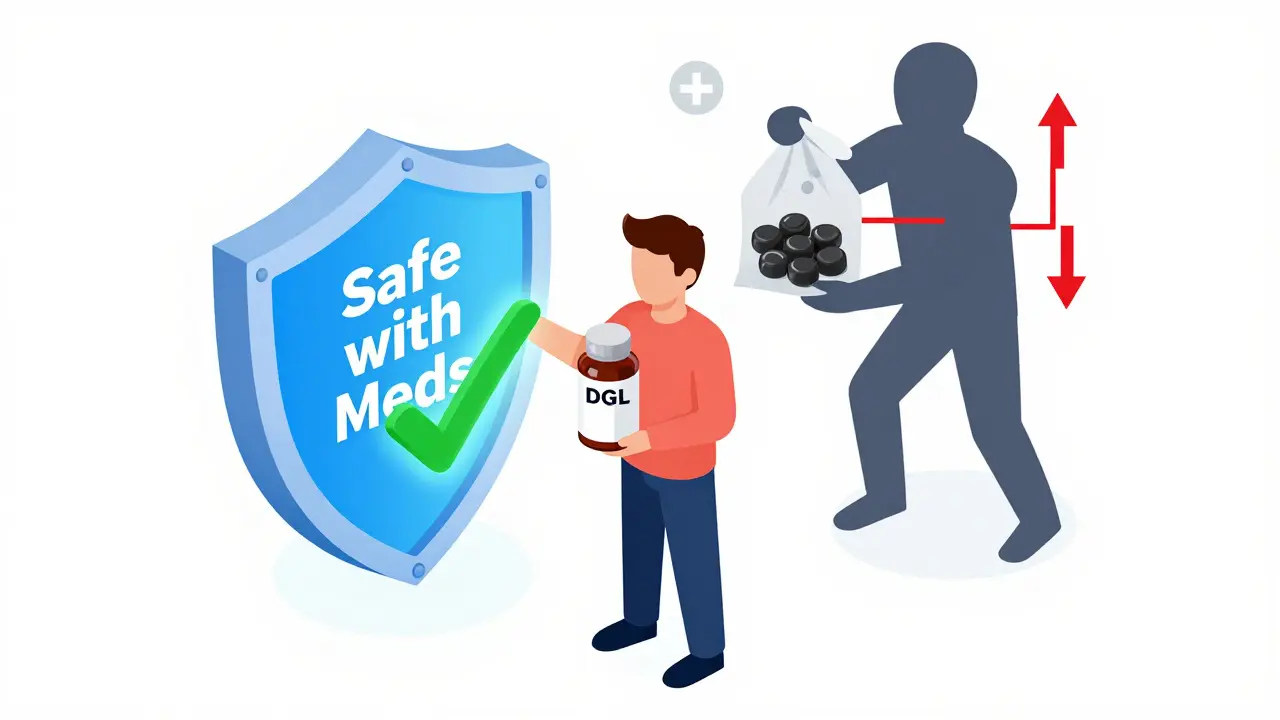
If you’re on medication and you like licorice, here’s what to do right now:- Check your candy. Is it real licorice? Look for “licorice root” on the ingredient list. If it says “anise oil” or “artificial flavor,” you’re probably safe.
- Check your meds. Are you on blood pressure pills, diuretics, heart meds, or steroids? If yes, avoid real licorice entirely.
- Ask your pharmacist. A 2021 study found only 37% of community pharmacists could correctly list all major licorice-drug interactions. Don’t assume they know. Bring the product with you.
- Monitor your body. If you’ve eaten licorice and start feeling unusually tired, swollen, or dizzy, get your blood pressure and potassium checked. A simple blood test can catch problems before they become emergencies.
- Choose DGL. If you want the flavor without the risk, go for DGL products. They’re designed to be safe with medications.
Why This Isn’t Common Knowledge
You’d think this would be on every candy wrapper. But the FDA classifies licorice as “Generally Recognized As Safe”-even though it’s been linked to over 147 adverse events between 2010 and 2020. The UK requires warning labels on products with over 100 mg glycyrrhizin per serving. Japan limits supplements to 100 mg/day. The U.S. does nothing.Meanwhile, the licorice market is growing. It was worth $1.37 billion in 2022, with supplements making up a third of sales. Most of these products don’t warn you about interactions. You’re left guessing.
And here’s the kicker: science is still divided. Some studies say licorice doesn’t interfere with liver enzymes. Others say it can mess with how your body processes drugs like cyclosporine or metformin. One 2025 review even found that licorice combined with another herb (Euphorbia kansui) becomes toxic if licorice makes up more than half the mix.
Bottom line: if you’re on meds, don’t gamble with licorice. The risks are real. The evidence is there. And the consequences can be serious.
Can I eat licorice if I take blood pressure medication?
It’s not safe. Licorice raises blood pressure and lowers potassium, which directly opposes the effects of most blood pressure medications. Even small amounts over time can cause your BP to spike. If you’re on lisinopril, amlodipine, or similar drugs, avoid real licorice entirely. DGL products are a safer alternative.
How long does it take for licorice to affect my meds?
Effects usually show up after 2-4 weeks of daily use. But in sensitive individuals or those on high-risk meds like digoxin or diuretics, symptoms can appear in as little as 7-10 days. Don’t wait for symptoms to appear-monitor your blood pressure and potassium levels if you’ve been eating licorice regularly.
Is red licorice safe to eat with medications?
Yes, if it’s truly red licorice. Most red licorice contains no licorice root-it’s flavored with anise or artificial flavors. Check the ingredient list. If it says “licorice extract” or “licorice root,” avoid it. If it says “artificial flavor” or “anise oil,” you’re likely safe.
Can licorice cause low potassium even if I’m not on diuretics?
Absolutely. Licorice triggers the same hormonal pathway as diuretics, even without them. Your kidneys start flushing out potassium on their own. People without any meds have developed dangerously low potassium levels after eating large amounts of licorice daily for weeks. It’s not just a drug interaction-it’s a direct effect of glycyrrhizin.
Should I stop eating licorice if I’m on warfarin?
Yes. Licorice can make warfarin work too well-or not well enough. One case showed INR dropping suddenly after licorice use; another showed increased bleeding risk. Since the effect is unpredictable, it’s safest to avoid licorice completely if you’re on warfarin or similar blood thinners. Always check your INR if you’ve changed your licorice intake.
What’s the difference between licorice candy and licorice supplements?
Candy usually has lower glycyrrhizin (0.5-2%), while supplements can contain 4-24%. A single supplement capsule might deliver the same glycyrrhizin as a whole bag of candy. Supplements are less regulated, often unlabeled, and pose a higher risk. Never assume a supplement is safe just because it’s sold as “natural.”
What’s Next?
The FDA is starting to take notice. Their 2023 draft guidance lists licorice as a “high-priority” interaction risk. The American Herbal Pharmacopoeia is pushing for mandatory glycyrrhizin labeling on all products by 2026. Until then, the burden is on you.If you’re taking any medication, especially for heart, blood pressure, or kidney issues, treat licorice like a drug-not a snack. Ask your doctor or pharmacist before eating it. Keep track of what you consume. And if you feel off-swollen, weak, dizzy-get checked. Your body might be telling you something your candy wrapper won’t.
Cassie Widders
January 11, 2026 AT 19:58I had no idea licorice could do this. I eat it every week and I’m on lisinopril. Gonna stop cold turkey and check my potassium.
Thanks for the heads-up.
Konika Choudhury
January 12, 2026 AT 04:59India has been using licorice root in Ayurveda for centuries and no one drops dead from it
you westerners overreact to everything
Rinky Tandon
January 14, 2026 AT 03:59Oh please this is just Big Pharma fearmongering disguised as science
glycyrrhizin is a natural compound not some synthetic poison
your body knows how to handle it if you’re not a hypochondriac with a blood pressure monitor obsession
and why are you trusting Consumer Reports over millennia of traditional use?
Also DGL is just a corporate workaround to sell you overpriced supplements
real licorice is cheap and honest
you’re being manipulated by labels and fear-based marketing
and don’t even get me started on how they demonize anything that can’t be patented
Ben Kono
January 16, 2026 AT 00:36Just ate a bag of black licorice last week and my legs swelled up
thought it was the heat
now I get it
thanks for the post
Darryl Perry
January 16, 2026 AT 06:27This is why the FDA is broken
They classify licorice as GRAS while warfarin has 47 pages of warnings
Double standard
And no one checks labels
People are idiots
Windie Wilson
January 16, 2026 AT 21:28So let me get this straight
the candy that tastes like childhood and regret is now a silent killer disguised as a snack?
And we’re supposed to feel guilty for enjoying it?
Meanwhile Big Pharma sells us $300 pills that make us sleepy and thirsty
and then tells us to avoid the one thing that makes life bearable
Thanks for the guilt trip
I’ll have another bag with my blood pressure meds
and maybe a side of existential dread
Amanda Eichstaedt
January 17, 2026 AT 06:08I’m a nurse and I’ve seen this happen twice
One woman on diuretics ate licorice tea daily for her ‘digestion’
She ended up in the ER with a potassium level of 2.1
She didn’t even know what was in the tea
Another guy took licorice supplements for ‘stress’ and his digoxin spiked to toxic levels
Neither had any idea the candy was the problem
It’s not about fear
It’s about awareness
And the fact that no one teaches this in school
Or on the packaging
Or even at the pharmacy counter
It’s a systemic failure
And we’re all paying for it with our health
Daniel Pate
January 18, 2026 AT 20:12If glycyrrhizin mimics aldosterone then what does that say about our hormonal architecture?
That we’re so fragile that a plant compound can hijack a core regulatory pathway?
And yet we treat cortisol as the villain while ignoring how easily our endocrine system is manipulated by food
Is this not a reflection of how deeply embedded modern medicine is in chemical reductionism?
Why do we assume that natural = safe and synthetic = dangerous?
Both are molecules
Both interact with receptors
Both can kill
Maybe the real issue isn’t licorice
But our belief that we can consume anything without consequence
And then blame the candy when our bodies rebel
Craig Wright
January 19, 2026 AT 11:31Interesting how the article ignores the cultural context.
For centuries in the UK, licorice root was used medicinally by apothecaries to treat coughs and ulcers.
It was never considered a candy.
Now it’s marketed as a snack to children while the medicinal properties are buried under sugar and flavoring.
This isn’t a health crisis.
This is a commercial failure of education.
And the fact that the FDA does nothing while the EU and Japan regulate it speaks volumes about the influence of corporate lobbying.
Don’t blame the candy.
Blame the system that turned a herb into a confectionery afterthought.