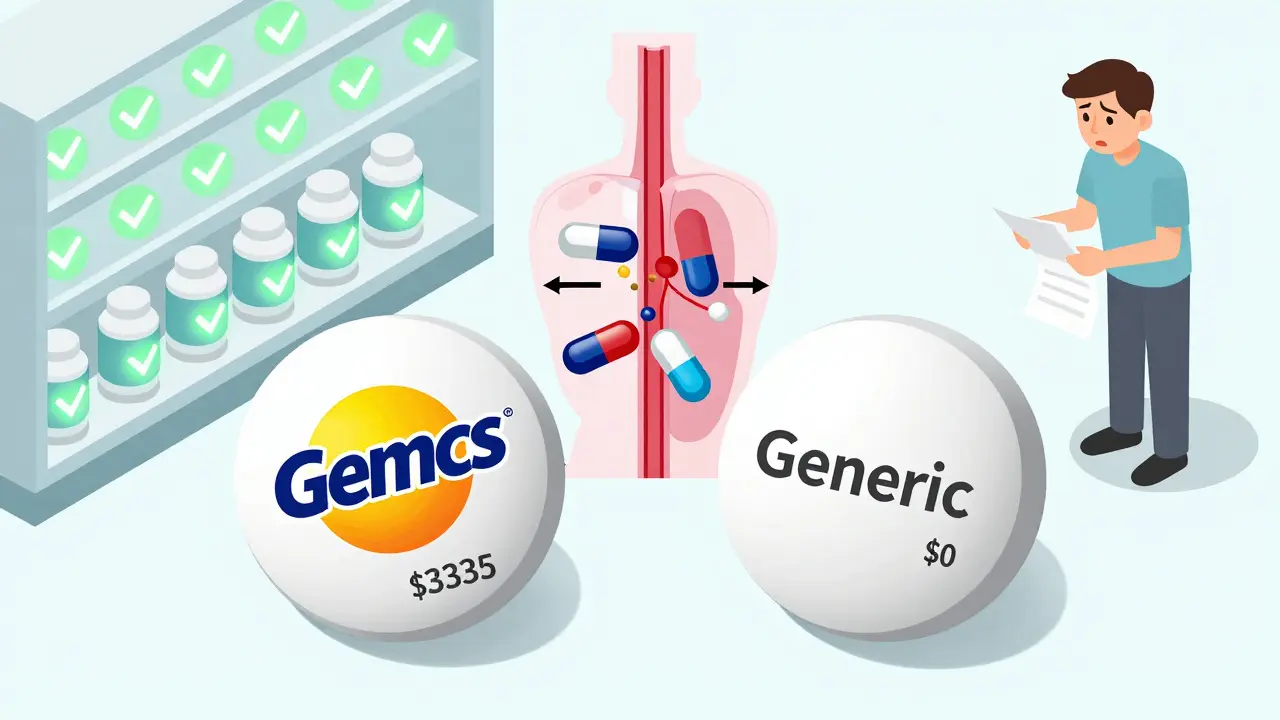
You’ve likely been there: your pharmacist tells you they’re switching your usual medication to a generic version to save you money. For most of us, it seems like a win-win. But it’s natural to wonder if a cheaper pill actually does the same thing over five or ten years that the expensive one does. While the official line is that they are identical, the real-world data shows a more nuanced picture. Depending on the drug and where it was made, the experience can range from completely seamless to clinically significant.
The Baseline: What Makes a Generic "Equivalent"?
To understand long-term safety, we first have to look at how these drugs get approved. In the U.S., the Food and Drug Administration is the federal agency responsible for protecting public health by ensuring the safety, efficacy, and security of human drugs . Under the Hatch-Waxman Act of 1984, a generic doesn't have to repeat the massive clinical trials the original brand went through. Instead, they must prove bioequivalence.
What does that actually mean? The FDA requires that the amount of the active ingredient that reaches your bloodstream (the AUC) and the peak concentration (Cmax) fall within a specific range-typically 80% to 125% of the brand-name drug. If you look at over 2,000 bioequivalence studies, the average difference in absorption is only about 3.5%. For most people, this tiny gap is invisible. However, for a small slice of the population, that 3.5% or even a 10% difference can be the gap between a controlled condition and a flare-up.
Long-Term Outcomes: The Surprising Data
When we move from short-term lab tests to long-term population studies, the results get interesting. A massive study published in 2020 in Scientific Reports tracked thousands of insured people in Austria over five years. They looked at medications for chronic metabolic illnesses, specifically focusing on antihypertensives.
Surprisingly, the generic users actually fared better. The study found that branded drug users had a higher mortality rate (53.8 deaths per 1,000 patient-years) compared to generic users (30.2 deaths per 1,000 patient-years). Generic users also had fewer major adverse cardiac and cerebrovascular events (MACCE). While this suggests generics are at least as safe-and sometimes associated with better outcomes-it’s important to remember that these studies often reflect the types of patients who are prescribed generics versus brands, which can skew the data.
| Metric | Branded Medication | Generic Medication |
|---|---|---|
| Deaths (per 1,000 patient-years) | 53.8 | 30.2 |
| 5-Year Survival Rate | 77.8% | 85.9% |
| Cardiac/Cerebrovascular Events | 83.6 | 51.3 |
The "Narrow Therapeutic Index" Danger Zone
If generics are generally safe, why do some people report total failure after a switch? The answer usually lies in the Narrow Therapeutic Index (NTI), which is a characteristic of drugs where small increases or decreases in dose or blood concentration can lead to serious toxicity or lack of efficacy . For most drugs, a 10% difference in absorption doesn't matter. But for NTI drugs, it's a huge deal.
Common examples include Warfarin (a blood thinner), Levothyroxine (for thyroid issues), and certain anti-epileptics. For instance, a 2017 study showed that people on generic levothyroxine had 12.3% higher rates of TSH level fluctuations compared to those on brand Synthroid. In the world of seizures, this is even more critical. There are documented cases where patients saw their seizure frequency jump from 2 per month to 10 per month simply by switching from brand Lamictal to a generic version.
Does the Manufacturer Matter More Than the Label?
We often talk about "Brand vs. Generic," but that's a bit of a simplification. There are actually three categories: the original brand, traditional generics, and Authorized Generics, which are the exact same drug as the brand-name version, but sold under a generic label by the original manufacturer .
Research suggests that the difference isn't always about the "generic" label, but who is making the pill. A study using the FDA’s Adverse Event Reporting System (FAERS) found that the geographic origin of the factory can impact safety. Specifically, some generic drugs manufactured in India were linked to 54% higher rates of severe adverse events-like hospitalization or disability-compared to the same generic drug produced in the U.S. This suggests that quality control at the manufacturing site is a bigger variable than whether the drug is a brand or a generic.
The Individual Response: Why You Might Feel a Difference
Even if the active ingredient is the same, the Excipients-the inactive ingredients like binders, fillers, and dyes-are different. These can affect how a drug dissolves in your stomach or how your immune system reacts.
Some patients experience "clinical deterioration" after a switch. Case reports have shown patients using generic ciprofloxacin or levofloxacin who saw symptoms persist or worsen, only to have them resolve immediately after switching back to the brand. Some estimates suggest that while 60% of patients feel no difference and 30% actually improve, about 10% experience new side effects, and another 30% may find the drug simply doesn't work as well for them.
How to Manage Your Transition to Generics
If you're worried about a switch, don't just guess. Be proactive with your healthcare provider. Not all switches are created equal, and some risks can be mitigated with a bit of planning.
- Ask about NTI: If you are taking a medication for a critical condition (like epilepsy or thyroid disorder), ask your doctor if that drug has a narrow therapeutic index. If it does, request a "Dispense as Written" (DAW) order to stay on the brand.
- Track your symptoms: Keep a simple log for two weeks after switching to a generic. Note any new side effects or a return of original symptoms.
- Consistency is key: If you find a generic that works, ask your pharmacist to keep you on that specific manufacturer. Switching between different generic brands every month can cause blood-level fluctuations.
- Consult the Orange Book: The FDA's Orange Book lists all approved generics and their therapeutic equivalence. Your pharmacist can help you navigate this to ensure you're getting a vetted alternative.
Are generic drugs less effective over many years?
For the vast majority of people, no. Long-term population studies, such as those conducted in Austria, have shown that generic users often have similar or even slightly better survival rates and fewer cardiac events than brand-name users for chronic conditions. The efficacy is generally equal because the active ingredient remains the same.
Why do some people feel worse after switching to a generic?
This is usually due to two things: inactive ingredients (excipients) and the 80-125% bioequivalence range. While most people don't notice a 10% difference in absorption, people taking Narrow Therapeutic Index (NTI) drugs-like warfarin or levothyroxine-can experience significant clinical changes from that small variation.
Does it matter where my generic drug is manufactured?
Yes, data suggests it can. Some studies have shown higher rates of severe adverse events in generics produced in certain overseas markets compared to those produced domestically in the U.S. This is typically due to differences in manufacturing quality control rather than the drug formula itself.
What should I do if I think my generic isn't working?
First, document your symptoms clearly. Contact your doctor and explain exactly when the change occurred. If the drug is an NTI medication, your doctor may switch you back to the brand-name version or find a specific generic manufacturer that provides more stable results for you.
Is the FDA's bioequivalence standard too loose?
For most medications, the 80-125% range is more than sufficient. However, medical experts like those at Harvard Medical School argue that for a small subset of high-risk drugs, this standard is too wide and can lead to therapeutic failure or toxicity.