
Brown Bag Medication Inventory Tool
Gather all your medications before your next review. This tool helps you create a complete, organized list to bring to your healthcare provider.
Your Medication List
Important: Bring all bottles (including empty ones) to your appointment. Your provider needs to see the actual containers to identify duplicates and interactions.
No checklist generated yet
What Is a Brown Bag Medication Review?
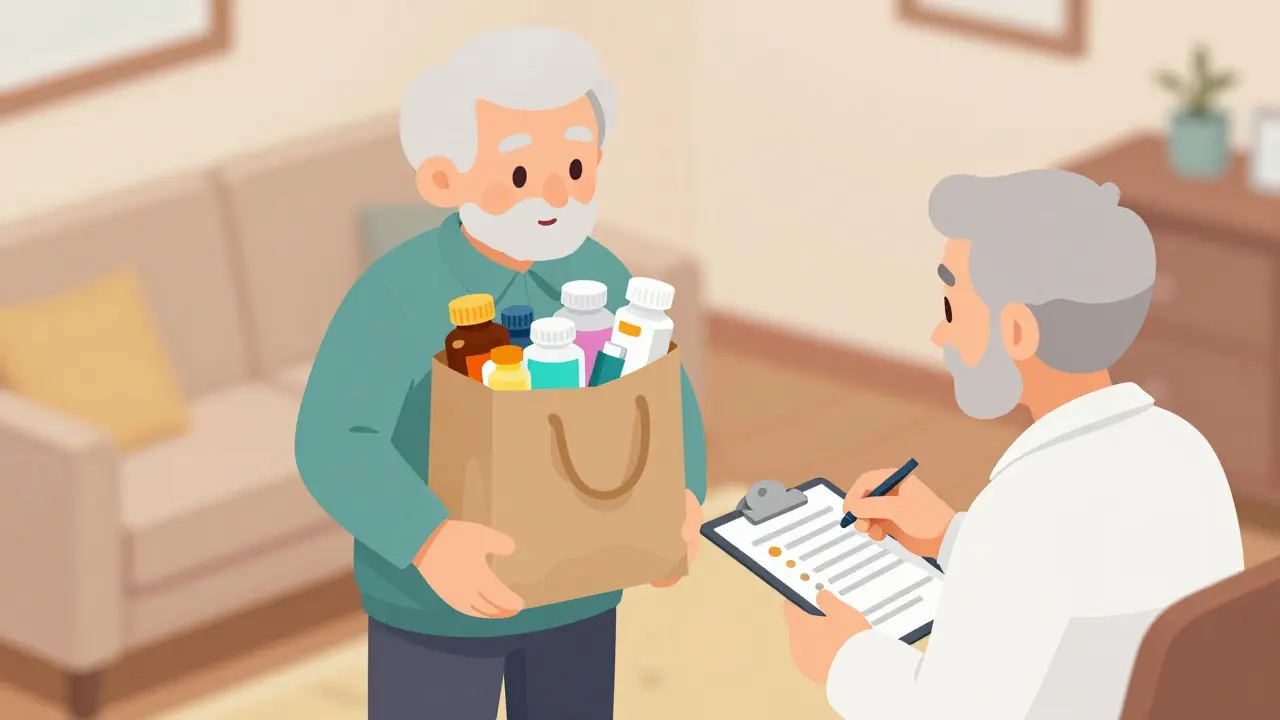
A brown bag medication review is a simple, powerful way to make sure you’re taking the right medicines, in the right doses, and for the right reasons. It’s when you gather every pill, capsule, cream, inhaler, vitamin, supplement, and herbal remedy you take - all of it - and bring them in a brown paper bag to your doctor or pharmacist. They sit down with you, look at each item, and check for problems like duplicates, dangerous interactions, or medicines you no longer need.
This isn’t just a checklist. It’s a safety net. In Australia, and across the U.S., Canada, and the U.K., this practice has become a key part of managing older adults’ health. Why? Because nearly half of seniors take five or more medications. And when you’re juggling that many, mistakes happen - fast.
Why This Review Matters More Than You Think
Medication errors are one of the leading causes of hospital visits among seniors. Studies show that up to 20% of serious drug reactions happen because someone was taking two medicines that shouldn’t be mixed, or they didn’t know they were doubling up. One patient in Sydney was admitted with dizziness and confusion. Turns out, he was taking three different sleep aids - each prescribed by a different doctor. None of them knew about the others.
That’s why a brown bag review works better than any form you fill out. When patients try to remember what they take, they forget. A 2016 study found that only 2 out of every 10 patients accurately listed their meds from memory. But when they brought the actual bottles? Accuracy jumped to over 92%. That’s not a small improvement - it’s life-changing.
What Exactly Should You Put in the Bag?
Don’t just grab your prescription bottles. Bring everything. Here’s the full list:
- All prescription medicines - even those you haven’t taken in months
- All over-the-counter drugs - painkillers, antacids, allergy pills, sleep aids
- All vitamins and minerals - multivitamins, calcium, vitamin D, iron
- All herbal supplements - echinacea, ginseng, fish oil, turmeric
- All topical treatments - creams, patches, eye drops, inhalers
- All empty or nearly empty bottles - yes, even those
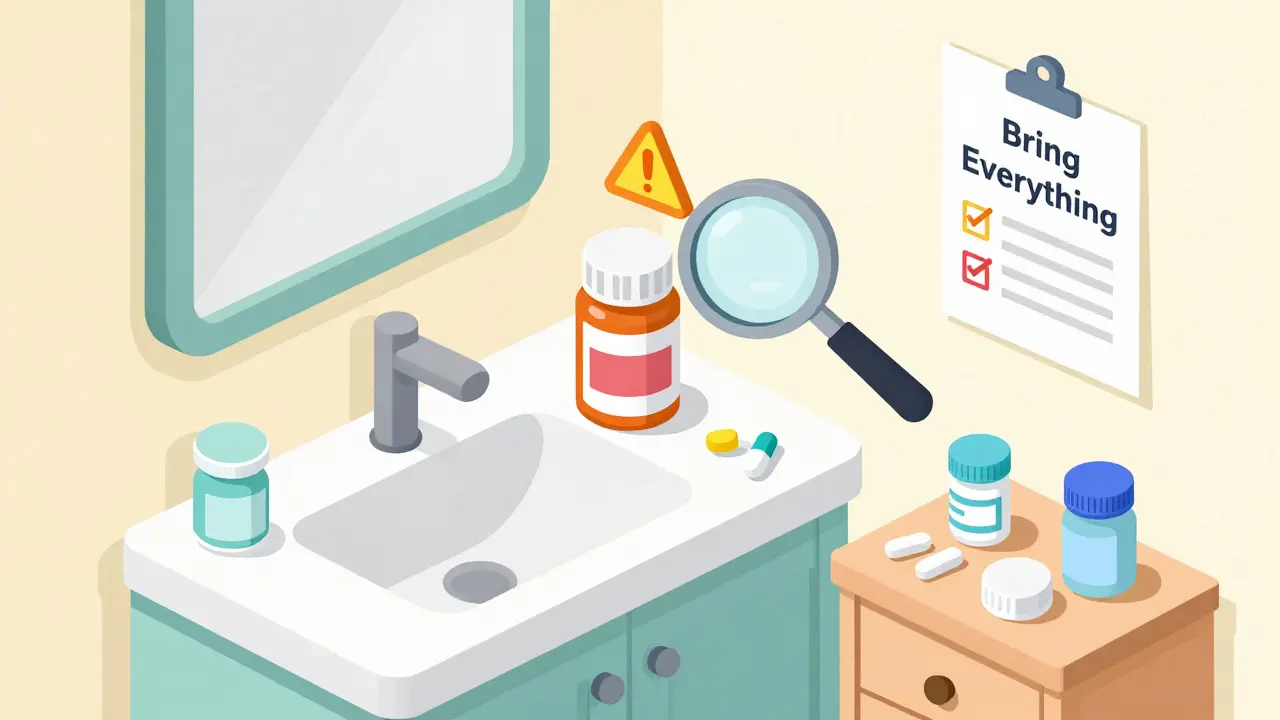
Why include the empty ones? Because they tell a story. If a bottle of blood pressure pills is half-empty, maybe you’re not taking them. If you’ve got five bottles of the same painkiller, maybe you’re self-medicating. These details matter.
How to Prepare - Step by Step
- Set aside 30 to 45 minutes. This isn’t a quick chat. You need time.
- Gather every bottle, box, and packet you use daily or weekly. Don’t skip anything.
- Write down the reason you take each one - even if you’re not sure. Example: "For my heart," or "My doctor said for joint pain."
- Check expiration dates. Old meds can be dangerous or useless.
- Bring your list and your bag to the appointment. Don’t rely on memory.
Pro tip: If gathering everything feels overwhelming, do it a few items at a time. Put one day for pills, another for supplements. Use your bathroom cabinet, kitchen drawer, and bedside table as your checklist.
What Happens During the Review?
Your provider will go through each item. They’ll ask:
- Why are you taking this?
- How often? At what time?
- Have you noticed any side effects?
- Have you stopped any meds recently?
They’ll look for:
- Duplicates - two medicines with the same active ingredient
- Interactions - like mixing blood thinners with herbal supplements
- Unnecessary drugs - pills you were prescribed years ago and never stopped
- Wrong doses - too high, too low, or taken at the wrong time
- Medicines you can’t afford or can’t swallow
They might suggest stopping one, switching another, or simplifying your routine. In one review in Melbourne, a 79-year-old woman had her daily pill count cut from 17 to 9 - without losing any health benefits.
Why This Works Better Than Apps or Lists
Many people think, "I have a phone app that tracks my meds." Or, "I wrote them all down." But here’s the truth: apps can’t see what’s in your cabinet. Written lists can be outdated, incomplete, or misremembered.
Electronic records often miss what patients take on their own - supplements, OTCs, leftover antibiotics. One study found that 41% of dangerous medication errors involved drugs not recorded anywhere in the system. Only the brown bag catches those.
Even the best digital tools can’t tell if you’re crushing pills you can’t swallow, or if you’re taking your insulin only when you feel bad. The physical review lets the provider see your reality - not just your record.
Common Problems and How to Solve Them
People often hesitate to bring their meds because they feel embarrassed. Maybe they’ve got 20 bottles because they were scared to stop anything. Maybe they’ve been hoarding old prescriptions "just in case." That’s normal. But it’s also risky.
Here’s how to get past it:
- Remember: Your provider has seen this a hundred times. They’re not judging. They’re helping.
- If you’re confused about what to bring, ask: "Should I bring my fish oil? My CBD drops? My leftover antibiotics?" The answer is always: Yes.
- Bring a friend or family member. They can help remember details or ask questions you might forget.
And if you forget something? Don’t panic. Just bring it next time. The goal is progress, not perfection.
What Happens After the Review?
You’ll walk out with a clear, updated list of what you should - and shouldn’t - be taking. Your doctor or pharmacist will send a copy to your GP, pharmacy, and any specialists. That means everyone’s on the same page.
Many patients report:
- Less confusion about their meds
- Fewer side effects like dizziness or stomach upset
- Lower pill counts - sometimes by half
- More confidence managing their health
In pilot programs in the U.K., 64% of seniors had at least one unnecessary medication stopped after a review. In the U.S., Kaiser Permanente saw a 22% drop in hospital visits among seniors who had regular reviews.
How to Make This a Regular Habit
This isn’t a one-time thing. Your meds change. Your body changes. Your doctors change. You need to do this at least once a year - or anytime you see a new doctor, start a new treatment, or go to the hospital.
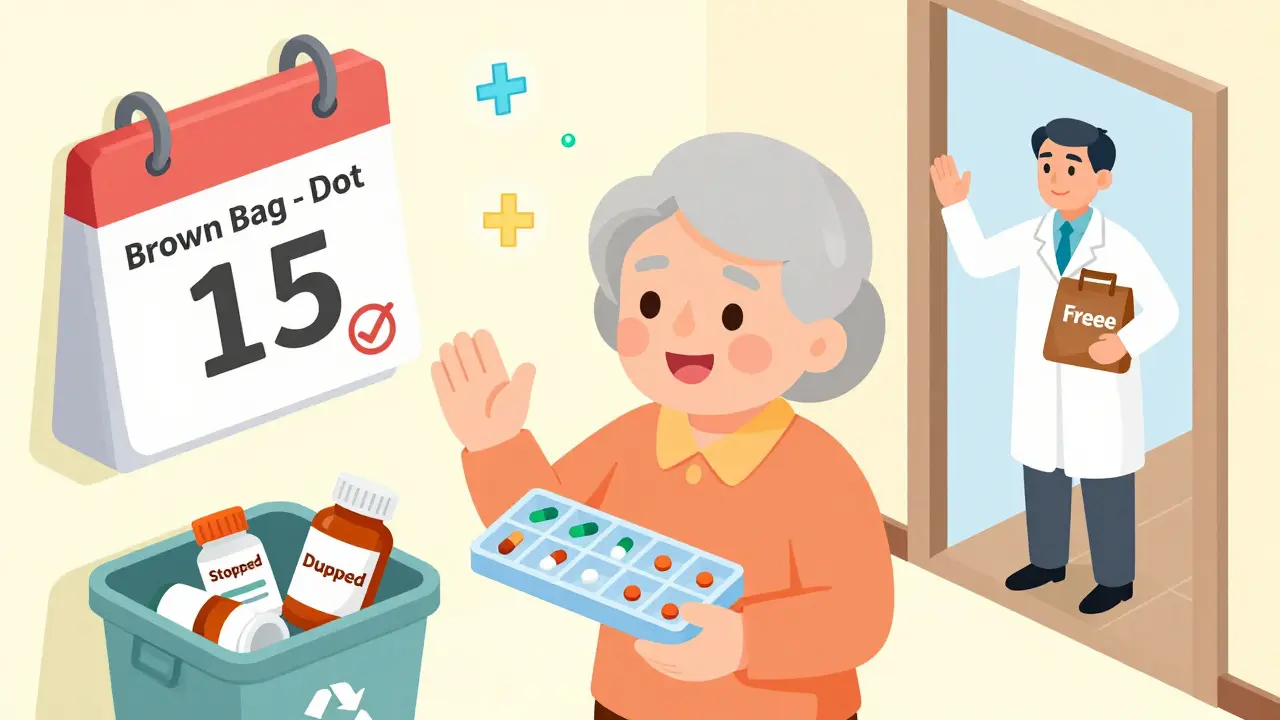
Set a reminder on your phone: "Brown Bag Day - October 15." Put it on your calendar. Tell your family. Make it part of your annual health routine, like your flu shot or dental checkup.
Some clinics now give out free brown bags with a checklist printed on them. Ask your pharmacy if they offer them. If not, just use any paper bag. The bag isn’t magic - the process is.
What If You Can’t Get to the Appointment?
If mobility is an issue, call your GP or pharmacist. Many now offer home visits for medication reviews. Others will send a nurse or pharmacist to your home. Some community health centers even run monthly brown bag events - just drop in with your bag.
And if you’re worried about transportation, ask your local aged care service. Many provide free rides to medical appointments, including medication reviews.
Final Thought: This Is Your Safety Plan
Medicines save lives. But when they’re not managed well, they can hurt you. A brown bag review isn’t about being told what to do. It’s about taking control. It’s about asking: "Do I really need all this? Is it still working? Is it safe?"
This is your chance to speak up, ask questions, and make sure your meds are helping - not hurting. You’ve done the hard part: you’ve lived with these pills for years. Now it’s time to make sure they’re working for you, not against you.
Charlotte N
January 3, 2026 AT 22:42Also why do we still call it a brown bag? Mine was a Trader Joe's reusable tote. Does that count?
Allen Ye
January 5, 2026 AT 18:28Brendan F. Cochran
January 6, 2026 AT 00:48mark etang
January 7, 2026 AT 22:20Ashley Viñas
January 9, 2026 AT 06:47Also, if you're still taking leftover antibiotics from 2018? Stop. Just stop.
jigisha Patel
January 9, 2026 AT 12:11Roshan Aryal
January 9, 2026 AT 17:16Catherine HARDY
January 9, 2026 AT 17:17Clint Moser
January 11, 2026 AT 08:18John Ross
January 13, 2026 AT 00:40Jack Wernet
January 13, 2026 AT 04:16Enrique González
January 13, 2026 AT 11:06Connor Hale
January 14, 2026 AT 10:46josh plum
January 15, 2026 AT 13:45