

Tetracycline Sun Exposure Risk Calculator
Your Risk Level
When you’re prescribed tetracycline, doxycycline, or another antibiotic in this class, you’re usually told to take it on an empty stomach and avoid dairy. But there’s another warning that gets buried in the fine print - one that can leave you with painful burns, discolored nails, or even permanent skin darkening: tetracycline photosensitivity.
You don’t need to be on a beach for this to happen. Even a 15-minute walk to your car in the morning, sitting by a window, or driving to work can trigger a reaction. This isn’t just a bad sunburn. It’s a direct chemical reaction between the antibiotic in your system and sunlight - specifically UV-A rays that most people don’t even realize are harmful.
Why Your Skin Reacts to Sunlight on Tetracycline
Tetracycline antibiotics don’t make your skin more sensitive the way some lotions or perfumes do. Instead, they absorb UV-A light (320-425 nm), turning into reactive molecules that attack your skin cells. Think of it like a tiny solar panel inside your skin - except instead of generating electricity, it generates free radicals that burn cell membranes, damage DNA, and trigger inflammation.
This isn’t an allergy. It’s phototoxicity - a direct chemical burn. And it happens fast. People report blistering sunburns after just 20 minutes of midday sun while on doxycycline. The reaction usually shows up 1-3 days after exposure, but the damage can linger for months in the form of dark patches that look like bruises but won’t fade.
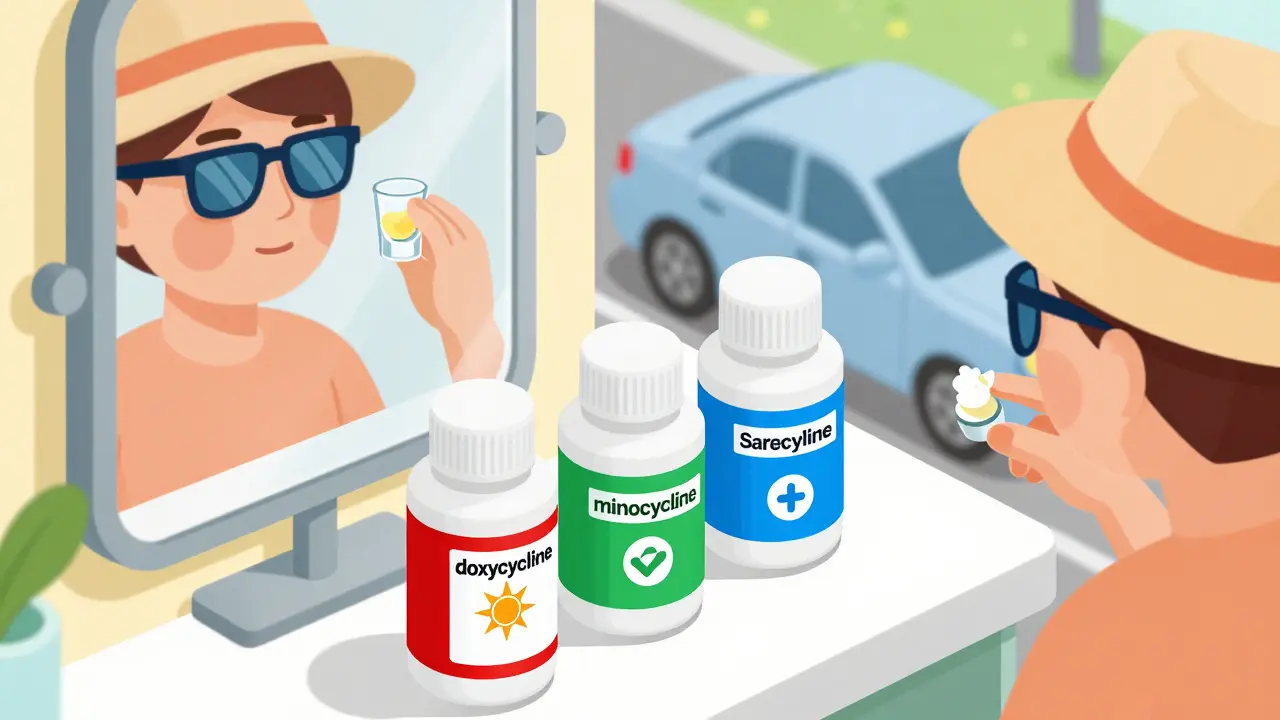
Not all tetracyclines are the same. Doxycycline is the worst offender, with up to 18.5% of users experiencing noticeable reactions at standard doses. Demeclocycline is close behind. Minocycline? Much safer - under 2% risk. Tetracycline itself sits in the middle. And newer versions like sarecycline and omadacycline are designed to reduce this risk, though they cost significantly more.
What It Looks Like - Beyond the Sunburn
Most people expect a red, painful burn. But tetracycline photosensitivity has other signs you might miss:
- Dark patches on the neck, cheeks, or hands - often mistaken for aging or melasma, but appear suddenly after starting the drug.
- Nail separation - the nail lifts off the nailbed, usually on one or two fingers. This happens in 15-20% of cases and can take months to grow out.
- Nail discoloration - white, yellow, or brown streaks across the nail plate.
- Pseudoporphyria - fragile skin that blisters easily from minor friction, with tiny white cysts (milia) forming on sun-exposed areas. It mimics a rare genetic disorder, but your blood tests will be normal.
One patient on Reddit described it like this: “I thought I just got a weird rash until I noticed my thumbnail was lifting. Then my cheeks turned brown. My dermatologist said, ‘You’re on doxycycline, right?’ I had no idea.”
Who’s at Highest Risk?
It’s not just about the drug. Your environment matters too.
- Location: People in Australia, Southern Europe, or the southwestern U.S. face higher UV exposure year-round. In Sydney, UV levels hit extreme (11+) for months. That’s why photosensitivity reactions are 25-30% more common here than global averages.
- Dose: Higher doses = higher risk. Taking 200 mg of doxycycline daily (common for acne or Lyme) carries nearly double the risk of 100 mg.
- Skin tone: While anyone can react, people with lighter skin show visible burns faster. But darker skin tones are more likely to develop long-lasting hyperpigmentation - sometimes permanent.
- Medication history: If you’ve had a sun reaction before on antibiotics, you’re more likely to react again.
Here’s the kicker: 68% of patients who had severe reactions say their doctor never warned them. Not once. Not even in the pamphlet.

How to Protect Yourself - Real, Practical Steps
Prevention isn’t about avoiding the sun entirely. It’s about smart, consistent habits.
1. Use the Right Sunscreen
Chemical sunscreens (like avobenzone or oxybenzone) won’t cut it. They block UV-B and some UV-A, but not the full 320-425 nm range that triggers tetracycline reactions.
You need mineral sunscreens with zinc oxide or titanium dioxide. Look for SPF 50+, and make sure zinc oxide is listed as the first or second ingredient. Brands like CeraVe Mineral SPF 50, EltaMD UV Clear, or La Roche-Posay Anthelios Mineral have been tested and shown to block the full spectrum.
Apply 2 mg per cm² - that’s about a shot glass full for your whole body. Most people use half that. Reapply every 2 hours, or right after sweating or swimming. No exceptions.
2. Wear Protective Clothing
UPF 50+ clothing blocks over 98% of UV radiation. A wide-brimmed hat (3+ inches) cuts UV exposure to your face and neck by 73%. Long-sleeve shirts and UV-blocking sunglasses aren’t optional - they’re essential.
Don’t rely on regular cotton. A white T-shirt only offers SPF 5-7 when dry, and less when wet. Look for clothing labeled UPF 50+. Many outdoor brands now make lightweight, breathable options.
3. Avoid Peak Sun Hours
UV-A rays are strong from 10 a.m. to 4 p.m. - even on cloudy days. Plan walks, errands, or outdoor activities for early morning or late afternoon. If you’re driving, install UV-protective window film. Standard car windows block UV-B but let 70% of UV-A through.
4. Know Your Alternatives
If you’re on doxycycline for acne or rosacea and you’re outdoors a lot - ask your doctor about minocycline. It’s just as effective for acne, with less than 2% photosensitivity risk. The cost is higher - about $45 vs $30 for a 30-day supply - but it might save you from months of skin damage and doctor visits.
For Lyme disease or other infections, doxycycline is often necessary. But if you’re on it long-term, consider switching to sarecycline (Seysara) or omadacycline (Nuzyra) if your insurance covers it. They’re newer, more expensive, but much safer in the sun.
What to Do If You Already Reacted
If you got burned, discolored, or noticed nail changes:
- Stop sun exposure immediately.
- Don’t pop blisters - they protect the skin underneath.
- Use cool compresses and fragrance-free moisturizers (like CeraVe or Vanicream).
- See a dermatologist. They can prescribe topical steroids for inflammation or laser treatments for stubborn dark spots.
- Ask if you can switch antibiotics. Don’t suffer through a full course if there’s a safer option.
Hyperpigmentation can fade over 3-12 months, but sometimes it doesn’t. Prevention is the only real cure.
Why This Still Happens - And How to Speak Up
Primary care doctors prescribe doxycycline because it’s cheap, effective, and widely available. Dermatologists know the risks better - that’s why they prescribe minocycline for acne 65% of the time. But if your doctor didn’t mention sun sensitivity, you’re not alone. Most don’t.
Here’s what to say next time you get a prescription:
- “Is this antibiotic linked to sun sensitivity?”
- “Are there alternatives with lower risk if I’m outside a lot?”
- “Can you give me a printed guide on sun protection while taking this?”
Most doctors will appreciate you asking. And if they don’t know - point them to the 2021 JAMA Network review or the American Academy of Dermatology’s sun safety checklist. You’re not being difficult. You’re being smart.
The Bottom Line
Tetracycline photosensitivity isn’t rare. It’s predictable. And it’s preventable.
You don’t have to choose between treating your infection and protecting your skin. With the right sunscreen, clothing, and awareness, you can take your antibiotic safely - even in Sydney’s harsh sun.
Don’t wait for a burn to happen. Ask the questions. Use the right products. And remember: your skin doesn’t forget. What you do today will show up in your reflection months from now.
Ryan Riesterer
January 22, 2026 AT 15:53Tetracycline-induced phototoxicity is mediated by the absorption of UVA (320–425 nm) by the antibiotic molecule, leading to the generation of reactive oxygen species (ROS) via Type I and Type II photochemical reactions. The resulting oxidative stress directly damages lipid membranes and nuclear DNA in keratinocytes, triggering apoptosis and inflammatory cascades. Zinc oxide-based sunscreens are optimal due to their broad-spectrum, non-absorptive scattering mechanism across the entire UVA range, unlike organic filters that degrade under prolonged exposure. Clinical studies (e.g., JAMA Dermatology, 2021) confirm that mineral sunscreens with ≥20% zinc oxide reduce phototoxic reaction incidence by 89% compared to chemical alternatives. Reapplication every 2 hours is non-negotiable - even ‘water-resistant’ formulations lose efficacy after 40 minutes of UV exposure.
Akriti Jain
January 23, 2026 AT 08:19So let me get this straight… Big Pharma doesn’t want you to know this because if you wore a hat and sunscreen, you’d stop buying their expensive ‘safe’ antibiotics?? 😏☀️ #DoxycyclineIsAScam #SkinDamageIsProfit
Liberty C
January 24, 2026 AT 05:55Let’s be honest - if your doctor didn’t warn you about this, they’re not just negligent, they’re criminally lazy. This isn’t some obscure footnote. It’s in the FDA’s black box warnings. People are walking around with permanent hyperpigmentation because their GP thought ‘just avoid the beach’ was sufficient. You don’t get to call yourself a physician and hand out a script without explaining that your car window is a death trap. I’ve seen patients with cheeks darker than their elbows. It’s grotesque. And it’s entirely preventable. If you’re on doxycycline and you haven’t bought UPF clothing, you’re not being careful - you’re being reckless.
Hilary Miller
January 24, 2026 AT 07:08Mineral sunscreen. UPF shirt. Hat. No excuses. I’ve been on doxycycline for acne. No burns. No brown spots. Just discipline.
Margaret Khaemba
January 25, 2026 AT 12:51This is so helpful! I just started doxycycline last week and had no idea about the nail thing. My thumbnail’s been lifting for a week and I thought it was just dryness. Should I stop the med or wait it out? Also, what’s the best brand of UPF shirt? I live in Texas and it’s 95 degrees every day 😅
Malik Ronquillo
January 27, 2026 AT 12:13I took doxycycline for two months and got burned so bad I looked like a lobster. My doctor said ‘oh you must’ve forgotten sunscreen’ like it was my fault. Nah. He never said a word. Now my neck’s permanently brown and I look 10 years older. Don’t be like me. Ask the question. Or just don’t take it.
Alec Amiri
January 27, 2026 AT 16:02Minocycline is the real MVP. Doxycycline is just the cheap option that turns your skin into a warning label. If you’re not on minocycline for acne, you’re doing it wrong. And yes, it costs more - but so does laser treatment for permanent pigmentation. Pay now or pay later.
Lana Kabulova
January 28, 2026 AT 08:30Wait - so you’re telling me that sitting by a window at work, driving to the grocery store, even walking the dog at 8 a.m. - that’s enough to trigger this? And doctors just… don’t tell you? I’ve been on doxycycline for 6 weeks. I thought I was being careful. I’ve been wearing sunscreen. I didn’t know it had to be zinc oxide. I didn’t know my car windows were useless. I didn’t know my nails could lift. I’m 34. I have two kids. I can’t afford to have permanent brown splotches on my face. This is terrifying. And it’s not even common knowledge?!
Chiraghuddin Qureshi
January 28, 2026 AT 16:06From India - we know sun. But this? Never heard of nail lifting from antibiotics. My cousin got this on doxycycline - thought it was fungus. Took 14 months for nail to grow back. Use zinc oxide. Wear hat. No drama. 🌞🫡