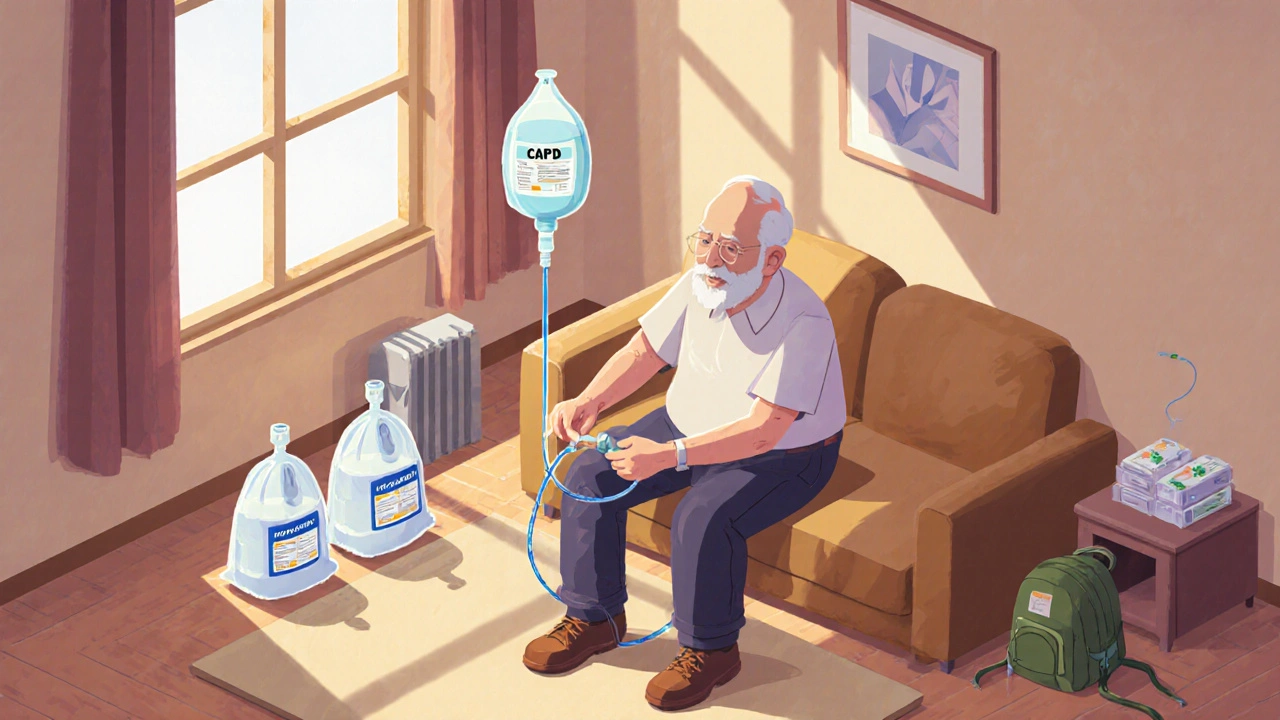
CAPD: What It Is, How It Works, and What You Need to Know
When your kidneys can’t filter waste anymore, CAPD, Continuous Ambulatory Peritoneal Dialysis, a form of home-based kidney treatment that uses the lining of your abdomen to clean your blood. Also known as peritoneal dialysis, it lets people with kidney failure avoid frequent trips to a clinic by doing dialysis themselves, usually four times a day. Unlike hemodialysis, which needs a machine and a nurse, CAPD uses gravity and your body’s natural lining—the peritoneum—to pull toxins out of your blood. You fill your belly with a special fluid, let it sit for a few hours, then drain it out. It’s not magic, but it’s simple enough that most people learn to do it without help after a few days of training.
CAPD isn’t for everyone. It works best for people who still have some kidney function, aren’t overweight, and don’t have major abdominal surgery scars. It’s also ideal if you want to keep working, traveling, or managing your own schedule. But it requires discipline—you have to do it on time, every day, and keep your catheter site clean to avoid infections. A single infection in the abdomen can land you in the hospital, and that’s why many doctors recommend it only after they’re sure you’ll stick with the routine.
People on CAPD often wonder how it compares to other dialysis types. It’s slower than hemodialysis but gentler on the heart. It doesn’t require needles or a machine, but you do need storage space for dialysis fluid bags. And while it’s cheaper than in-center dialysis over time, the upfront cost of supplies can be high if your insurance doesn’t cover it fully. Some patients switch to CAPD after trying hemodialysis and finding it too disruptive. Others start with CAPD because their doctors think it’s a better long-term fit.
What you won’t find in most brochures is how it feels to live with CAPD. You learn to carry your fluid bags in a backpack. You learn to do exchanges in the backseat of your car, in hotel rooms, or while watching TV. You learn to ignore the occasional bloating or discomfort. And you learn to recognize the early signs of peritonitis—fever, cloudy fluid, belly pain—before it turns serious. These aren’t just medical facts. They’re daily realities for over 200,000 people worldwide who choose this path.
The posts below cover real-world experiences and practical details about CAPD and related treatments. You’ll find guides on managing infections, comparing it to other dialysis options, understanding fluid formulas, handling catheter care, and even how to travel with your supplies. There’s also information on what happens when CAPD stops working, when to consider switching, and how to talk to your doctor about your options. This isn’t theory. It’s what people actually need to know to stay safe and in control.
Learn the real differences between CAPD and APD for home peritoneal dialysis-how they work, costs, daily impact, and who benefits most. Make an informed choice for kidney failure treatment.
View More