Anticoagulants: What They Are, How They Work, and What You Need to Know
When your blood clots too easily, it can lead to strokes, heart attacks, or deadly blockages in your lungs. That’s where anticoagulants, medications that slow down the blood’s ability to form clots. Also known as blood thinners, they don’t actually thin your blood—they interfere with the proteins and enzymes that trigger clotting. If you’ve been told you need one, you’re not alone. Millions take them every year after heart surgery, for atrial fibrillation, or after a deep vein thrombosis.
Not all anticoagulants are the same. Some, like warfarin, a long-used oral anticoagulant that requires regular blood tests, need careful monitoring. Others, like newer direct oral anticoagulants (DOACs), work more predictably and don’t need as much testing. Then there’s Coumadin, the brand name for warfarin, still widely prescribed despite newer options. Each has different risks, interactions, and dosing rules. Taking the wrong one, or missing a dose, can be dangerous. Too much? You risk bleeding. Too little? You could get a clot.
Anticoagulants aren’t just about pills. They’re tied to your diet, other medications, even how you live. Vitamin K in leafy greens can mess with warfarin. Ibuprofen can increase bleeding risk. Even something as simple as falling can turn serious if you’re on these drugs. That’s why so many posts here focus on safety—how to store them right, when to call a doctor, and how to avoid dangerous mix-ups. You’ll find real comparisons between generic and brand versions, tips on managing side effects, and guides on switching safely.
What you’ll find below isn’t just a list of articles. It’s a practical toolkit. Whether you’re managing your own anticoagulant therapy, helping a loved one, or just trying to understand why your doctor chose one drug over another, these posts cut through the noise. You’ll see how people handle side effects, what alternatives exist, and how technology is making these drugs safer to use. No fluff. No jargon. Just what you need to stay in control.
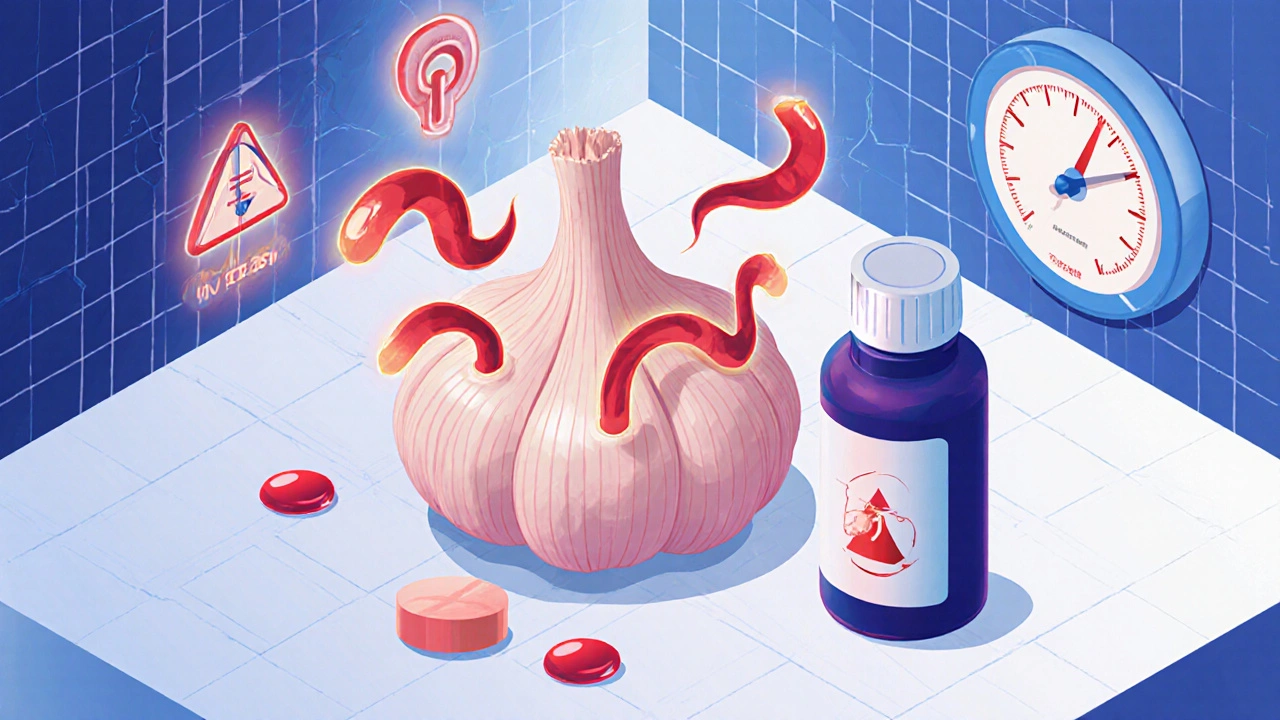
Garlic supplements can dangerously increase bleeding risk when taken with blood thinners like warfarin or apixaban. Learn why culinary garlic is safe-but supplements are not-and what steps to take to stay protected.
View More