
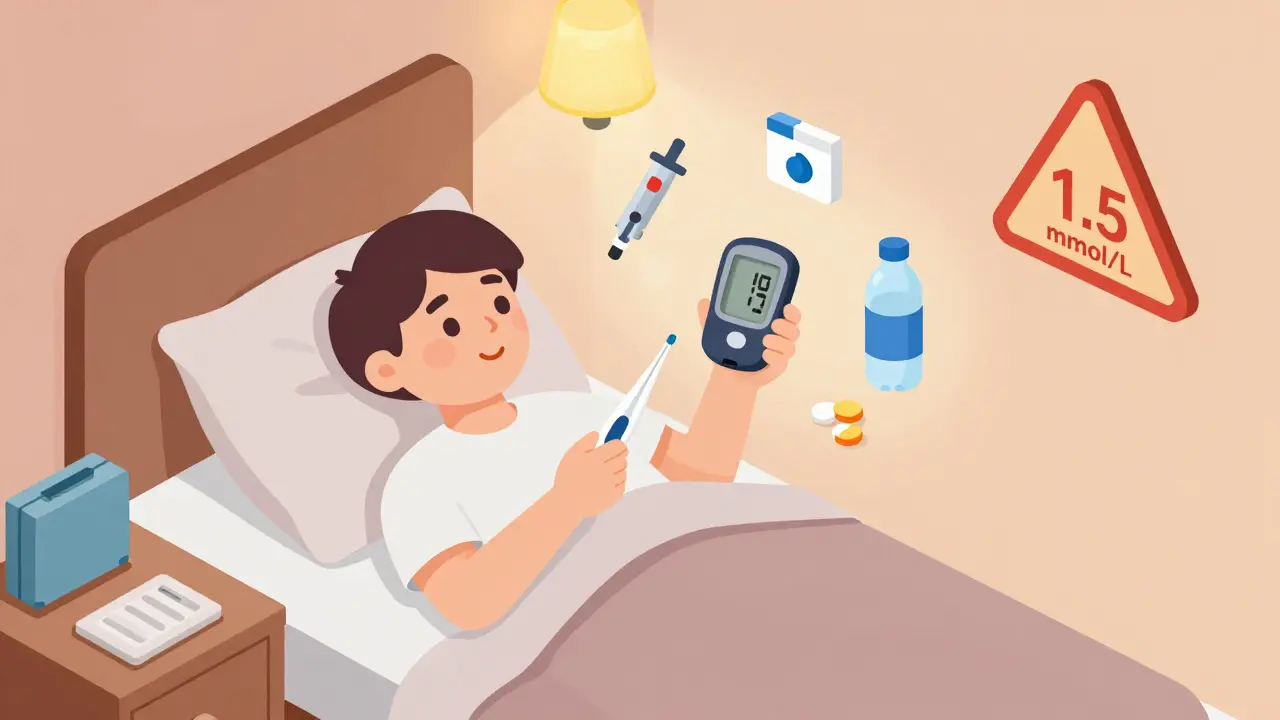
When You’re Sick and Have Diabetes, Your Body Changes-Here’s How to Adapt
Getting sick isn’t just about feeling awful-it can send your blood sugar into chaos. Even a mild cold or stomach bug can trigger dangerous spikes, especially if you’re on insulin. That’s because your body releases stress hormones like cortisol and adrenaline when you’re ill. These hormones make your liver pump out more glucose, while also making your body resist insulin. The result? Blood sugar can jump 30-50% higher than normal, even if you’re not eating. And if you stop your insulin thinking you don’t need it because you’re not eating, you risk slipping into diabetic ketoacidosis (DKA)-a life-threatening condition that sends over 27% of diabetes-related hospitalizations in the U.S. each year.
There’s no magic fix, but there are clear, proven steps you can take to stay safe. These aren’t vague suggestions-they’re evidence-based rules used by clinics, hospitals, and diabetes educators across Australia, the U.S., and Europe. Follow them, and you significantly lower your risk of ending up in the ER.
Never Skip Your Long-Acting Insulin-Even If You Can’t Eat
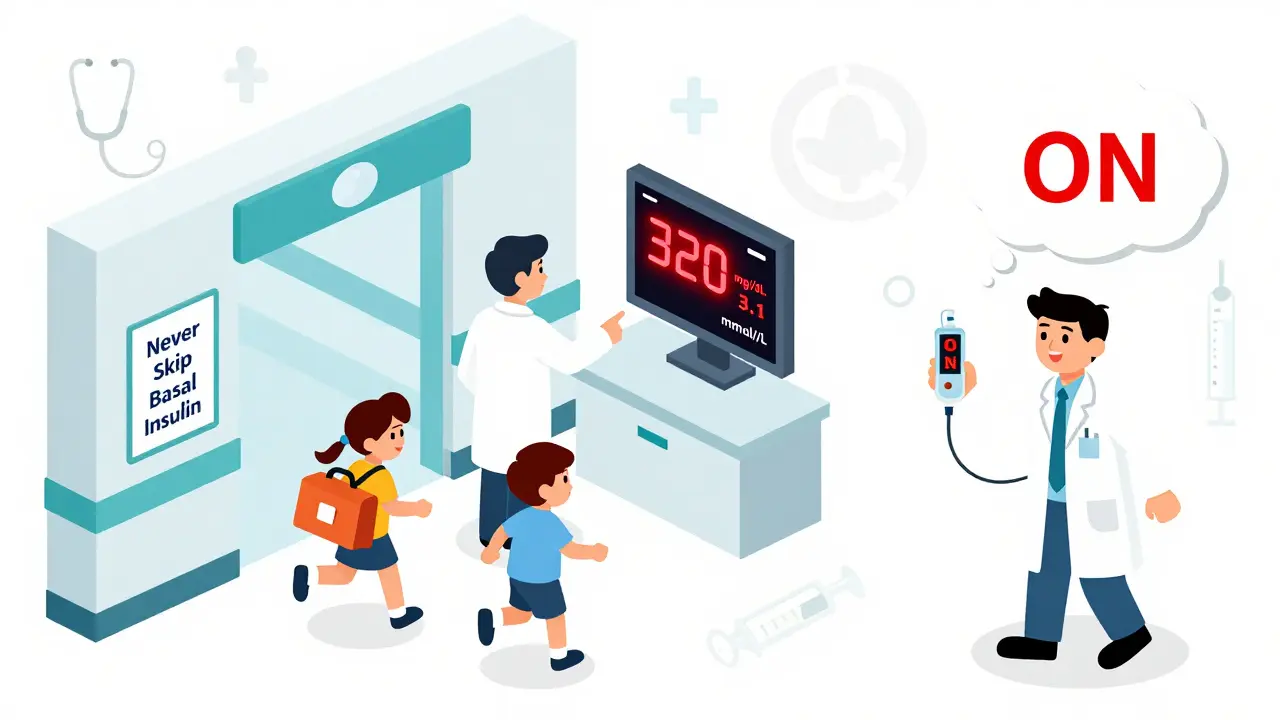
This is the most common mistake people make. When you’re sick and not eating, it’s tempting to skip your basal insulin-Lantus, Levemir, Basaglar, or whatever long-acting insulin you use. Don’t. Your body still needs insulin to stop your liver from flooding your bloodstream with glucose. Without it, your body starts breaking down fat for energy, producing ketones. That’s the first step toward DKA.
For Type 1 diabetes, you should never reduce your basal insulin by more than 20% of your usual dose-even if you’re vomiting or fasting. Some people think, “I didn’t eat, so I don’t need insulin.” That’s wrong. Your body is still working overtime to fight infection, and it needs insulin to keep that process from going off the rails.
For Type 2 diabetes, the rules are a little different. If you’re usually on pills only, you might not need extra insulin unless your blood sugar stays above 240 mg/dL for more than a day. But if you’re already on insulin, you still need to keep taking it. In fact, many Type 2 patients end up needing temporary insulin during illness, even if they’ve never used it before.
Insulin pump users have an extra layer of complexity. If your ketones are moderate or large, you may need to increase your basal rate by 20% for 12 hours. But don’t turn off your pump. And if you’re using a closed-loop system, check your settings-some automated systems may reduce insulin delivery too much during illness. You might need to switch to manual mode temporarily.
Hydration Is Your Secret Weapon
When your blood sugar is high, your kidneys try to flush out the extra glucose through urine. That pulls water out of your body with it. Dehydration makes everything worse-it thickens your blood, makes insulin less effective, and speeds up ketone buildup.
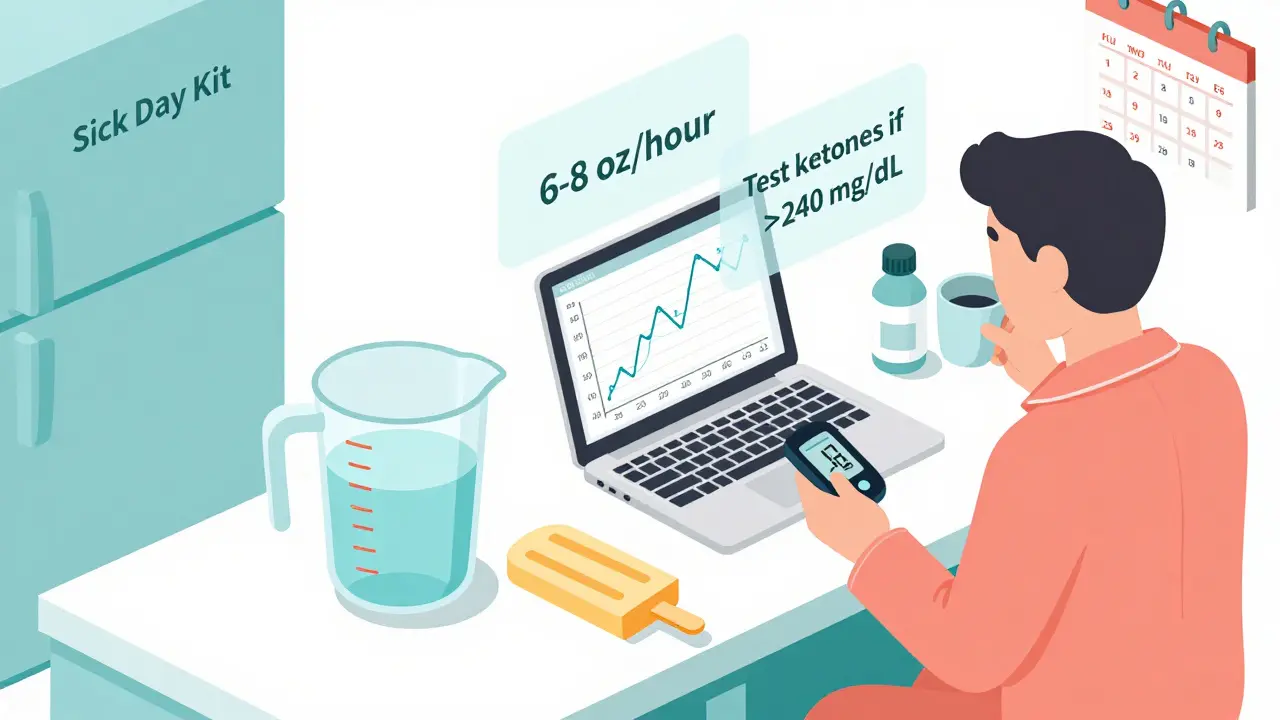
Drink fluids. Constantly. Not just when you’re thirsty. For adults, aim for 6-8 ounces every hour. That’s about 1.5 to 2 liters a day. For kids, the rule is simple: their age in ounces per hour. A 10-year-old needs 10 ounces every hour.
But not all fluids are equal. Here’s how to choose:
- If your blood sugar is above 180 mg/dL: Stick to sugar-free fluids-water, diet soda, broth, unsweetened tea.
- If your blood sugar is between 100-180 mg/dL: Alternate between water and fluids with 15g of carbs. Try half a cup of regular soda, half a cup of Gatorade, or a small juice box. This keeps you hydrated without spiking your sugar too high.
- If your blood sugar is below 100 mg/dL: Use sugary fluids to prevent lows. Try 4 oz of juice or regular soda every hour.
Pro tip: Use a measuring cup. Don’t guess. A cup of soup isn’t the same as a cup of soda. Measure it. And if you’re vomiting, try sipping slowly. Take a sip every 10 minutes. If you can’t keep anything down for more than 4 hours, call your doctor or go to the ER. IV fluids are often needed.
Ketone Checks: When to Test and What the Numbers Mean
Ketones are your body’s emergency fuel when it can’t use glucose. They’re normal in fasting-but dangerous when they build up too fast. You need to test for them when your blood sugar is over 240 mg/dL, or if you feel nauseous, have stomach pain, or are breathing fast.
Use a blood ketone meter if you have one. They’re more accurate than urine strips. Urine strips can be misleading-they show ketones from hours ago, not what’s happening right now. Blood ketones give you real-time data.
Here’s what the numbers mean:
- Below 0.6 mmol/L: Normal. No action needed.
- 0.6-1.5 mmol/L: Mild ketosis. Drink more fluids, take your insulin, recheck in 2 hours.
- 1.5-3.0 mmol/L: Moderate ketones. Increase insulin (if on pump, raise basal by 20%). Call your doctor if it doesn’t drop in 4 hours.
- Above 3.0 mmol/L: High ketones. This is dangerous. Take a correction dose of insulin immediately. If you’re vomiting, confused, or breathing deeply, go to the hospital. Don’t wait.
Don’t rely on “no ketones” from a urine strip. A 2022 survey found 42% of patients misused urine strips during illness, thinking they were safe when they weren’t. Blood ketone meters cost about $2-$3 per strip, but they’re worth every cent.
What to Do If You Can’t Eat
You don’t need to force down a full meal. But you do need to keep your body fueled with carbs-otherwise, your body breaks down fat faster, making ketones worse.
For adults: Aim for 50 grams of carbohydrates every 3-4 hours. That’s:
- One slice of toast
- Half a cup of cooked pasta or rice
- One cup of applesauce
- Two graham crackers
- Half a cup of regular yogurt
For kids: Smaller portions. Try 15g of carbs every 1-2 hours. That’s a few crackers, a small fruit, or a spoonful of honey.
If you can’t keep anything down, try ice chips, popsicles (sugar-free if sugar is high), or electrolyte drinks with carbs. If you’re vomiting and can’t keep fluids down for more than 4 hours, don’t wait-get help. Dehydration plus high ketones can turn into a medical emergency fast.
Watch Out for Hidden Sugars and Alcohol in Cold Medicines
Over-the-counter cough syrups, cold tablets, and throat sprays often contain sugar, alcohol, or decongestants that raise blood sugar. Even “sugar-free” products can have alcohol, which can interfere with your liver’s ability to release glucose-leading to unexpected lows.
Check labels. Look for ingredients like:
- Sucrose, high fructose corn syrup, dextrose (sugar)
- Alcohol, ethanol, denatured alcohol
- Pseudoephedrine, phenylephrine (decongestants that raise blood sugar)
Choose pills over syrups when possible. If you must use syrup, pick sugar-free versions. And always check your blood sugar after taking any new medication-even if it’s “just for a cold.”
Prepare a Sick Day Kit Before You Get Sick
Don’t wait until you’re feverish to gather supplies. Build a sick day kit now. Keep it in your medicine cabinet or fridge. Include:
- Unexpired blood ketone strips (they last 6 months after opening)
- Glucose tablets or juice boxes (for lows)
- Measuring cup (for accurate fluid intake)
- Glucagon kit (if you’re on insulin)
- Extra insulin and syringes/pump supplies
- List of emergency contacts and your doctor’s number
- 7-day supply of all your regular meds
Also, keep a log. Write down your blood sugar, ketone levels, fluid intake, and insulin doses every few hours. This helps your doctor understand what happened if you need to go in.
When to Call for Help
You don’t need to tough it out alone. Call your doctor or go to the ER if:
- Your blood sugar stays above 300 mg/dL for more than 6 hours, even after insulin
- Your ketones are above 1.5 mmol/L and rising
- You’re vomiting and can’t keep fluids down for more than 4 hours
- You feel confused, drowsy, or have trouble breathing
- You’ve lost 5 pounds or more in a few days
- You’re pregnant or have another chronic condition
And if you’re ever unsure-call. The American Diabetes Association’s helpline (1-800-DIABETES) handles over 12,000 sick-day calls every month. They’re trained to walk you through what to do.
What’s New in 2025
Guidelines are updating fast. In 2023, the ADA added new advice for people using continuous glucose monitors (CGMs). If more than half your readings are above 250 mg/dL for 12 hours straight, treat it like a high blood sugar emergency-even if you don’t feel sick. Your body might be fighting something you haven’t noticed yet.
Also, viral infections like RSV and flu cause 37% more insulin resistance than bacterial infections. That means you might need more insulin during flu season than you think. And by 2025, AI tools are expected to predict sick-day risks based on early symptoms-like a cough or fatigue-before your blood sugar spikes.
For now, stick to the basics: keep insulin on, drink fluids, test ketones, and don’t delay help when things go wrong. Your body is fighting hard. You just need to help it do its job.
Should I stop my insulin if I’m not eating when I’m sick?
No. Never stop your long-acting insulin, even if you’re not eating. Your body still needs insulin to prevent your liver from releasing too much glucose and to stop ketone production. Skipping insulin during illness is the leading cause of diabetic ketoacidosis (DKA). Keep your basal insulin at or near your usual dose, and adjust only if your doctor advises.
Can I use urine ketone strips instead of blood ketone meters?
You can, but it’s not ideal. Urine strips show ketones from hours ago, not what’s happening now. By the time they turn positive, you may already be in danger. Blood ketone meters give real-time results and are more accurate. If you only have urine strips, test them every 2-4 hours, but treat any moderate or large result as urgent-don’t wait for blood testing to confirm.
What if I’m on insulin pumps and get sick?
You still need to take insulin-but you may need to adjust your pump settings. If your ketones are moderate or high (≥1.0 mmol/L), increase your basal rate by 20% for 12 hours. Keep giving correction doses as needed. Don’t turn off your pump. If you’re using a closed-loop system, you may need to switch to manual mode, as automated systems may reduce insulin too much during illness. Always have backup insulin and syringes ready.
How much fluid should I drink if I’m vomiting?
If you’re vomiting, sip small amounts every 10-15 minutes. Try 1-2 tablespoons of fluid at a time. Use sugar-free fluids if your blood sugar is high, or fluids with 15g carbs if it’s low. If you can’t keep anything down for more than 4 hours, go to the ER. You may need IV fluids to prevent severe dehydration and ketone buildup.
Do Type 2 diabetics need to check ketones when sick?
Yes-if you’re on insulin. Even if you usually manage with pills, if you’re taking insulin during illness, you can develop ketones and DKA. If you’re not on insulin, check ketones only if your blood sugar stays above 240 mg/dL for more than a day. But if you feel unwell, confused, or nauseous, test anyway. Better safe than sorry.
Sandeep Jain
December 25, 2025 AT 15:30Sophia Daniels
December 25, 2025 AT 22:55roger dalomba
December 26, 2025 AT 12:09Amy Lesleighter (Wales)
December 28, 2025 AT 06:37Erwin Asilom
December 30, 2025 AT 04:37Nikki Brown
December 31, 2025 AT 00:59Brittany Fuhs
December 31, 2025 AT 11:32Fabio Raphael
January 2, 2026 AT 00:07Peter sullen
January 2, 2026 AT 16:15Steven Destiny
January 4, 2026 AT 11:13