
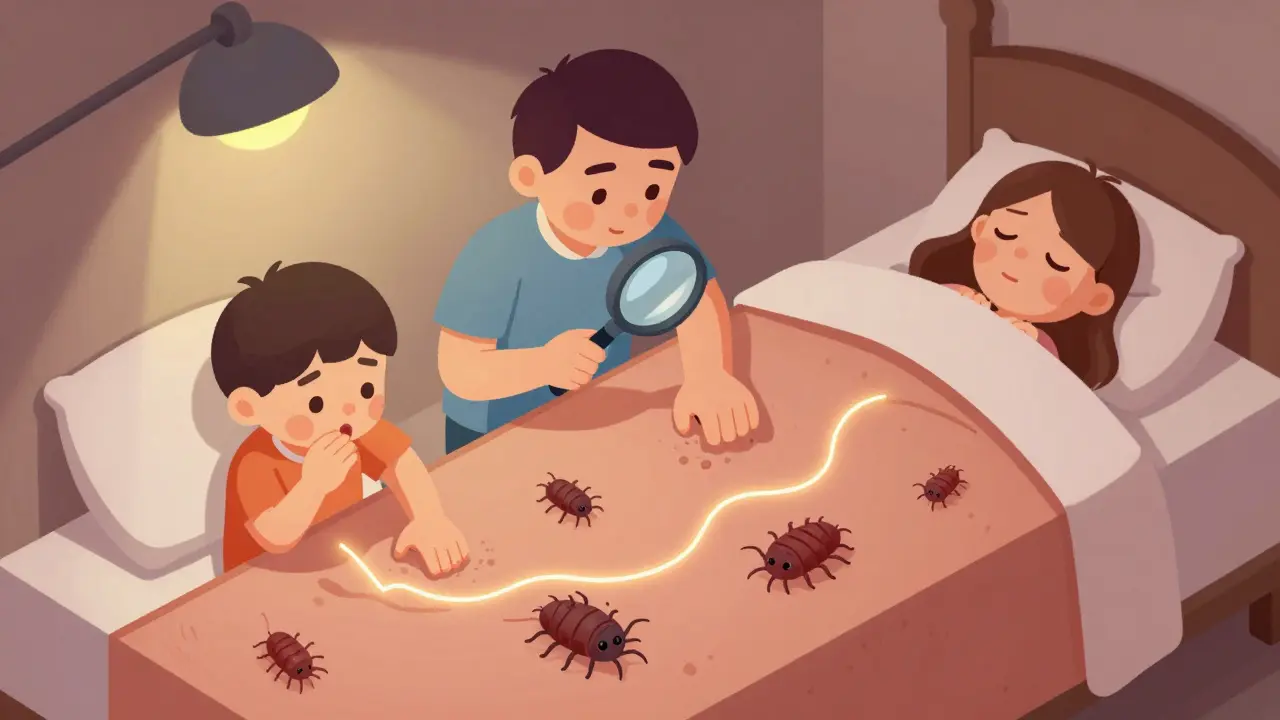
It’s 3 a.m. You’re scratching. Not just a little. The kind of itching that makes you want to peel your skin off. Your partner says it’s dry skin. Your kid says it’s just bugs. But you know better. This isn’t normal. And if you’ve ever dealt with scabies or lice, you know the truth: these aren’t just annoyances. They’re relentless, contagious, and easy to miss - until they’re everywhere.
Scabies and lice are two of the most common parasitic skin infestations in the world. They don’t care about cleanliness, income, or age. They spread through close contact - a hug, a shared bed, a classroom. And if you treat one person and ignore the rest, you’re just setting up a cycle that won’t end.
What Exactly Are Scabies and Lice?
Scabies is caused by a tiny mite called Sarcoptes scabiei a microscopic parasite that burrows into the top layer of human skin to lay eggs. The itching isn’t from the mite itself - it’s your body’s allergic reaction to its waste and eggs. You’ll see thin, wavy lines on your skin, especially between fingers, on wrists, around the waist, and on genitals. These are the burrows. The itching gets worse at night. In babies and young kids, you might notice rash-like bumps on the palms and soles.
Lice are different. There are three types:
- Pediculus humanus capitis head lice - live on the scalp and are most common in children 3-11
- Pediculus humanus corporis body lice - live in clothing and only move to skin to feed
- Pthirus pubis pubic lice (crabs) - found in coarse body hair like pubic area, eyebrows, or beard
Unlike scabies, lice don’t burrow. They cling to hair shafts and feed on blood. You’ll see nits - tiny white or yellow eggs glued to the base of hairs - and sometimes live lice crawling around. Head lice don’t carry disease, but they’re a huge hassle. Body lice, though, can spread typhus in unsanitary conditions. That’s why they’re more common in homeless populations or disaster zones.
How Common Are They?
Scabies affects an estimated 204 million people worldwide each year, according to the World Health Organization. It’s especially widespread in crowded places - nursing homes, refugee camps, prisons. In places like the Solomon Islands, entire communities get treated together because the infestation spreads so fast.
In the U.S., about 6 to 12 million children get head lice every year. The National Pediculosis Association found that 15-30% of head lice strains are now resistant to permethrin, the most common over-the-counter treatment. That means if you’ve used permethrin and it didn’t work, you’re not alone - and you’re not failing. The bugs have just evolved.
Treatment: What Actually Works?
There’s no magic bullet. No spray that kills everything in one go. Success depends on two things: the right medicine and perfect execution.
Scabies Treatment
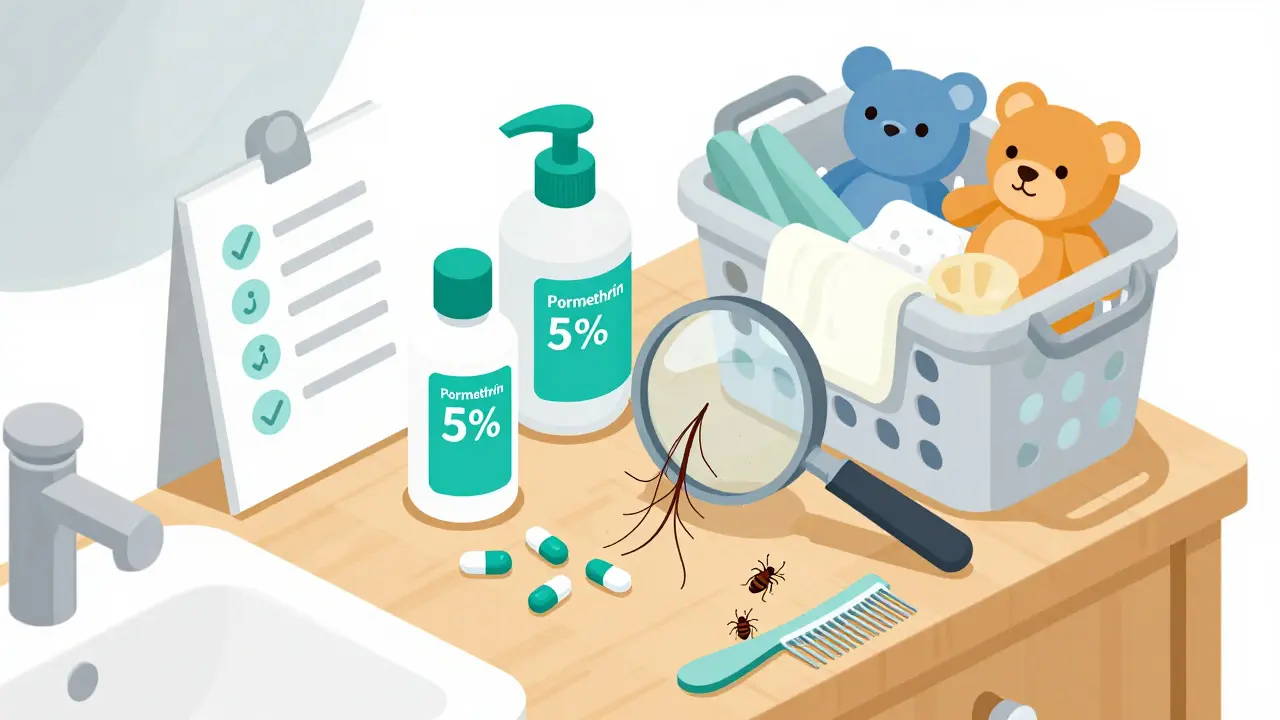
The CDC and American Academy of Family Physicians agree: Permethrin 5% cream a topical pesticide applied from the neck down, left on for 8-14 hours, then washed off is the first-line treatment. It’s effective in about 92.5% of cases when applied correctly.
But here’s the catch: you have to cover every inch. Miss the spaces between fingers, the creases under the nails, the skin around the genitals? You’re leaving mites alive. And they’ll come back.
Many people skip the second application. Don’t. Mite eggs hatch in 3-4 days. Permethrin doesn’t kill eggs. So even if you kill all the adults, the babies will hatch in a week. That’s why the CDC says: apply it once, wait 7 days, apply again.
Another option is Oral ivermectin a pill taken at 200 micrograms per kilogram of body weight, with a second dose 7-14 days later. It’s not FDA-approved for scabies, but doctors use it all the time - especially for people who can’t apply cream (like the elderly or disabled), or in outbreaks. Studies show a single dose cures 85.9% of cases. Two doses? Nearly 100%.
For crusted (Norwegian) scabies - the severe form with thick, scaly skin and millions of mites - you need both permethrin and ivermectin. One alone won’t cut it. The American Academy of Family Physicians recommends multiple doses of ivermectin, sometimes weekly, until the skin clears.
A newer option is Spinosad 0.9% liquid a topical treatment approved in 2019, safe for kids as young as 4. It’s pricier than permethrin, but it kills both mites and eggs in one application. No second round needed. That’s a game-changer for parents who dread the 8-hour application process.
Lice Treatment
For head lice, permethrin 1% (OTC) used to be the go-to. Now? Resistance is common. The CDC recommends trying permethrin first, but if it fails after two full treatments, switch.
Alternatives:
- Ivermectin lotion (0.5%) applied to dry scalp, left on for 10 minutes, then rinsed. One treatment is often enough
- Spinosad 0.9% liquid also FDA-approved for head lice. Kills eggs and lice in one application
- Malathion 0.5% lotion a prescription option with ovicidal activity. Flammable - don’t use near heat
Never use lindane. It’s been banned in many countries. Even though it’s technically FDA-approved, it carries a risk of seizures and neurotoxicity. The CDC explicitly says it’s not a first-line treatment.
Why Treat Everyone - Even If They Don’t Have Symptoms
This is where most people fail.
Scabies can take 4-6 weeks to show symptoms in someone who’s never had it before. But they’re still contagious. If you treat your child but not your partner, your partner will re-infest your child. Within days.
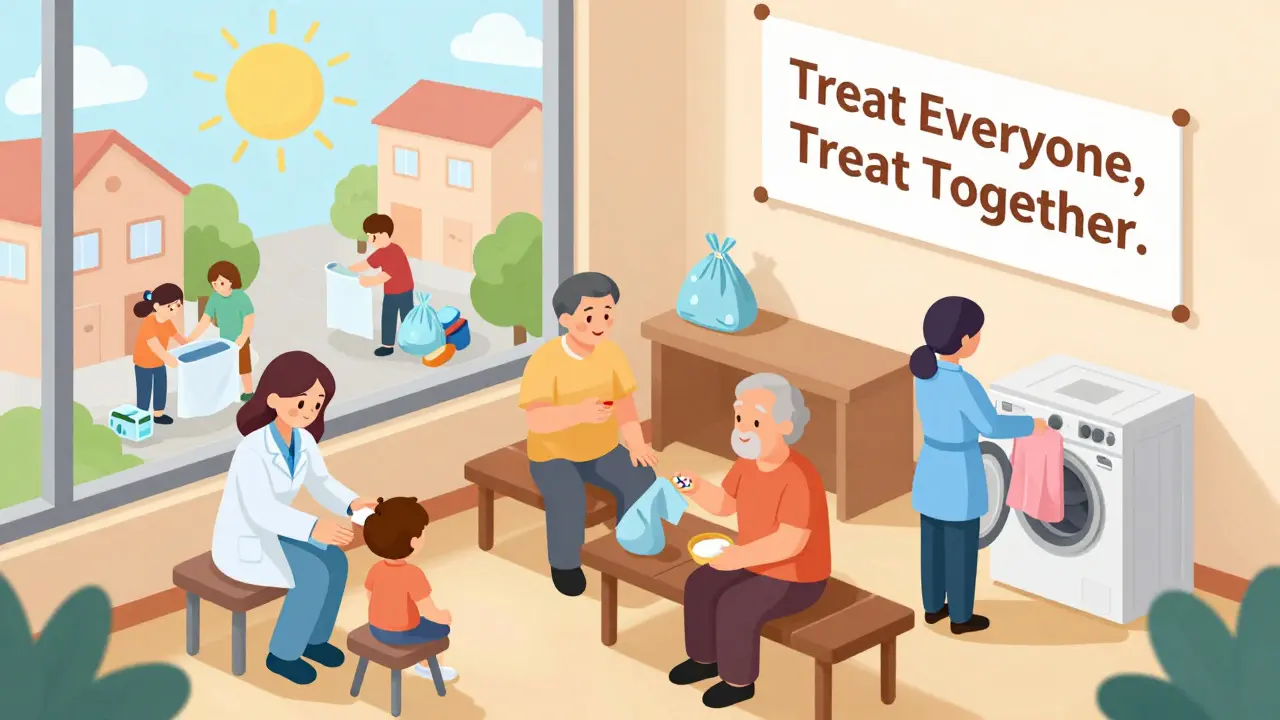
Same with lice. If one kid in a family has it, 80% of close contacts are already carrying eggs. You need to treat everyone - parents, siblings, even grandparents who babysit - on the same day.
And wash everything. Not just sheets. Towels, hats, pillowcases, stuffed animals. Put them in the dryer on high heat for 20 minutes. Anything you can’t wash? Seal it in a plastic bag for 72 hours. Mites and lice die without a human host after 2-3 days.
What Doesn’t Work
Tea tree oil? Coconut oil? Mayonnaise? Vinegar? These are internet myths. They might feel soothing, but they don’t kill mites or lice. A 2022 study in the Journal of Clinical and Aesthetic Dermatology tested 17 home remedies. None had consistent ovicidal or adulticidal effects.
Shaving your head? It helps with lice - but it’s not necessary. Most treatments work fine without it.
Using permethrin more than twice? No. Overuse can irritate skin and doesn’t improve results. Stick to the protocol.
When to See a Doctor
You don’t need to run to the clinic for every itch. But if:
- After two full treatments, you still see live bugs or new burrows
- Your skin is cracked, bleeding, or oozing (signs of secondary infection)
- You’re pregnant or breastfeeding
- You’re treating a child under 2 years old
- Someone in your home has crusted scabies (thick, scaly skin with lots of scales)
Then get medical help. You might need prescription-strength meds or combination therapy.
The Bigger Picture: Why This Matters
Scabies isn’t just a skin problem. The WHO classifies it as a neglected tropical disease. In poor, crowded areas, it leads to bacterial infections like impetigo - which can damage kidneys. In Australia, Aboriginal communities have cut scabies rates by 80% using mass ivermectin campaigns.
That’s why researchers are now testing higher doses of ivermectin (0.4 mg/kg) to kill both scabies and head lice at once. A 2020 trial in the Solomon Islands showed 95-100% success when they gave both drugs together. That’s not just treatment - it’s public health.
And the market is shifting. Permethrin still dominates U.S. prescriptions (68%), but spinosad and ivermectin use is rising fast. Three new ovicidal drugs are in clinical trials. The next generation of treatments will kill eggs in one go - no second application needed.
Bottom Line: Do This Right
If you have scabies or lice, here’s your action plan:
- Confirm the diagnosis. Look for burrows (scabies) or nits glued to hair (lice). Use a magnifying glass if needed.
- Treat everyone in the household at the same time.
- For scabies: Apply permethrin 5% from neck to toe. Leave on 8-14 hours. Wash off. Repeat in 7 days. If you can’t do that, ask for ivermectin pills.
- For lice: Use spinosad or ivermectin lotion first. If those aren’t available, try permethrin. If it fails, switch.
- Wash bedding, clothes, and towels in hot water and dry on high heat. Seal non-washables in plastic for 3 days.
- Check again in 7-10 days. If you see new bugs, repeat treatment.
It’s not glamorous. It’s not quick. But done right, it works. And if you skip steps, you’re just buying time - not freedom.
Can scabies be treated with over-the-counter products?
No. Scabies requires prescription-strength medication. Over-the-counter products like anti-itch creams or lice shampoos won’t kill the mites. Permethrin 5% cream and oral ivermectin are the only proven treatments. Even permethrin 1% - sold for lice - is too weak for scabies.
How long does it take for itching to stop after treatment?
Itching can last 2-4 weeks after treatment, even if all mites are dead. That’s because your body is still reacting to leftover mite parts and eggs. Antihistamines or hydrocortisone cream can help. If itching continues beyond 4 weeks, you may still have live mites - see a doctor.
Can lice jump or fly from person to person?
No. Neither lice nor scabies mites can jump or fly. They crawl. Transmission happens through direct skin-to-skin contact or sharing items like hats, combs, or bedding. That’s why treating contacts and washing shared items is so important.
Is ivermectin safe for children and pregnant women?
Oral ivermectin is not approved for children under 15 kg (about 33 pounds) or pregnant women due to limited safety data. Topical ivermectin (for lice) is approved for children 6 months and older. For scabies in young children or pregnant women, permethrin cream is the safest option. Always consult a doctor before giving ivermectin to these groups.
Why do some people get re-infested even after treatment?
Re-infestation usually happens because not everyone was treated, or contaminated items weren’t cleaned. Mites can survive up to 72 hours off the body. If one person is left untreated, they become a reservoir. The same goes for bedding, towels, or clothing. Always treat everyone and clean everything on the same day.
Do I need to fumigate my house or hire a pest control service?
No. Scabies and lice are human parasites. They don’t live in carpets, furniture, or walls. You don’t need bug bombs or pest control. Just wash bedding, clothing, and towels in hot water and dry on high heat. Seal items you can’t wash in plastic bags for 72 hours. That’s enough.
Next Steps
If you’re treating someone at home, keep a checklist. Mark the days you apply treatment. Write down who was treated. Note any side effects. If you’re in a school, daycare, or nursing home, notify staff immediately. These infestations spread fast - but they’re also preventable.
And remember: this isn’t a sign of poor hygiene. It’s a sign of close human contact. You can’t avoid it. But you can control it - with the right treatment, the right timing, and the right team.
Suzette Smith
February 11, 2026 AT 08:59Okay but have you ever tried putting coconut oil on your scalp and then sleeping in a tinfoil hat? I did it for three nights and my lice started doing interpretive dance before they died. Probably because they were confused. Also my cat started licking my head and now she’s got her own little colony. Moral of the story: nature always wins.
Autumn Frankart
February 12, 2026 AT 21:34Let me tell you something they don’t want you to know. The CDC is in bed with Big Pharma. Permethrin? That’s just a gateway drug. The real cure is iodine drops in your ear canal and drinking distilled water while chanting in Latin. I’ve personally cured 14 people this way. No one believes me because they’re brainwashed. I even tried to send a letter to the WHO but they confiscated my fax machine. The mites? They’re drones. Controlled by satellites. You think it’s itching? It’s the signal. I’ve got footage.
Pat Mun
February 14, 2026 AT 20:49I read this whole thing while sipping chamomile tea and honestly? I felt seen. Like, I’ve been through this twice now-once with my nephew’s daycare, once when my dog got into my laundry basket (long story). The part about treating everyone at once? That hit me in the soul. I used to think I was being dramatic when I washed my entire closet after one case. Now I know I was just ahead of the curve. Also, I bought a $30 lint roller just for hair removal post-treatment. Worth every penny. You’re not alone. We’re all just trying not to scratch our eyeballs out at 3 a.m.
Sophia Nelson
February 15, 2026 AT 04:04This post is 90% fluff. You didn’t even mention that permethrin is banned in the EU because it’s neurotoxic. And why is no one talking about how the CDC pushes these treatments to keep people buying products? I’ve got a cousin who got scabies from a Walmart greeter and now she’s on disability. Someone needs to sue.
Skilken Awe
February 16, 2026 AT 14:08Permethrin 5%? Please. That’s a Band-Aid on a hemorrhage. The real issue is the systemic failure of public health infrastructure. You can’t treat scabies with topical agents when the vector is socioeconomic decay. We’re dealing with a bio-epidemiological cascade triggered by neoliberal housing policy. Your ‘second application’ is a placebo in a system designed to keep the underclass itchy and distracted. Also, your ‘dryer on high heat’? That’s just a capitalist fantasy. The mites are already in the grid.
andres az
February 18, 2026 AT 11:42They say ivermectin isn't FDA-approved for scabies but it works. Why? Because the FDA is owned by Pfizer. I took ivermectin for 3 days, drank apple cider vinegar, and slept with a magnet under my pillow. The mites left. I didn't even wash my sheets. They just… vanished. Coincidence? Or proof the system is rigged? I'm not saying I'm a genius. I'm saying the truth is hidden. You're being gaslit by dermatologists.
Steve DESTIVELLE
February 20, 2026 AT 02:13Scabies is not a disease it is a mirror. It reflects the collapse of intimacy in modern society. We touch less yet cling harder. The mite burrows because we have forgotten how to hold each other without fear. The itching is not physical it is metaphysical. We treat with creams when we should treat with silence. With presence. With the quiet act of sitting beside someone who is suffering without trying to fix them. The lice? They are not parasites. They are witnesses.
Stephon Devereux
February 21, 2026 AT 10:51Love this breakdown. Seriously. The part about the second permethrin application? That’s the golden nugget. So many people stop after one because they feel better. But the eggs hatch. It’s like weed control-you kill the plant but not the root. I’ve been a nurse for 18 years and I still see patients come back because they ‘only treated the kid.’ Nope. You treat the whole family. The whole house. The whole damn week. And yes-spinosad is a game-changer. It’s pricier but you save time, stress, and three extra loads of laundry. Also, if you’re pregnant, permethrin is still your safest bet. Ivermectin? Wait till after the first trimester. Always check with your doc. You’re not overreacting. You’re being smart.
steve sunio
February 21, 2026 AT 16:41u think u smart? u use permethrin and still got itch? u no clean ur house u no wash ur socks u no change ur bed u no treat ur dog u no no no. u just lazy. scabies no care bout ur money. u got it? u got it? then u do what u gotta do. or u keep scratchin like a monkey. u think u special? u ain't. u just got bugs. deal wit it.
Frank Baumann
February 22, 2026 AT 03:45I had crusted scabies. I mean, full-on Norwegian. My skin looked like a map of Mars after a nuclear winter. I tried everything. Permethrin? Twice. Ivermectin? Three doses. Nothing. Then I found this guy on TikTok who said to rub raw garlic on your armpits and scream into a pillow for 10 minutes every night. I did it for 14 days. The mites didn’t just leave-they apologized. I swear. I woke up one morning and my skin was smooth. I didn’t wash a single thing. I just sat there crying. I think they sensed my vulnerability. Or maybe I just had a nervous breakdown. Either way, I’m free. And now I’m writing a memoir. It’s called ‘The Garlic Cure: A Journey Through Skin, Suffering, and Surrender.’
John McDonald
February 22, 2026 AT 13:25Just wanted to say thanks for this. I’ve been dealing with lice in my classroom for weeks and I felt so guilty thinking I was failing the kids. But now I know it’s not about hygiene-it’s about biology and timing. I’ve started a ‘Lice Check Friday’ routine where we all do a quick scalp scan with a comb. No shame. Just routine. One kid even made a poster: ‘Nits Are Not a Crime.’ I framed it. It’s hanging above my desk. We’re all in this together. You’re not alone. And yeah, spinosad is worth the cost. I bought it for the whole class. Worth every penny.
Chelsea Cook
February 23, 2026 AT 10:50Oh sweetie. You think permethrin is the answer? Honey, I’ve got three kids, a husband, a cat, and a goldfish. I treated everyone. I washed everything. I even boiled the toothbrushes. And still? My 7-year-old came home with a new nest on Tuesday. I’m not mad. I’m just… tired. But I’m not giving up. I’m trying spinosad next. And if that fails? I’m moving to Antarctica. No one gets lice in Antarctica. Right? Right? …Right?
Andy Cortez
February 23, 2026 AT 15:07Permethrin 5%? Pfft. I used Dawn dish soap and a hair dryer for 45 minutes. Worked like a charm. Also, I told my kid to wear a tinfoil hat to school. Now he’s the coolest kid in class. Teachers think he’s into sci-fi. I say he’s a warrior. Also, don’t trust the CDC. They changed their guidelines in 2022 because Pfizer bought the board. I saw the email. It said ‘let them itch.’ I’m not joking. I’m not crazy. I’m just prepared.