
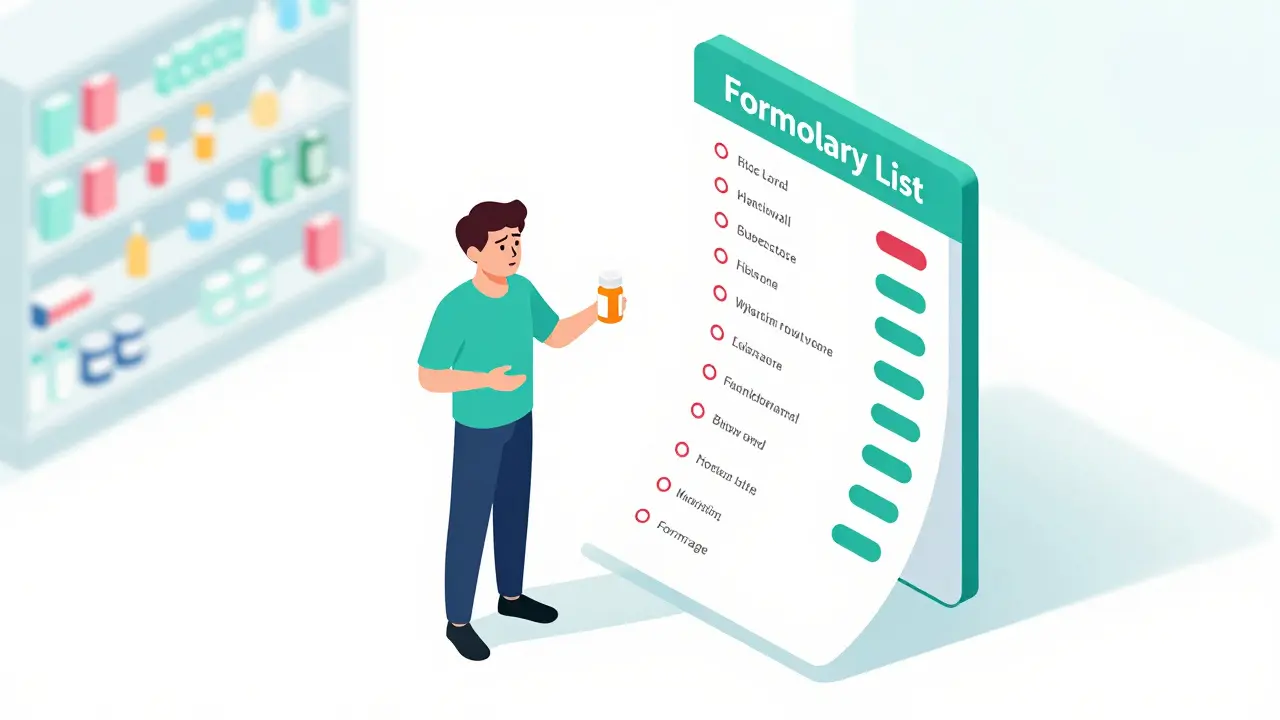
Finding out your medication is no longer covered or that your copay just tripled is a stressful experience. It usually happens because of formulary updates is a systematic change in prescription drug coverage policies where insurance providers and pharmacy benefit managers decide which drugs are covered and at what cost. While these shifts are often driven by a push for cost containment, they can leave patients feeling stranded. However, with recent laws like the Inflation Reduction Act a 2022 US law that fundamentally restructured Medicare Part D benefits and drug pricing, there are new protections in place to help you manage these transitions without breaking the bank.
The Real Reason Your Meds Are Changing
Why does your insurance company suddenly decide your long-term medication isn't "preferred" anymore? It mostly comes down to the battle between brand-name drugs and generics. Insurers want to move patients toward generic drugs medications created to be the same as an already marketed brand-name drug in dosage, safety, strength, and quality because they are significantly cheaper to provide.
In recent years, we've seen a massive shift toward biosimilars biological products that are highly similar to an FDA-approved reference biologic drug. Unlike simple generics, biosimilars are complex proteins. The FDA the US Food and Drug Administration responsible for protecting public health by ensuring the safety and efficacy of drugs has updated its guidance to make it easier for pharmacy benefit managers to swap these in. For example, some patients have switched from Humira to Amjevita and saved hundreds of dollars a month without noticing any change in how the drug worked.
Understanding the Tier System
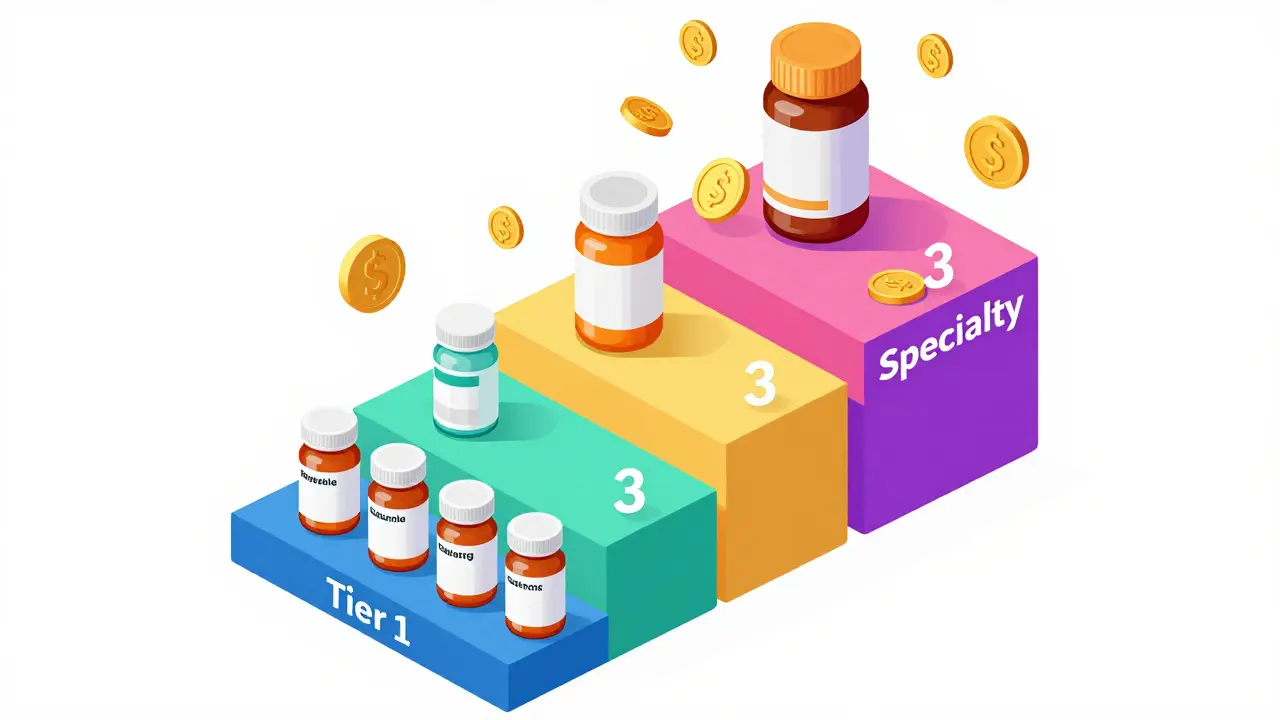
When you look at your insurance plan, you'll notice your drugs are split into "tiers." This is how insurers determine your out-of-pocket cost. If your drug moves from Tier 1 to Tier 3, your wallet feels it immediately.
| Tier | Drug Type | Average Cost Estimate |
|---|---|---|
| Tier 1 | Preferred Generics | $1 - $10 copay |
| Tier 2 | Non-Preferred Generics / Preferred Brands | ~$47 copay |
| Tier 3 | Non-Preferred Brands | ~$113 copay |
| Specialty | High-Cost/Complex Drugs | $113 or 25% coinsurance |
Wait, why does this matter? Because a "tier reassignment" is one of the most common ways insurance companies nudge you toward a generic. If your brand-name drug moves to Tier 3, but the generic version is in Tier 1, the price difference is essentially a financial incentive for you to switch.
How to Navigate the "Non-Medical Switch"
There is a frustrating trend called "non-medical switching." This happens when an insurer forces you to change medications not because your current one isn't working, but simply to save the insurance company money. Experts have noted a significant increase in these cases, which can be disruptive for people managing chronic conditions like diabetes or rheumatoid arthritis.
If you are forced into a switch, you aren't powerless. You have several tools to fight back:
- Prior Authorization: Your doctor must prove to the insurer that the specific drug is medically necessary for you.
- Step Therapy: This is a "fail-first" policy. The insurer requires you to try a cheaper generic first; if that fails, they will cover the brand-name drug.
- Formulary Exceptions: If a drug is completely excluded from the list, your doctor can request an exception. While these are harder to get than tiering exceptions, they are possible if the alternative drugs are contraindicated for your health.

The New Safety Nets for 2025 and 2026
If you're on Medicare Part D the federal program that adds prescription drug coverage to Original Medicare, the landscape has changed for the better. The "donut hole" (coverage gap) is gone. More importantly, there is now a $2,000 annual out-of-pocket cap on prescription drug expenses. This means once you hit that limit, you stop paying for covered drugs for the rest of the year.
Looking ahead to 2026, the Medicare Drug Price Negotiation Program a government initiative to negotiate prices for some of the most expensive brand-name drugs will kick in. This will mandate that plans cover specific negotiated drugs, such as Stelara or Xolair, at lower prices. This is a huge win for patients who rely on these high-cost specialty medications.
Proactive Steps to Avoid Pharmacy Surprises
Don't wait until you're at the pharmacy counter to find out your medication is no longer covered. That's a recipe for a bad day. Instead, treat your insurance review like an annual checkup.
Between October and December, check your plan's updated formulary. Most insurers are required to give you a 60-day notice if a drug you're currently taking is being removed or moved to a higher tier. However, new generics can sometimes be added with only 30 days' notice. If you see a change coming, call your doctor immediately. Ask them if the new generic or biosimilar is a safe alternative for your specific condition.
If your doctor insists on the brand name, have them submit an expedited exception request. While standard requests can take 72 hours, expedited ones are often processed within 24 hours for urgent needs. According to member surveys, a high percentage of patients successfully get these exceptions, though it often takes 10 to 14 days of back-and-forth communication to finalize everything.
What is the difference between a generic and a biosimilar?
Generics are chemically identical copies of small-molecule drugs. Biosimilars are "highly similar" versions of complex biological drugs made from living cells. Because biologics are so complex, biosimilars aren't identical copies but are designed to provide the same clinical result and safety profile as the original.
Can my insurance force me to switch to a generic?
Essentially, yes, but they do it through pricing. By placing the brand-name drug in a higher cost tier or requiring a "step therapy" process, they make it financially difficult to stay on the brand name unless your doctor can prove a medical necessity through a formulary exception.
What should I do if my medication is suddenly excluded from the formulary?
First, ask your pharmacist if there is a therapeutic equivalent that is still covered. If not, work with your doctor to file a formulary exception request. Be prepared to provide medical records showing why other covered drugs in the same class didn't work for you or caused adverse reactions.
Does the $2,000 cap apply to all medications?
The $2,000 out-of-pocket cap applies to covered prescription drugs under Medicare Part D plans. It does not cover medications that are not on your plan's formulary or drugs that are not approved by the FDA.
How often do formularies change?
Major updates typically happen annually, effective January 1st. However, insurers can make smaller changes throughout the year, such as adding new generics or biosimilars as they receive FDA approval.