

When your child comes home from school with a red, crusty rash around the nose, or you wake up with a swollen, hot patch of skin on your leg, it’s easy to assume it’s just a minor irritation. But these aren’t just rashes-they’re bacterial infections that need the right treatment, fast. Impetigo and cellulitis are two of the most common skin infections doctors see, but they’re not the same. Mixing them up can delay recovery, spread the infection, or even lead to serious complications.
What’s the difference between impetigo and cellulitis?
Impetigo is a surface-level infection. It starts in the top layer of skin, often where there’s a tiny cut, scrape, or eczema flare-up. You’ll see small red sores that quickly burst and form a sticky, honey-colored crust. It’s most common in kids between ages 2 and 5, and it spreads like wildfire in schools and daycare centers. That’s why it’s often called “school sores.”
Cellulitis is deeper. It attacks the dermis and the fatty tissue beneath the skin. The area turns red, swells, feels warm to the touch, and hurts when you press on it. Unlike impetigo, cellulitis doesn’t form crusts or blisters-it just looks like a spreading bruise that gets worse. It can happen to anyone, but it’s more common in adults with diabetes, poor circulation, or a weak immune system.
There’s also erysipelas-a cousin of cellulitis. It looks like a bright red, sharply defined patch, usually on the face or legs. It’s almost always caused by strep bacteria and feels hot and tender. It’s not as deep as cellulitis, but it’s just as urgent to treat.
What causes these infections?
Both infections are usually caused by two types of bacteria: Staphylococcus aureus and Streptococcus pyogenes. But they play different roles.
Impetigo is mostly linked to Staph aureus, especially the nonbullous type (which makes up 70% of cases). Bullous impetigo, with its large fluid-filled blisters, is also caused by Staph, but through a different toxin. Streptococcus shows up more often in nonbullous cases, especially when the infection follows a cold or sore throat.
Cellulitis? That’s mostly Streptococcus. About 80% of cases trace back to strep bacteria. Staph can cause it too, especially in people with cuts from animal bites or IV drug use.
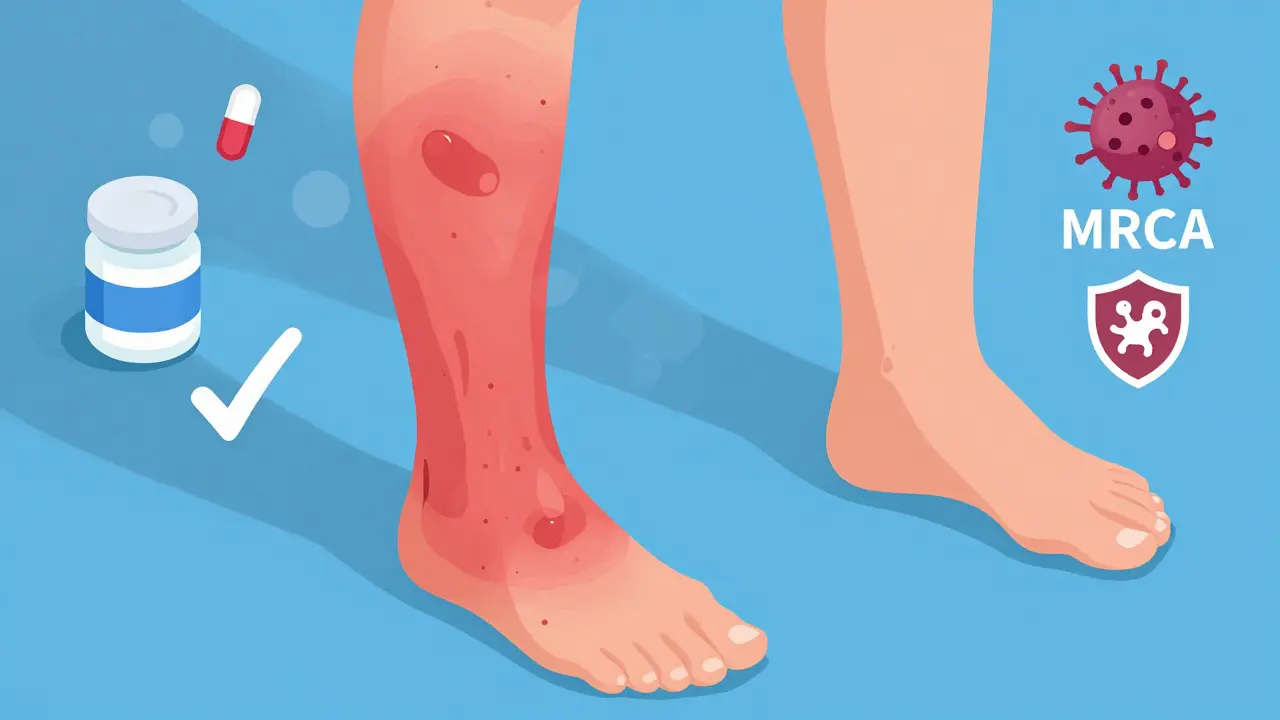
And then there’s MRSA-Methicillin-resistant Staphylococcus aureus. This is the scary version of staph that doesn’t respond to common antibiotics like flucloxacillin or dicloxacillin. It’s on the rise. In some areas, up to 40% of staph skin infections are MRSA. That’s why guessing the wrong antibiotic can mean the infection keeps spreading.
How are they treated?
Treatment depends on how bad it is, where you live, and what bacteria are common in your area.
For impetigo:
- If it’s just a few spots, a topical antibiotic like mupirocin (applied 3 times a day for 5-10 days) works in 90% of cases. It’s cheap, safe, and doesn’t mess with your gut bacteria.
- If it’s widespread, or if mupirocin doesn’t help, you’ll need oral antibiotics. In the UK and Belgium, flucloxacillin is the go-to. In France, doctors often start with amoxicillin-clavulanate or pristinamycin.
- For MRSA cases, you might need clindamycin or doxycycline. These are reserved for when the infection doesn’t respond to first-line drugs.
For cellulitis:
- Most cases are treated with oral antibiotics for 5-14 days. Flucloxacillin is still the standard in the UK, Australia, and Canada.
- In the U.S. and parts of Europe, cephalexin is often used instead-it’s just as effective and easier to tolerate.
- In France, amoxicillin is now the first choice for cellulitis, thanks to rising resistance to other drugs.
- If you’re allergic to penicillin, alternatives include clindamycin, doxycycline, or azithromycin.
- If you’re sick enough to have a fever, chills, or the infection is spreading fast, you’ll likely need IV antibiotics in the hospital. Vancomycin or linezolid are used for confirmed MRSA.
Why do treatment guidelines vary so much?
There’s no single global rule. Why? Because bacteria change depending on where you live.
In the UK, flucloxacillin has been the standard for decades. But over time, resistance has crept up. Still, it works well enough for most cases. In France, doctors saw more treatment failures with flucloxacillin and switched to amoxicillin because strep bacteria there are more sensitive to it.
MRSA rates also differ. In Australia, MRSA is common in hospitals but less so in the community. In the U.S., community-acquired MRSA is widespread, so doctors often skip flucloxacillin entirely and start with doxycycline or clindamycin.
That’s why your doctor doesn’t just pick a drug at random. They’re thinking: What’s the most likely bug here? And what’s resistant in my area?
What happens if you don’t treat them?
Impetigo might seem harmless-it’s just a crusty rash, right? But if left alone, it can lead to kidney problems (post-streptococcal glomerulonephritis) or spread to others. Kids can miss weeks of school. Parents lose workdays. The infection can turn into deeper cellulitis.
Cellulitis? That’s a bigger risk. It doesn’t just stay on the skin. It can spread to the bloodstream (sepsis), to the bones (osteomyelitis), or into the tissue around the eyes or brain. In people with diabetes, it can lead to foot ulcers that never heal-or worse, amputation.
Studies show that if you wait more than 48-72 hours to start antibiotics, the chance of needing hospital care doubles. Early treatment isn’t just about feeling better-it’s about avoiding life-threatening complications.
What can you do at home?
Antibiotics are the main treatment, but hygiene is just as important.
- Wash the infected area daily with soap and water. Gently pat it dry.
- Cover it with a clean bandage to stop it from spreading to others or other parts of your body.
- Don’t share towels, clothing, or bedding. Wash them in hot water.
- Keep fingernails short. Scratching spreads the infection.
- For impetigo, keep kids home until they’ve been on antibiotics for at least 24 hours. Schools usually require this.
Don’t try to pop blisters or peel off crusts. That just makes it worse. Let the antibiotic do its job.
When should you see a doctor?
See a doctor right away if:
- The red area is spreading fast (more than 1 inch per day)
- You have a fever, chills, or feel dizzy
- The pain is getting worse, not better
- You have diabetes, a weak immune system, or swollen lymph nodes
- It’s on your face, especially near the eyes
- The infection doesn’t improve after 3 days of antibiotics
For kids, if the rash looks like impetigo but they’re also lethargic or not eating, get help fast. Kids can crash quickly with these infections.

How to prevent them
Prevention is simpler than you think:
- Wash hands often-especially after touching infected skin.
- Clean and cover every cut, scrape, or insect bite-even tiny ones.
- Avoid close contact with someone who has impetigo until they’ve been on antibiotics for 24 hours.
- If you have eczema, keep it well-managed. Broken skin is a gateway for bacteria.
- Don’t share razors, towels, or sports equipment.
For people with recurrent cellulitis, doctors may prescribe low-dose antibiotics long-term as a preventive measure. But that’s only for those with clear risk factors-like leg swelling from poor circulation or repeated infections.
What about natural remedies or home treatments?
Tea tree oil, honey, or garlic might sound appealing, but there’s no solid evidence they cure impetigo or cellulitis. Some studies show medical-grade honey can help heal wounds, but it’s not a replacement for antibiotics.
These infections are bacterial. They need targeted drugs. Delaying proper treatment for a “natural” fix can lead to hospitalization. Save the honey for your tea-not your open sores.
What’s new in treatment?
Doctors are starting to use faster tests. Instead of waiting days for a culture, some clinics now use rapid PCR tests that can detect MRSA in under an hour. That means the right antibiotic can be started sooner.
Antibiotic stewardship is also changing things. Instead of giving everyone broad-spectrum drugs, doctors are learning to use narrow-spectrum ones-like mupirocin for impetigo or cephalexin for cellulitis-only when needed. This helps slow down resistance.
In the next 5 years, we’ll likely see more use of targeted therapies based on local resistance patterns. One study predicts this could cut unnecessary antibiotic use by 40%.
Can impetigo turn into cellulitis?
Yes, if impetigo isn’t treated, the bacteria can spread deeper into the skin layers and cause cellulitis. This is more likely in people with weakened skin barriers-like those with eczema, diabetes, or poor circulation. That’s why it’s important to treat impetigo early, even if it seems mild.
Is impetigo contagious after starting antibiotics?
No, not after 24 hours of proper antibiotic treatment. The bacteria are killed quickly enough that the risk of spreading drops sharply. That’s why schools and daycares allow kids to return after one full day on antibiotics. Before that, it’s highly contagious through direct contact or shared towels and toys.
Can you get cellulitis without a cut or wound?
Yes. While cuts and insect bites are common entry points, cellulitis can also start from tiny cracks in the skin caused by dryness, athlete’s foot, or even eczema. Sometimes, bacteria enter through the lymphatic system or from an internal infection. That’s why people with chronic swelling in their legs (lymphedema) are at higher risk-even without visible breaks in the skin.
How long does it take for antibiotics to work?
For impetigo, you should see the crusts drying up and the redness fading within 2-3 days. For cellulitis, swelling and warmth usually start to improve in 2-4 days. But you still need to finish the full course-even if you feel better. Stopping early can let resistant bacteria survive and come back stronger.
Are there side effects from these antibiotics?
Yes. Flucloxacillin and cephalexin can cause stomach upset, diarrhea, or rash. Amoxicillin-clavulanate is more likely to cause diarrhea or yeast infections. Clindamycin carries a small risk of a serious gut infection called C. diff. Always tell your doctor if you get severe diarrhea, rash, or swelling after starting antibiotics.
Should I get a culture test for my skin infection?
Not always. For mild, classic cases of impetigo or cellulitis, doctors can treat based on symptoms alone. But if the infection doesn’t improve, keeps coming back, or looks unusual (like with pus, black spots, or rapid spread), a culture is essential. It tells you exactly which bacteria you’re dealing with-and which antibiotics will work.
Can you prevent MRSA skin infections?
You can reduce your risk by practicing good hygiene: washing hands, covering wounds, not sharing personal items, and keeping skin moisturized to avoid cracks. In high-risk settings like gyms or prisons, using disinfectant wipes on shared equipment helps. If you’ve had MRSA before, your doctor may recommend nasal swabs and special body washes to clear the bacteria from your skin.
Final thoughts
Impetigo and cellulitis might look simple, but they’re not. One is a surface rash; the other is a deep, dangerous infection. The same bacteria can cause both-but the treatment isn’t interchangeable. Getting the right antibiotic fast makes all the difference. Don’t wait. Don’t guess. See a doctor if you’re unsure. Your skin isn’t just a barrier-it’s your first line of defense. Treat it like it matters.
Anna Weitz
December 28, 2025 AT 07:07People act like antibiotics are magic beans but half the time they just make your gut scream for mercy
Been there done that got the C. diff t-shirt
And yeah mupirocin works if you don't overuse it like some kind of hand sanitizer
But we keep pushing pills like they're candy and wonder why superbugs win
dean du plessis
December 30, 2025 AT 02:40This is one of the clearest breakdowns of skin infections I've seen in years
Most docs just say 'take this pill' and move on
Knowing the difference between impetigo and cellulitis could save someone's leg or worse
Thanks for laying it out like this
Will Neitzer
December 30, 2025 AT 08:58It is imperative to underscore the critical distinction between superficial bacterial dermatoses and deep soft tissue infections, as misclassification may precipitate iatrogenic complications of systemic magnitude
Furthermore, the regional disparities in antimicrobial susceptibility patterns necessitate a geographically informed therapeutic algorithm, rather than a one-size-fits-all pharmacological approach
Antibiotic stewardship remains not merely prudent, but ethically obligatory in the contemporary clinical milieu
Alex Lopez
December 31, 2025 AT 02:56So let me get this straight - we're giving people antibiotics like they're energy drinks, then acting shocked when the bacteria throw a rave in their bloodstream?
And yes, I'm looking at you, 'just pop some amoxicillin' culture
Meanwhile, the MRSA is sipping champagne in the ICU
😂
Monika Naumann
December 31, 2025 AT 21:36In my country, we do not treat infections with Western drugs like this
Our ancestors used neem and turmeric for centuries - why do we now bow to pharmaceutical companies?
This is cultural surrender disguised as medicine
Antibiotics are not the answer - discipline is
Elizabeth Ganak
January 2, 2026 AT 10:13My cousin had cellulitis after a tiny cut from her garden shears
She waited three days thinking it'd go away
Ended up in the hospital with IV antibiotics
Don't be like her - get it checked
Nicola George
January 3, 2026 AT 16:46So you're telling me the same bacteria that gave my kid impetigo could turn his foot into a science experiment if we ignore it?
And we're still giving flucloxacillin like it's 2005?
Wow
Just wow
Raushan Richardson
January 5, 2026 AT 06:47Y'all need to stop treating skin infections like they're just a bad pimple
These aren't Instagram filter problems - they're real, fast-moving threats
Wash your hands, cover your cuts, and if it looks angry? Go to the doctor
Don't wait for it to start glowing in the dark
Robyn Hays
January 5, 2026 AT 10:51It’s wild how something that looks like a silly crusty rash can quietly morph into a full-blown siege on your body
Impetigo is the whisper, cellulitis is the scream
And we’re out here treating both like they’re the same tune
Meanwhile, the bacteria are remixing themselves into nightmares while we’re scrolling through memes about ‘natural cures’
It’s not that we’re ignorant - we’re just distracted
But distraction kills when it’s your skin on fire
Kylie Robson
January 7, 2026 AT 01:29Based on the current epidemiological data and resistance profiles outlined in the 2023 IDSA guidelines, it is imperative to recognize that the empirical selection of beta-lactamase-stable penicillins for impetigo is increasingly suboptimal in high-MRSA prevalence zones
Furthermore, the pharmacokinetic-pharmacodynamic parameters of mupirocin demonstrate superior biofilm penetration compared to oral agents in localized nonbullous presentations
One must also consider the CYP3A4 inhibition potential of clindamycin when co-administered with statins in elderly populations with comorbidities
Failure to account for these variables constitutes a violation of evidence-based prescribing principles
Caitlin Foster
January 7, 2026 AT 06:48Did you know?! That impetigo can turn into cellulitis?! And cellulitis can lead to sepsis?! And sepsis can kill you?! And you might not even notice until it's too late?! And you think you can just 'wait and see'?! NOOOOOO!!!
Wash your hands!!! Cover your cuts!!! Don't be that person!!!
Also, MRSA is REAL!!! And it's not a myth!!! And your cousin's tea tree oil won't save you!!!
Todd Scott
January 8, 2026 AT 06:27In the United States, the prevalence of community-acquired MRSA has shifted the paradigm of empirical therapy for skin and soft tissue infections, particularly in urban and densely populated regions where transmission dynamics favor methicillin-resistant strains
Conversely, in rural settings with lower antibiotic exposure, traditional first-line agents such as flucloxacillin retain clinical utility
Additionally, cultural factors - such as hygiene practices, access to primary care, and the stigma surrounding medical visits - significantly influence treatment delays, which in turn correlate with progression to deeper tissue involvement
It is not merely a matter of pharmacology, but of sociomedical context - and that is often overlooked in clinical education
Andrew Gurung
January 9, 2026 AT 11:33Of course you’re using amoxicillin - you’re clearly the kind of person who thinks ‘natural’ means ‘I googled it at 3am’
Meanwhile, real doctors are out here using PCR tests and resistance maps like actual scientists
And you’re out here rubbing honey on your open wound like it’s a TikTok trend
Get your life together
And stop pretending your grandma’s remedy is better than 40 years of microbiology
😭
Paula Alencar
January 9, 2026 AT 14:40It is profoundly disheartening to witness the erosion of clinical rigor in the face of misinformation and self-diagnosis
Antibiotic misuse is not merely a personal choice - it is a public health catastrophe in slow motion
Every unnecessary prescription contributes to the silent rise of untreatable infections
And while some may dismiss this as alarmist, the data is unequivocal: delayed or inappropriate therapy correlates directly with increased morbidity, prolonged hospitalization, and higher mortality
We owe it to our patients - and to future generations - to prescribe with precision, not convenience