
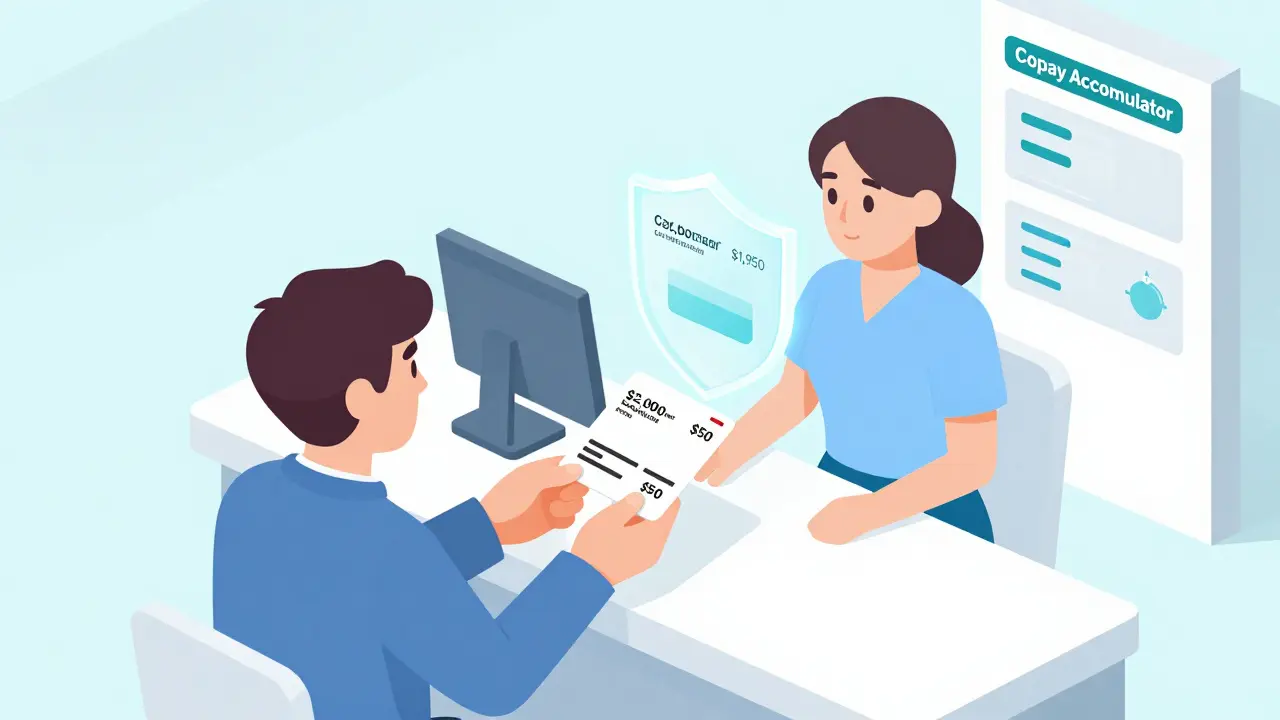
Brand-name medications can cost hundreds or even thousands of dollars a month. If you’re insured but still struggling to pay your copay, a manufacturer copay assistance card might be your best option. These cards aren’t free money-they’re coupons from drug companies that cover part of your out-of-pocket cost. But they come with rules, limits, and hidden traps that can leave you paying way more than you expected if you don’t know what you’re doing.
What Exactly Is a Manufacturer Copay Assistance Card?
A manufacturer copay assistance card is a discount coupon offered directly by the pharmaceutical company that makes your brand-name drug. It’s not insurance. It’s not a government program. It’s a tool the drug maker uses to help you afford their medication-while making sure you keep buying their brand instead of a cheaper generic. These cards work for people with private health insurance. If you’re on Medicare Part D, Medicaid, or have no insurance, you can’t use them. That’s federal law. The card reduces your copay or coinsurance at the pharmacy. For example, if your drug costs $2,000 a month and your insurance says you pay $500, the card might cover $450 of that-leaving you with just $50 to pay. But here’s the catch: the card doesn’t always count toward your deductible or out-of-pocket maximum. That’s where things get tricky.How Do These Cards Actually Work at the Pharmacy?
Using a copay card is simple-but only if you know what to say. 1. When you hand your prescription to the pharmacist, tell them you have a manufacturer copay card. 2. They’ll scan or enter the card details (usually found on a physical card or digital version in the manufacturer’s app or website). 3. The pharmacy system checks your insurance and the card’s terms. 4. The manufacturer pays their portion directly to the pharmacy. 5. You pay only what’s left. You don’t need to fill out forms every time. Once you enroll, the card stays active as long as you’re eligible and the manufacturer hasn’t ended the program. Most cards have an annual cap-often $8,000. If your drug costs $2,000 a month, that’s four months of free or low-cost meds. After that, you’re on your own-unless your plan is set up differently.The Hidden Trap: Copay Accumulator and Maximzer Programs
This is the part most patients don’t know until it’s too late. Many insurance plans now use something called a copay accumulator program. Here’s how it works: - Without an accumulator: The manufacturer’s payment counts toward your deductible and out-of-pocket maximum. So if you used $8,000 in copay assistance, that $8,000 helps you reach your $7,000 out-of-pocket limit faster. After that, your insurance pays 100%. - With an accumulator: The manufacturer’s payment does not count toward your deductible or out-of-pocket maximum. Only your own money does. So even if you used $8,000 in assistance, your deductible might still be $0. You still owe the full amount until you pay it yourself. That means after your card runs out, you could suddenly be hit with $2,000 monthly bills-even if you thought you were close to hitting your limit. A copay maximizer is similar but less common. Instead of ignoring the manufacturer payment, it spreads it out evenly over the year. So if you have $8,000 in assistance and a $2,000 monthly drug, the plan treats it as $666/month toward your out-of-pocket. That can help-but it doesn’t eliminate the risk. According to KFF, about 70% of commercial insurance plans in the U.S. had copay accumulator programs in 2023. That number is rising. If you’re on a high-cost medication, this could cost you thousands.How to Find Out If Your Plan Uses an Accumulator
Don’t assume. Don’t wait until your card expires to find out. Call your insurance company’s member services. Ask: “Does my plan use a copay accumulator or maximizer program for brand-name medications?” If they say yes, ask: “Does manufacturer copay assistance count toward my deductible or out-of-pocket maximum?” Write down their answer. If they’re vague or say “it depends,” ask for it in writing. You have the right to know. You can also check your Summary of Benefits and Coverage (SBC) document. Look for terms like “copay accumulator,” “copay maximizer,” or “manufacturer assistance.” If you see them, you’re in the risky zone.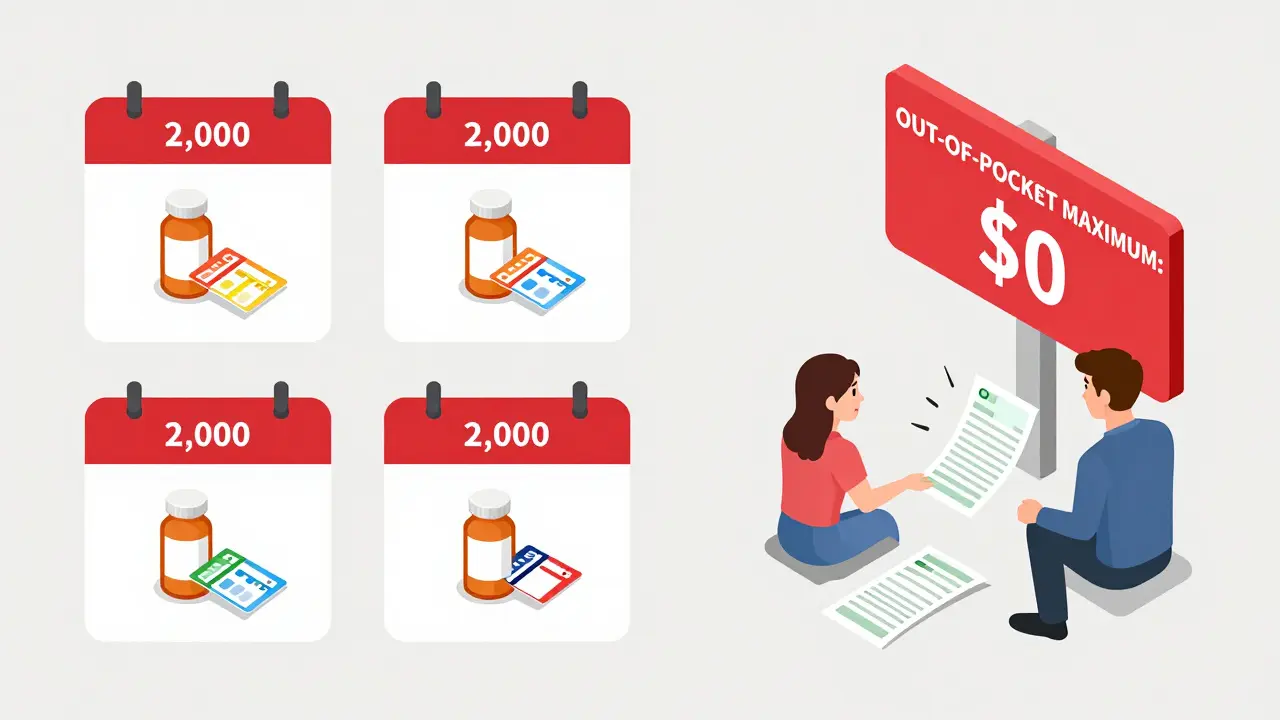
How to Get a Copay Card
Getting one is easy-but you need to do it right. 1. Go to the drug manufacturer’s website. Search for your medication’s name + “copay assistance” or “patient support.” 2. Check eligibility. You’ll need to confirm you have private insurance, aren’t on Medicare/Medicaid, and meet income requirements (some have caps). 3. Enroll. You’ll usually fill out a quick form with your insurance info and signature. 4. Download or print your card. Most offer a digital version you can save to your phone. Some manufacturers also have phone lines or patient navigators. If your drug is for a rare condition, they may have extra help programs. Don’t use third-party sites like GoodRx to get the card. Those are for discount programs, not manufacturer coupons. They’re different tools.Copay Cards vs. Pharmacy Discount Cards
You might see both options. Know the difference. | Feature | Manufacturer Copay Card | Pharmacy Discount Card (e.g., GoodRx) | |--------|--------------------------|----------------------------------------| | Who offers it | Drug manufacturer | Third-party company | | Can be used with Medicare? | No | Yes | | Can be used without insurance? | No | Yes | | Works for generics? | Rarely | Yes | | Annual limit? | Usually $5,000-$8,000 | No limit | | Counts toward deductible? | Only if no accumulator | No (it’s cash pay) | | Best for | Expensive brand-name drugs | Cheaper generics or uninsured patients | If you’re on Medicare or don’t have insurance, skip the copay card. Use a discount card instead. It’s your only real option.What to Do When Your Card Runs Out
If your card expires and you still need the drug, don’t panic-but act fast. - Contact the manufacturer’s patient assistance program. Many offer free or low-cost drugs to people who qualify based on income-even if you have insurance. - Ask your doctor about alternative medications. Sometimes there’s a similar drug with better savings options. - Check nonprofit organizations. Groups like the Patient Access Network (PAN) Foundation or HealthWell Foundation offer grants for copays on certain medications. Start this process at least one month before your card runs out. Approval can take weeks. Missing a dose because you didn’t plan ahead can be dangerous.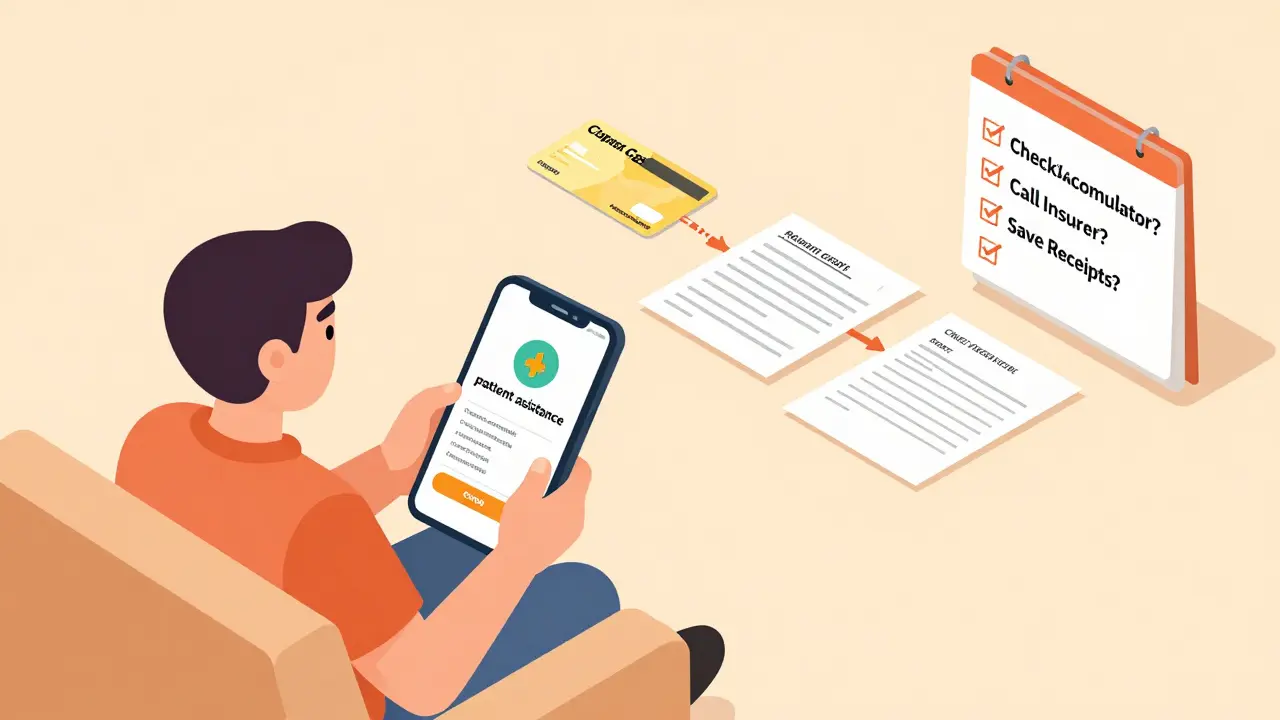
Vinayak Naik
January 5, 2026 AT 14:19bro i used one of these cards for my psoriatic arthritis med and thought i was winning til my bill jumped to $3k after 4 months 😭 turns out my plan had an accumulator and i was dumb as hell. now i pay full price for 6 months straight just to hit my max. worst financial rug pull ever.
Kelly Beck
January 5, 2026 AT 16:25YESSSSS this is SO IMPORTANT!! 🙌 I’m a nurse and I’ve seen so many patients cry because they didn’t know about accumulators - it’s not their fault, the system is rigged 💔 Please, please, please share this with your friends who are on expensive meds! You’re not alone, and you deserve to know the truth before you’re blindsided. I’m sending this to my entire family group chat right now! 💪💖
Isaac Jules
January 6, 2026 AT 17:41Wow. Another ‘poor me’ post from people who can’t afford $2k/month but somehow afford iPhones, Netflix, and 3 vacations a year. If you can’t pay for your meds, don’t take brand names. Use generics. Or don’t take them at all. The pharmaceutical companies aren’t your mom. Stop whining and get a job that pays more. 🤡
Pavan Vora
January 7, 2026 AT 10:24Actually, I think this is a very, very, very important article - because, you know, in India, we don’t have these cards, and people just pay out of pocket, or go without, or use generics, or… well, sometimes they just… die. So, I mean, it’s not that I’m jealous, but I’m just saying - this system, even with its flaws, is better than nothing, right? I mean, right? 😅
Indra Triawan
January 8, 2026 AT 13:03Isn’t it ironic… that we’re told to fight for our health, yet the system rewards those who can afford to play the game? We’re all just… trying to survive in a world that turns medicine into a lottery. I think we’re all just… lost. And the cards? They’re just glitter on a coffin. 🌌
Susan Arlene
January 8, 2026 AT 15:45lol i just asked my pharmacist if my plan had an accumulator and she laughed and said ‘you’re lucky if you even get a card’ 😅 so i just pay cash now and use goodrx. cheaper and no surprises. also my dog gets better meds than i do. 🐶💊
Mukesh Pareek
January 8, 2026 AT 18:37Let’s be clear: copay assistance cards are a regulatory arbitrage mechanism designed to circumvent formulary restrictions and prolong patent monopolies. The copay accumulator programs are a rational countermeasure by payers to mitigate moral hazard and preserve actuarial integrity. If you’re relying on manufacturer subsidies, you’re not managing risk-you’re externalizing it. You need to understand your plan’s benefit design hierarchy and align your pharmaceutical utilization accordingly. Otherwise, you’re just a liability vector.
Leonard Shit
January 10, 2026 AT 16:26to the guy who said ‘get a better job’ - i work two jobs and still can’t afford my insulin. you’re not helping. also, your grammar’s trash. 🤦♂️