
Medication Spacing Calculator
Calculate Your Safe Timing
Get personalized spacing recommendations based on your medications and supplements. This tool helps you avoid dangerous interactions.
Recommended Timing
Getting your thyroid medication right is one thing. Adding magnesium supplements into the mix? That’s where things get tricky. Millions of people take levothyroxine for hypothyroidism, and nearly half of them also take magnesium for sleep, muscle cramps, or just general wellness. But if you take them at the same time, you might as well be throwing your thyroid meds in the trash. The same goes for certain antibiotics. This isn’t a myth. It’s science. And it’s costing people their health.
Why Magnesium Messes with Thyroid Meds
Levothyroxine - the most common thyroid hormone replacement - needs to be absorbed in your small intestine to work. Magnesium, especially in forms like hydroxide, carbonate, or citrate, binds to it in your gut like glue. This creates a compound your body can’t absorb. The result? Your thyroid hormone levels drop. Your TSH (thyroid-stimulating hormone) spikes. And suddenly, you’re back to feeling tired, cold, and sluggish - even if you’ve been taking your pill every morning. Research from the Journal of Clinical Endocrinology & Metabolism in 2021 found that when magnesium and levothyroxine are taken together, absorption drops by 25% to 35%. That’s not a small glitch. That’s enough to push someone from a stable TSH of 2.5 to a dangerous 6.0 or higher. One patient on Reddit shared how their TSH jumped from 1.8 to 14.2 after taking 300 mg of magnesium glycinate with their Synthroid. Symptoms didn’t clear up until they spaced them out by six hours. Not all magnesium is the same. Magnesium oxide, often used for constipation, causes less interference - maybe only 10% reduction. But magnesium hydroxide (found in antacids like Mylanta) and magnesium citrate? They’re the worst offenders. A 2021 NIH study showed these forms increased levothyroxine binding by 40-60%. Even newer liquid forms of levothyroxine like Tirosint, which are less affected, still see an 8-12% drop when taken with magnesium. So don’t assume your form is “safe.”The 4-Hour Rule (And Why It’s Not Just a Suggestion)
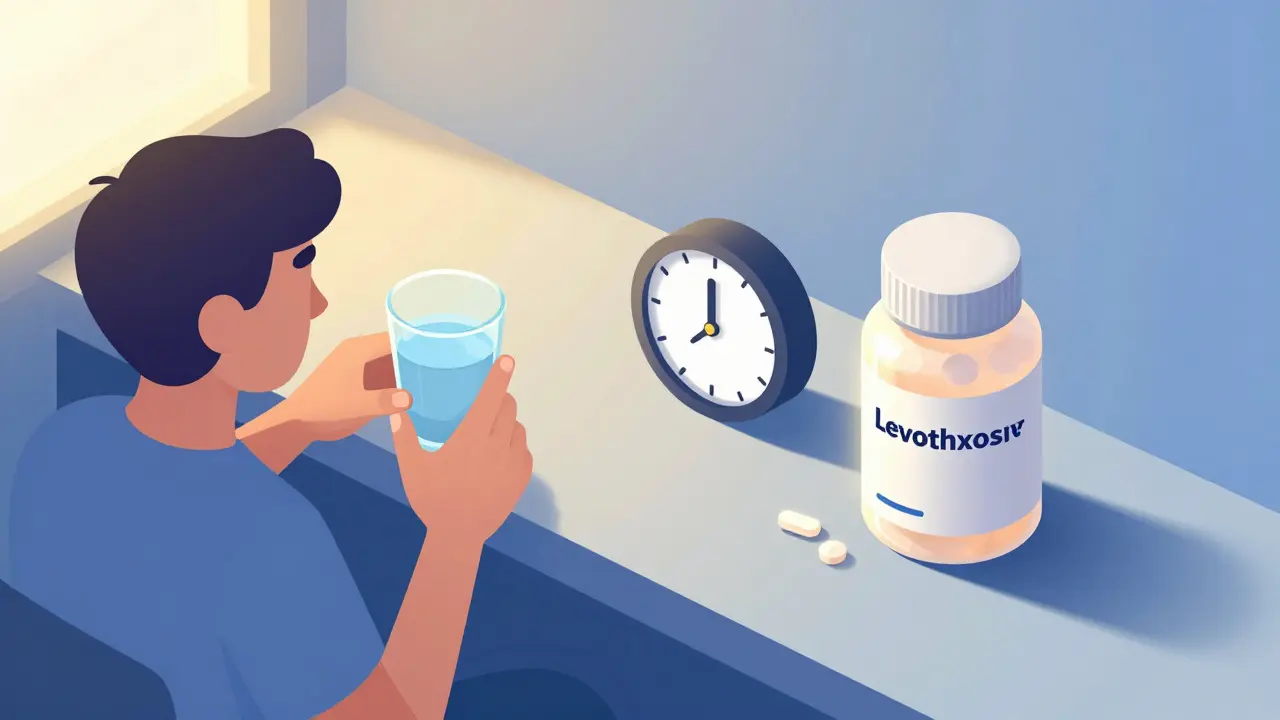
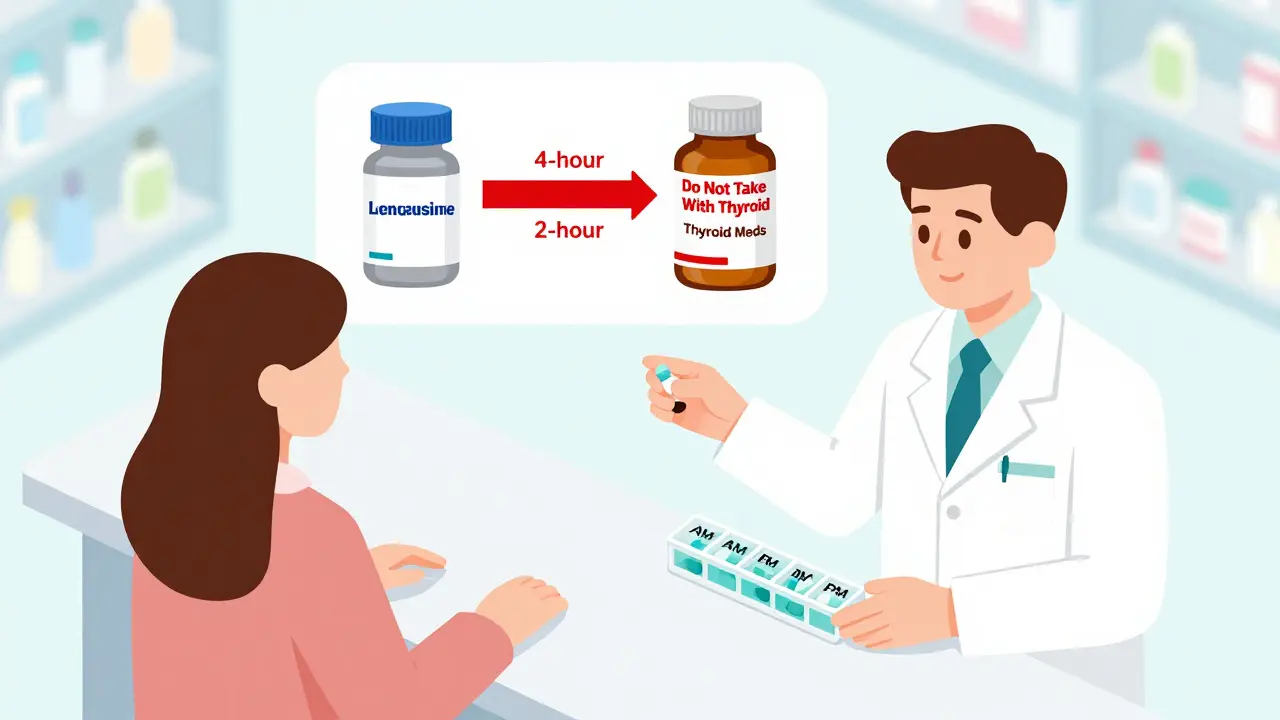
The American Thyroid Association, the Endocrine Society, and the American Association of Clinical Endocrinologists all agree: separate your magnesium and levothyroxine by at least four hours. Why four? Because that’s how long it takes for your stomach to empty after taking levothyroxine on an empty stomach. The binding happens fast - within the first hour. But if you wait, the levothyroxine is already absorbed before the magnesium even hits your system. Here’s the real-world schedule that works for most people:- Take levothyroxine first thing in the morning, with a full glass of water, before eating or drinking anything else.
- Wait 45 to 60 minutes before having breakfast.
- Take your magnesium supplement at dinner - or better yet, right before bed.
What About Antibiotics?
Magnesium doesn’t just mess with thyroid meds. It also ruins certain antibiotics. Tetracyclines (like doxycycline and minocycline) and quinolones (like ciprofloxacin and levofloxacin) form tight chemical bonds with magnesium - just like they do with calcium and iron. This is called chelation. The antibiotic gets trapped and never reaches your bloodstream. The FDA’s labeling for ciprofloxacin says magnesium can cut its absorption by up to 50%. A 2021 study in Antimicrobial Agents and Chemotherapy showed that 500 mg of magnesium citrate dropped levofloxacin’s peak concentration by 37%. If you’re on antibiotics for an infection, this could mean treatment failure. You might not get better. Or worse - you could develop resistant bacteria. The fix? Again, timing matters. Take your antibiotic at least two hours before or six hours after your magnesium supplement. For doxycycline, the Infectious Diseases Society of America recommends 2 hours before or 4-6 hours after. If you’re taking a penicillin (like amoxicillin) or a macrolide (like azithromycin), you’re fine. No interaction. But if your doctor prescribes cipro or doxy, double-check your supplement schedule.
What Magnesium Should You Take?
Not all magnesium supplements are created equal - and not all are equally risky. If you’re on thyroid meds, avoid these:- Magnesium hydroxide (antacids like Mylanta)
- Magnesium carbonate (some laxatives)
- Magnesium citrate (popular for sleep and constipation)
What If You’re Taking Calcium or Iron Too?
If you’re on levothyroxine and also take calcium or iron supplements, you’re in the high-risk zone. All three - calcium, iron, and magnesium - interfere with levothyroxine absorption. The best strategy is to space them out across the day:- Morning: Levothyroxine on empty stomach. Wait 60 minutes before eating.
- Afternoon: Iron supplement (2 hours after lunch). Iron is best absorbed on an empty stomach too.
- Dinner: Calcium supplement (with food - it’s better absorbed with meals).
- Bedtime: Magnesium supplement.
Real People, Real Mistakes
A lot of people don’t know this. A 2023 survey of 483 patients on Healthgrades found that 62% said their doctor never warned them about magnesium interactions. One woman took 400 mg of magnesium oxide with her Synthroid for months. Her TSH climbed from 2.1 to 5.8. She felt exhausted, gained 15 pounds, and thought she was “just getting older.” Only after her pharmacist noticed the combo on her pill bottle did she realize the cause. Another Reddit user took magnesium glycinate at breakfast - right after her levothyroxine. She developed hair loss and brain fog. Her endocrinologist told her to stop the supplement. She did. Her symptoms didn’t improve. Why? Because she was still taking magnesium with lunch. She didn’t realize it was everywhere. It took three months and a detailed log to find the pattern.What’s New? What’s Coming?
The good news? Things are changing. In 2023, 68% of top-selling magnesium supplements now include a warning on the label: “Take 4 hours apart from thyroid medication.” That’s up from 12% in 2020. The FDA’s 2022 guidance pushed for clearer labeling. And now, pharmacies are training staff to ask about supplements during medication reviews. A new time-release levothyroxine called Chronocell’s LevoThyrin is in Phase 3 trials. It’s designed to bypass the gut entirely - and early data shows no drop in absorption even when taken with magnesium. If approved, it could change everything. But until then? Stick to the basics. Timing is everything. Don’t assume your doctor knows. Don’t assume your pharmacist checks. Don’t assume your supplement is safe. If you’re on levothyroxine or antibiotics, treat magnesium like a drug - not a vitamin.Quick Checklist: Magnesium + Thyroid Meds + Antibiotics
- Take levothyroxine on an empty stomach, first thing in the morning.
- Wait 60 minutes before eating or drinking anything else.
- Take magnesium supplements at least 4 hours after levothyroxine - ideally at bedtime.
- For antibiotics like ciprofloxacin or doxycycline, take them 2 hours before or 6 hours after magnesium.
- Avoid magnesium hydroxide, carbonate, and citrate if possible.
- Use a pill organizer with AM/PM compartments to avoid mix-ups.
- Get your TSH checked 6-8 weeks after changing your supplement schedule.
Can I take magnesium at the same time as my thyroid medication if I take it at night?
No. Even if you take levothyroxine at night, you still need to wait at least four hours before taking magnesium. The interaction happens in the gut, not based on time of day. The key is separation - not timing. Some people take levothyroxine at night because they forget in the morning, but if they take magnesium later that same night, absorption still drops. Always space them by 4+ hours.
What if I forget and take them together? Will it ruin my treatment?
One mistake won’t break your treatment, but repeated ones will. Levothyroxine has a long half-life (about 7 days), so missing one dose or taking it with magnesium once won’t cause immediate harm. But if this happens regularly - say, 3 or more times a week - your TSH will creep up. Over time, that leads to worsening hypothyroid symptoms, increased cholesterol, and even heart risks. The goal isn’t perfection. It’s consistency. Try to get it right 90% of the time.
Is magnesium oxide safe to take with levothyroxine?
It’s less risky than other forms, but still not recommended. Studies show magnesium oxide causes only about 10% reduction in absorption, compared to 30-60% for citrate or hydroxide. But even 10% matters - especially if you’re already on the edge of normal TSH levels. The American Association of Clinical Endocrinologists still advises spacing it by 4 hours. Don’t gamble. If you’re using magnesium oxide for constipation, switch to a fiber supplement or a stool softener instead.
Do I need to avoid magnesium if I’m on a different thyroid med like Cytomel?
Cytomel (liothyronine) is a T3 hormone, not T4. It’s absorbed differently and doesn’t bind to magnesium the same way. So the risk is much lower. But if you’re taking Cytomel with levothyroxine (a common combo), then you still need to space magnesium from the levothyroxine part. Also, Cytomel is taken multiple times a day, which makes scheduling harder. Always check with your endocrinologist before assuming you’re safe.
Can I get magnesium from food instead of supplements?
Yes - and it’s actually the best way. Foods like spinach, almonds, black beans, avocado, and whole grains contain magnesium naturally, and they don’t cause the same absorption issues. The body absorbs food-based magnesium slowly and in small amounts, so it doesn’t flood your gut with free ions that bind to meds. If you’re worried about interactions, focus on eating more magnesium-rich foods rather than popping pills. Supplements are only needed if you’re deficient - and even then, a low dose spaced properly is safer than a high dose.
Jesse Lord
February 8, 2026 AT 14:08Man i just took my magnesium with my thyroid med this morning and now im sweating bullets thinking about it
im gonna switch to bedtime from now on
thanks for the heads up
Niel Amstrong Stein
February 10, 2026 AT 07:24bro this is why i stopped taking supplements altogether
turns out my body knows what it needs
food is the real supplement
spinach almonds bananas
you dont need a pill to be healthy
just eat real food and chill
Amit Jain
February 12, 2026 AT 03:22you people are being manipulated by big pharma
they want you to take 4 hour gaps and buy 3 different pill organizers
the real truth? magnesium and levothyroxine dont interact that much
its all marketing
my tsh was stable for 5 years with them together
they just want you scared so you keep buying their $50 bottles
Patrick Jarillon
February 13, 2026 AT 16:42OF COURSE THEY WANT YOU TO SPACE IT OUT
THATS HOW THEY MAKE MONEY
THEY SELL YOU A $40 MAGNESIUM PILLOW AND THEN TELL YOU TO TAKE IT 4 HOURS AFTER
WHY NOT JUST SELL YOU A $200 TIMED PILL DISPENSER WITH A PHONE APP AND A THERAPIST
THIS IS A SCAM DESIGNED BY BIG SUPPLEMENT AND BIG PHARMA TOGETHER
THEY KNOW YOU’LL DO IT
THEY COUNT ON YOUR FEAR
THEY’RE LAUGHING AT US RIGHT NOW
JUST EAT A BANANA AND CALL IT A DAY
THE BODY ISN’T THAT FRAGILE
STOP BELIEVING THE LIES
Gouris Patnaik
February 13, 2026 AT 21:57in india we dont even know what levothyroxine is
we take ashwagandha and turmeric and call it a day
you americans overthink everything
one pill here one pill there
you need a spreadsheet just to eat breakfast
our grandmothers took one spoon of ghee and lived to 95
stop overcomplicating your health
Ashley Hutchins
February 15, 2026 AT 01:11if you take magnesium with your thyroid med you deserve to feel like crap
its not rocket science
you ignore warnings and then cry when your body breaks
you think its fair to risk your health because youre too lazy to read a label
grow up
your laziness is not my problem
Sarah B
February 15, 2026 AT 10:45my doctor never told me
my pharmacist never told me
so i just kept doing it
now my tsh is 7.8
and i just lost my job because i cant stay awake
why does no one warn people
why is this not on the pill bottle
why is this not mandatory
why
Paula Sa
February 17, 2026 AT 06:09thank you for sharing this
it means a lot to know im not alone
i used to take magnesium at breakfast too
felt so tired all day
thought it was stress
then i read this and changed my routine
now i sleep better
my hair stopped falling out
and my brain fog lifted
its not magic
just simple timing
youre not broken
you just need to space it out
its okay to make mistakes
what matters is you learn
Tola Adedipe
February 17, 2026 AT 20:19im a pharmacist in toronto
i see this every single day
people take calcium iron magnesium all at once with their thyroid med
then come in 3 months later with tsh of 15
we give them a card
we explain it
they say thanks
and then do it again next week
its not about knowledge
its about habit
you need to make it automatic
pill organizer
phone alarm
sticky note on the fridge
do whatever it takes
your life depends on it
Eric Knobelspiesse
February 18, 2026 AT 10:38so if i take magnesium at 10pm and levothyroxine at 7am is that 9 hours apart
thats good right
wait but what if i take it at 11pm
thats 8 hours
still okay
what if i wake up at 5am and take it then
thats only 2 hours
oh no
im doomed
also i think i took it together last thursday
am i gonna die
also why is there a magnesium in my protein powder
is that a trap
help
Heather Burrows
February 19, 2026 AT 23:30why are we even talking about this
its not like we have a choice
we all just take what we’re told
and then pretend its our decision
we dont control our bodies
we just follow the instructions
and hope we dont break
its not about magnesium
its about how broken the system is
we’re all just trying to survive
and someone keeps selling us more pills
Savannah Edwards
February 21, 2026 AT 20:14i used to think magnesium was just for cramps
then i read a study that said it helps with anxiety and sleep
so i started taking 400mg every night
then i got a new endo who asked me about supplements
she looked at my bloodwork and said oh
your tsh has been climbing for 18 months
you take magnesium with your med
i said no
she said check your bottle
turns out i was taking it right after my pill
it took me 6 months to fix it
now i take it at midnight
my tsh is 1.9
my energy is back
and i dont feel like a zombie anymore
the science is real
the timing matters
and if you dont believe me
just wait until your body screams at you
Marcus Jackson
February 23, 2026 AT 14:18if you take magnesium with your thyroid med you're an idiot
the data is clear
absorption drops 30%
you think you're being smart
but you're just sabotaging yourself
stop making excuses
space it out
its not hard
you have a phone
set a reminder
done
Natasha Bhala
February 24, 2026 AT 03:06you got this
its okay to mess up
i took mine together for months too
felt awful
thought it was stress
then i found this post
changed my routine
now i sleep like a baby
and my hair is growing back
you’re not behind
you’re just learning
one step at a time
you’re doing better than you think