
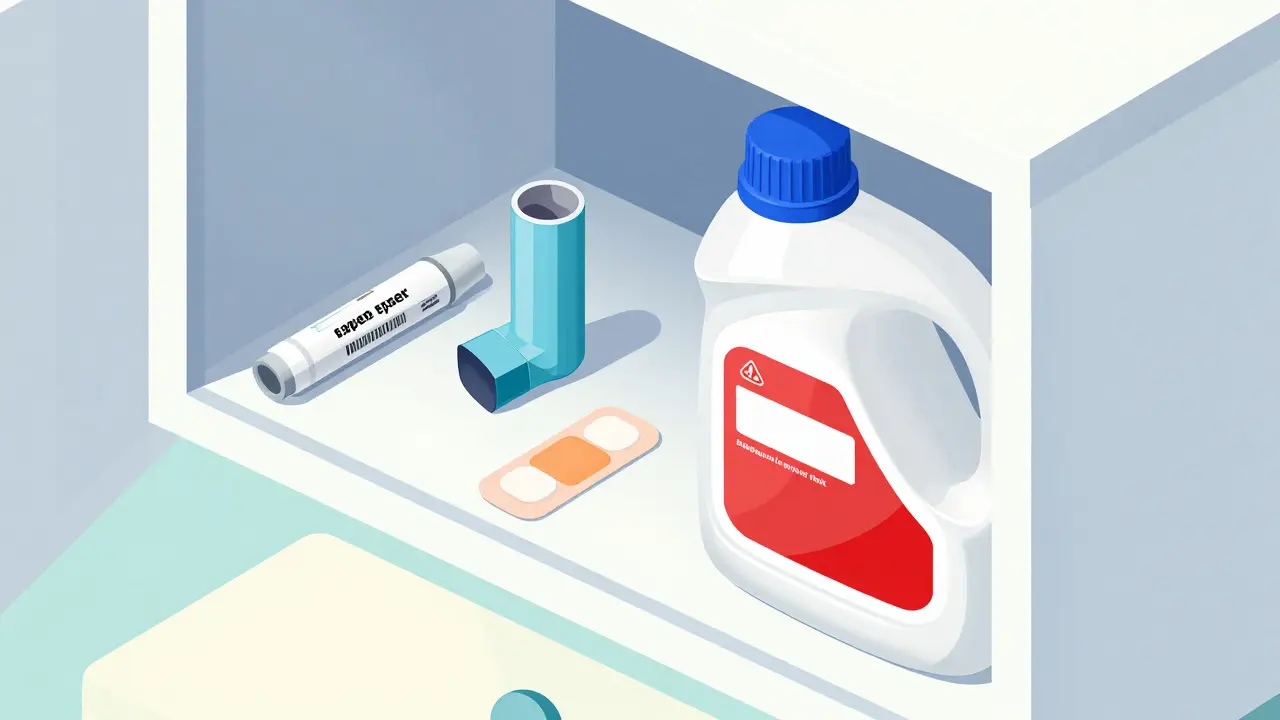
Tossing a used needle or an old inhaler into the kitchen trash might seem like the easiest path, but it's actually a gamble. When you throw away medical devices incorrectly, you're not just risking a needle stick for a sanitation worker; you're potentially leaking potent chemicals into the water supply or leaving a dangerous lure for a curious toddler. Whether you're cleaning out your medicine cabinet or replacing an expired kit, knowing the right way to get rid of these items is a critical part of healthcare.
Key Takeaways for Safe Disposal
- EpiPens are medical sharps and must never go in the regular trash without a puncture-proof container.
- Inhalers are pressurized canisters that can be dangerous if incinerated or punctured.
- Medicated patches often contain high doses of drugs and may need to be flushed or folded depending on the medication.
- Take-back programs are always the gold standard over home disposal.
Dealing with EpiPens and Auto-Injectors
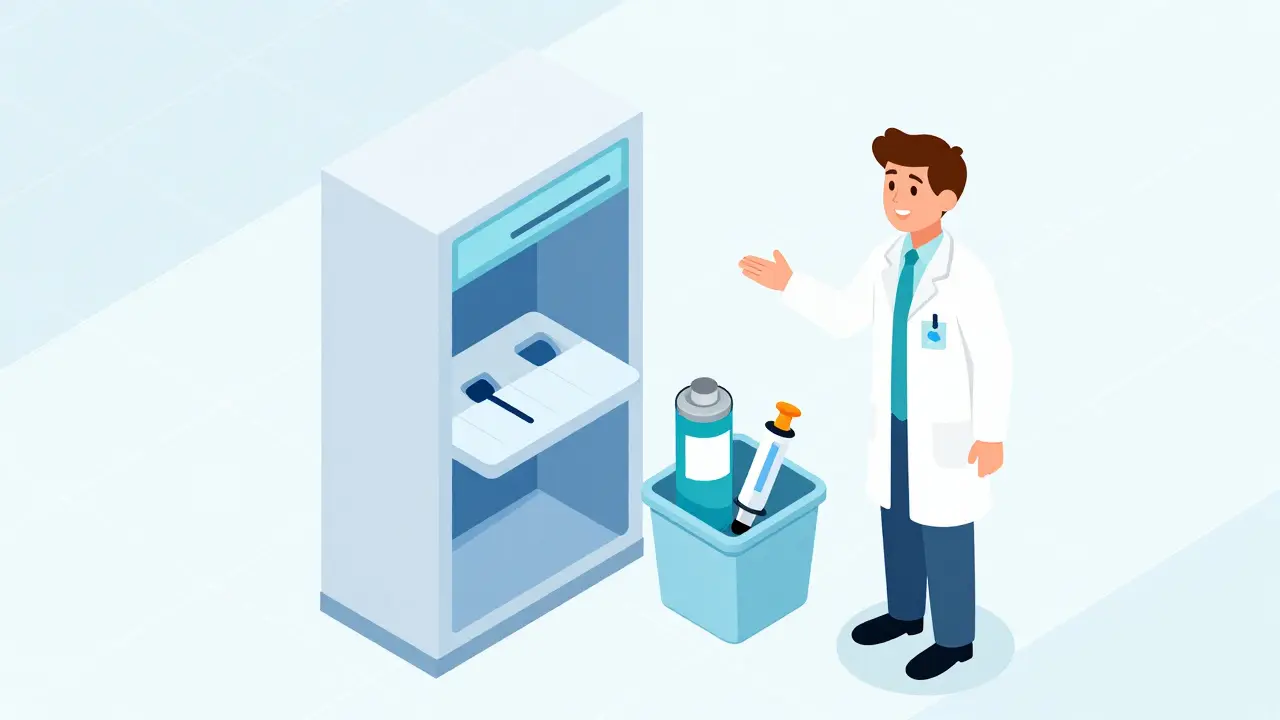
If you have an expired EpiPen is an epinephrine auto-injector used to treat life-threatening allergic reactions (anaphylaxis), you need to treat it as a "sharp." Because it contains a needle, it can't just be thrown in a plastic bag. The best move is to bring your expired device back to your doctor's office or a pharmacy that has a dedicated sharps bin when you pick up your new prescription.
If a pharmacy trip isn't immediate, you can create a safe temporary container at home. Use a heavy plastic bottle, like a laundry detergent jug, that has a screw-on lid. Label it clearly with "BIOHAZARD" or "SHARPS - DO NOT RECYCLE." This prevents anyone from accidentally digging through the trash and getting poked. Avoid trying to take the device apart-for example, if you use an Auvi-Q, don't try to remove the internal battery, as this can be hazardous.
| Method | Best For... | Key Requirement |
|---|---|---|
| Healthcare Provider | Routine replacements | Return during next visit |
| Pharmacy Take-back | Immediate disposal | Verify location accepts sharps |
| Home Container | Temporary storage | Puncture-proof, labeled jug |
Handling Pressurized Inhalers
Inhalers are a bit different because they are pressurized. Whether it's a rescue inhaler for asthma or a maintenance medication, these canisters can behave like small explosives if they are crushed in a garbage truck or thrown into a fire. This is why you'll see warnings on the packaging against puncturing or incinerating them.
Because of the propellants used in Metered-Dose Inhalers (MDIs), they can contribute to greenhouse gas emissions if they leak into the atmosphere. Your first step should be to check your local waste management guidelines. Some cities have specialized aerosol collection sites for household hazardous waste. If you're unsure, call your local trash facility rather than guessing, as rules vary wildly between different municipalities.
Discarding Medicated Patches
Transdermal patches, such as nicotine or fentanyl patches, are tricky because they don't just deliver medicine while they're on your skin-they often contain a huge reservoir of the drug that remains even after the patch is "spent." If a pet or child finds a used patch, they could absorb a toxic dose of the medication through their skin.
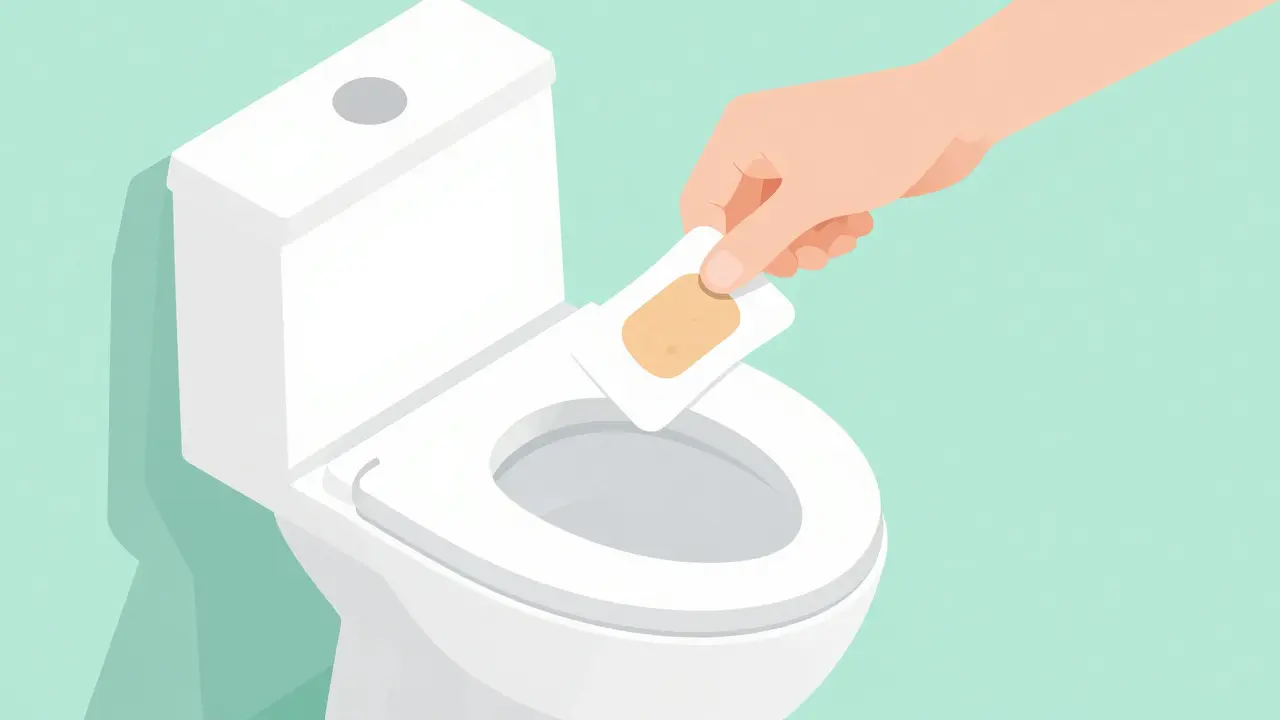
For high-risk medications like fentanyl, the FDA (Food and Drug Administration) recommends a specific process: fold the patch in half so the sticky sides are touching, and flush it down the toilet. While we're usually told not to flush meds, the risk of accidental poisoning from these specific patches outweighs the environmental concern. For other patches, check the package insert or ask a pharmacist if the "fold and flush" method applies to your specific drug.
Avoid using home disposal methods like mixing the patch with cat litter or coffee grounds. These methods work for pills, but they don't effectively neutralize the adhesive surface of a patch where the medication lingers.
Finding Professional Disposal Sites
If you're feeling overwhelmed by the rules, the simplest solution is to use a professional take-back program. These are designed to handle pharmaceutical waste safely and efficiently. The DEA (Drug Enforcement Administration) hosts National Prescription Drug Take Back Days twice a year, usually in April and October. These events turn local police stations and community centers into temporary drop-off points.
For a more permanent solution, look for pharmacies that offer a drop-box. Be careful, though; not all pharmacy boxes are created equal. Some only take pills, while others are equipped to handle sharps or liquids. If you walk into a store and the bin says "Pills Only," do not drop your EpiPen in there. Instead, ask the pharmacist for the nearest authorized collector for medical devices.
Common Disposal Mistakes to Avoid
One of the biggest errors is trusting the recycling bin. Most medical devices-including the plastic casings of inhalers and the needles of auto-injectors-are not recyclable. Putting them in the blue bin puts recycling plant workers at risk of injury and contaminates the recycling stream.
Another common pitfall is ignoring the expiration date until the moment of a crisis. We recommend checking your dates monthly. An expired EpiPen may not deliver the full dose of epinephrine needed to stop a reaction. When you replace them, make it a habit to dispose of the old ones immediately so they don't linger in a drawer for years, eventually becoming a forgotten hazard.
Can I just throw an EpiPen in the regular trash?
No, you should not throw an EpiPen directly into the trash. Because it contains a needle, it is classified as medical sharps. If you cannot find a take-back program, you must place it in a puncture-proof plastic container (like a laundry detergent bottle) with a secure lid and label it "SHARPS - DO NOT RECYCLE" before placing it in the trash.
Why can't I put my inhaler in the recycling bin?
Inhalers are pressurized canisters. If they are crushed or punctured during the recycling process, they can explode or leak harmful propellants into the air. They must be handled as hazardous waste or disposed of according to your local city's aerosol guidelines.
Is it safe to flush all medicated patches?
Not necessarily. Only specific high-risk patches, such as fentanyl, are on the FDA's "flush list" because the danger of accidental exposure is so high. Always check your medication's specific instructions or consult a pharmacist before flushing any medication.
Where can I find a drug take-back location near me?
You can use the DEA's online locator tool to find authorized collectors in your area. Additionally, many retail pharmacies like CVS or Walgreens have permanent drop-boxes, though you should verify if they accept sharps and inhalers specifically.
What should I do if I live in a rural area with no take-back sites?
If you don't have access to a permanent facility, your best bet is the home-container method for sharps (using a heavy plastic jug) and contacting your local waste management office to see if they have a scheduled hazardous waste collection day for aerosols like inhalers.
william wang
April 16, 2026 AT 13:21The laundry detergent jug trick is a lifesaver for people in rural areas. I've seen some folks use old coffee cans, but the thick plastic of a Tide bottle is way more reliable for preventing punctures. Just make sure to tape the lid shut with duct tape before it goes in the bin for that extra layer of security!
Randall Barker
April 16, 2026 AT 14:28It is absolutely appalling that we live in a society where the basic responsibility of waste management is left to the individual's whims. We treat these hazardous materials like common trash because we've outsourced our morality to convenience. The fact that some people even consider the "regular trash" as an option reveals a systemic failure of civic duty and a complete lack of respect for the people cleaning up our filth. It's not just about a needle; it's about the erosion of the social contract where we prioritize our five minutes of effort over the safety of a stranger. We are essentially gambling with other people's lives to save ourselves a trip to the pharmacy. This is the peak of modern narcissism and it's honestly disgusting that we even need guides for this.
Autumn Bridwell
April 18, 2026 AT 02:07OMG I literally just found an old EpiPen in my guest bathroom from three years ago!! 😱 I can't believe I just left it there! This is so scary!
Jon lee
April 18, 2026 AT 21:14Good call on mentioning the Auvi-Q batteries. A lot of people don't realize those are different from the standard EpiPens. If anyone is feeling overwhelmed by the process, just take it one step at a time. Your local pharmacist is usually happy to point you in the right direction if you just ask politely.
Nell O'Leary
April 20, 2026 AT 06:38Total agreement on the MDI propellants! 🌿 The fluorinated hydrocarbons in those canisters have such a high GWP (Global Warming Potential) that it's practically a crime to just vent them into the atmosphere. Definitely check for a hazardous waste facility that can handle the titration of those pressurized gases ♻️
Nathan Berlin
April 20, 2026 AT 21:50Typical western chaos lol. in india we have better systems for some things and worse for others but this obsession with plastic jugs is just so quaint 🙄🇮🇳 honestly just go to a clinic and stop making it a whole personality trait