
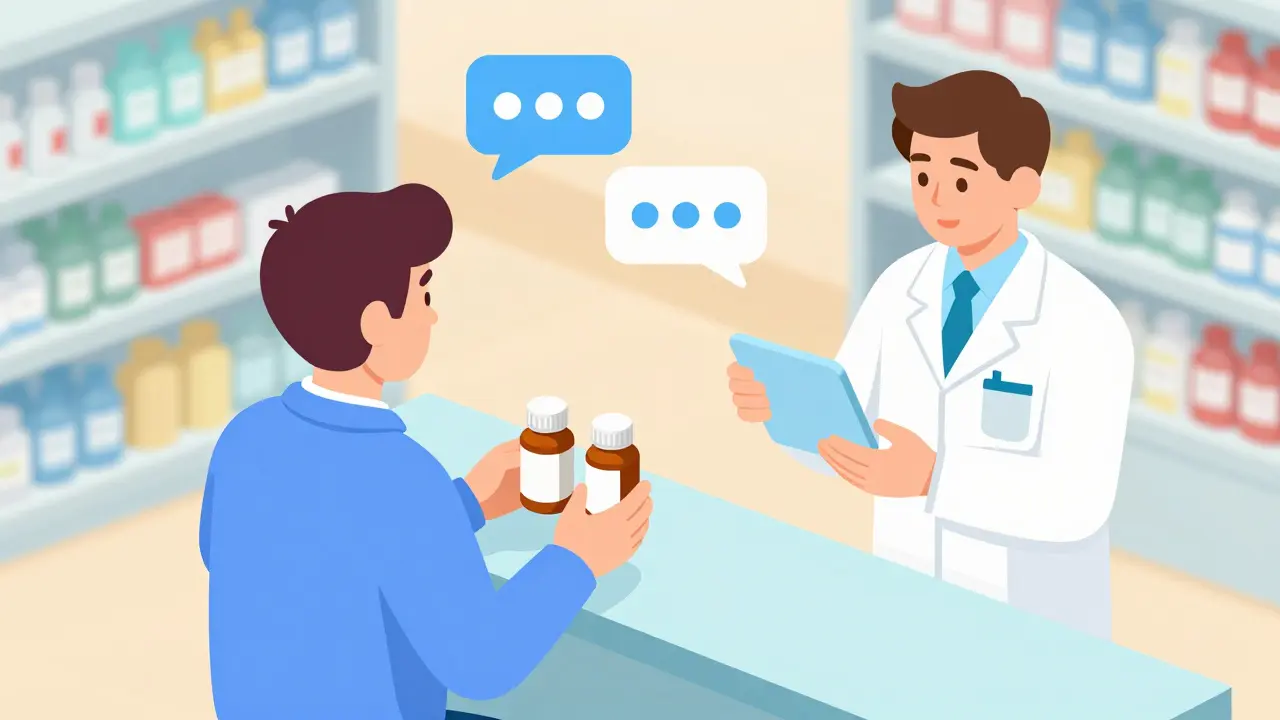
Why Language Barriers Put Patients at Risk
Medication counseling translation is a critical service that ensures patients understand how to take their prescriptions safely when English is not their primary language. Imagine standing at the pharmacy counter, holding a new bottle of pills, and realizing you can't ask what "take with food" actually means. That confusion isn't just frustrating; it can be dangerous.
Research shows that patients with Limited English Proficiency (LEP) face serious risks when communication breaks down. A major study from the University of California San Francisco revealed that LEP patients experience medication errors at three times the rate of English-speaking patients when language support isn't available. This statistic underscores why requesting translator services isn't just about convenience-it's about your safety. Many people mistakenly believe pharmacies provide interpreters out of kindness. In reality, it is often a legal requirement designed to protect you.
The Legal Right to Clear Communication
Access to language assistance in healthcare is not optional for many providers. In the United States, Title VI of the Civil Rights Act of 1964 established the foundation, banning discrimination based on national origin. Later, Section 1557 of the Affordable Care Act strengthened these protections significantly. By the 2025 update, Section 1557 specifically requires any healthcare facility receiving federal funds-including almost all pharmacies-to offer meaningful access to LEP patients without charging fees.
If you visit a pharmacy that receives Medicare or Medicaid funding, they must provide professional interpretation during counseling sessions. This includes explaining dosage, side effects, and drug interactions. The Office for Civil Rights (OCR), part of the Department of Health and Human Services (HHS), has been cracking down on violations. As of late 2023, there were dozens of settlements totaling millions of dollars against providers who failed to comply. You have the right to expect a qualified human interpreter, not just a translation app printed on a card.
Choosing the Right Type of Interpreter Service
When you ask for help, you aren't limited to a single method. Different situations call for different tools. Understanding the differences helps you advocate for the best method for your specific health needs. Here is a breakdown of the main delivery models used in modern pharmacies:
| Service Type | Best For | Average Cost (for Pharmacy) | Limitations |
|---|---|---|---|
| Telephonic | Quick calls, complex medical terms | $2.50 - $3.50/min | No visual cues for medications |
| Video Remote | Dosage demonstrations, reading labels together | $3.00 - $5.00/min | Requires device/screen access |
| On-Site | High anxiety, sensitive topics, elderly | $45 - $75/hour | Availability varies by region |
Telephonic interpreting remains the fastest option. Services like RxTran allow pharmacists to connect with an interpreter in under 30 seconds. While efficient, studies note that some older patients find phone-only interpretation confusing. Video remote interpreting has gained massive traction, with about 65% of healthcare facilities adopting it by early 2023. This method allows you to see the pharmacist pointing to the label while the interpreter translates, bridging the gap between audio and visual understanding.

How to Ask for an Interpreter Correctly
Making the request is the first step, but phrasing it matters. Simply saying "I don't speak English well" might sometimes lead a busy staff member to offer a family member instead. To ensure you get a professional, be specific. You should say, "I need a professional interpreter for my medication counseling." This distinction is vital because federal law prohibits using untrained helpers like children or friends for medical explanations.
Here is the process you can expect once you make that request:
- Identification: The pharmacist should ask you which language you prefer and verify your ability to communicate in English.
- Connection: They access the approved channel-dialing a line, opening a video app, or calling an on-site agency.
- Verification: Before starting, the pharmacist should confirm the interpreter is certified in medical terminology.
- Counseling: The session happens through the interpreter, covering the drug name, purpose, usage, and risks.
- Documentation: The pharmacy records the service type and duration to ensure billing compliance.
If the pharmacy tries to rush you into accepting a translated handout without verbal explanation, you can politely decline. Verbal interaction is the gold standard for ensuring comprehension.
Why Professional Interpreters Are Non-Negotiable
There is a persistent myth that using a family member is cheaper and more comfortable. Data suggests otherwise. Dr. Glenn Flores from Dell Medical School published findings showing that relying on family or untrained bilingual staff increases the risk of serious medication errors by nearly 50%. Why? Because a child or spouse won't know the difference between "micrograms" and "milligrams," nor do they understand the nuance of "statutory reporting" versus "symptom tracking."
Furthermore, Qualified Medical Interpreters must adhere to strict confidentiality standards under HIPAA. They also undergo rigorous training. The American Translators Association notes that professionals typically complete over 40 hours of specialized training and pass certification exams. Even if you feel shy using a stranger, the safety benefit outweighs the awkwardness. Most pharmacies also guarantee this service is free of charge to you. If they try to bill you for it, they are violating Section 1557 regulations.
Ensuring Quality and Follow-Up
Once the interpreter is connected, quality control is key. In California, the SafeRx program mandates standardized directions for patients in five major languages including Spanish, Chinese, Korean, Russian, and Vietnamese. If you speak one of these, ask for the standardized sign (SIG) rather than a generic printout. These have been vetted by linguists to ensure grammatical accuracy.
Despite the systems in place, technology glitches happen. About 28% of remote interpretation attempts report technical failures according to CMS data. If the connection drops or the voice sounds robotic (indicating unauthorized AI translation), pause the process. New 2025 guidelines explicitly prohibit using AI alone for prescription labels without human review. Always insist on a human voice for the final confirmation of your dosing instructions. Keep a copy of the translated plan on the counter until you leave the store.
Frequently Asked Questions
Is it free to use a translator at the pharmacy?
Yes. Under federal law (Title VI and Section 1557), covered healthcare providers cannot charge patients for language assistance services required to ensure meaningful access to care.
Can I ask for an interpreter for a second opinion later?
Absolutely. Language access applies to all aspects of care, including follow-up appointments, counseling changes, and adverse event reporting.
What if the interpreter speaks my language but isn't certified?
You should request a qualified medical interpreter. Unqualified staff may lack knowledge of medical terminology, which increases error risk. Pharmacies must have protocols to screen interpreter qualifications.
Does the pharmacy need to document that I used an interpreter?
Yes. Documentation supports compliance audits and allows for proper billing codes (such as T-1013) to be submitted for reimbursement by insurance payers.
What happens if the pharmacy refuses my request?
You can file a complaint with the Office for Civil Rights (OCR) or your state's Board of Pharmacy. Repeated violations can lead to significant financial penalties for the provider.
Troubleshooting Common Issues
Even with clear policies, hiccups occur. If you arrive during peak hours, staff might try to cut corners. One tactic is to remind them gently that documentation is required for their own compliance audits. If they insist on using a family member, you have the right to wait for a professional. Another issue is dialect mismatch. If the Spanish interpreter sounds different from your regional dialect, tell them immediately. Effective communication relies on mutual understanding, not just shared vocabulary.
Finally, keep records. If you receive printed materials, check them before leaving. Some standardized translations, like those in California's Board of Pharmacy library, are vetted, but ad-hoc translations can drift. If you notice a warning label doesn't match what was said verbally, clarify it before stepping out the door. Taking ownership of this process is the safest way to manage your health when language barriers exist.
Sakshi Mahant
April 2, 2026 AT 03:21It is really important to remember that healthcare systems vary widely depending on where you live globally. Some regions have much better integration of multilingual support than others do currently. We should celebrate the efforts made by professionals to bridge these gaps respectfully. Understanding your own rights empowers you to seek the help you deserve without shame. Building trust between patients and pharmacists requires clear communication above all else always.
Divine Manna
April 2, 2026 AT 21:32It is crucial to understand that federal mandates are rarely optional when it comes to healthcare safety standards. Many individuals mistakenly assume that language barriers are merely a matter of inconvenience rather than civil rights violations. Title VI protections were established decades ago yet remain misunderstood by the general populace regarding pharmaceutical interactions. Pharmacies operating under Medicare funding are legally bound to provide professional interpretation without passing costs to the patient. This requirement stems directly from the Office for Civil Rights enforcement guidelines updated recently. Failure to comply results in significant financial penalties for the institution involved in the transaction. Qualified medical interpreters undergo rigorous certification processes unlike family members who lack proper training. Relying on children for translation introduces severe risks regarding medical terminology nuances. Studies consistently show higher error rates when untrained personnel handle complex dosage instructions. Patients often feel intimidated about requesting these services due to cultural stigma surrounding institutional support. Overcoming that hesitation is necessary for maintaining personal health outcomes during treatment cycles. Insurance codes exist specifically to reimburse providers for these necessary communication services correctly. Documentation of the session ensures future audits verify compliance with Section 1557 regulations accurately. Video remote options have become standard practice because they allow visual confirmation of medication labels simultaneously. Pharmacists must prioritize these connections before dispensing controlled substances that require verbal counseling. Ignoring these protocols exposes both the provider and the vulnerable patient population to unnecessary danger.
Will Baker
April 4, 2026 AT 09:28Oh great, another lecture on how the government knows best about your medicine. It is funny how everyone assumes laws actually fix anything in real life scenarios. Most pharmacies just want to sell the pills and get you out the door quickly anyway. You sound like you enjoy memorizing rulebooks more than helping actual people in pain. Who cares about certification when the bottle says what it says clearly enough for most adults. It is exhausting reading all this doom and gloom about potential errors everywhere you turn. Maybe stop worrying about imaginary lawsuits and just pick up the phone yourself next time.
Beth LeCours
April 5, 2026 AT 22:41This situation causes problems for people who cannot speak the main language fluently.
Dee McDonald
April 7, 2026 AT 06:53Don't just read this and scroll away like nothing matters anymore. Your health depends on taking action today. You have the power to demand better service from these facilities immediately. Stop accepting less than what the law guarantees you as a human being. It takes courage to speak up when things are not right. But that is exactly what strong people do every single day. Fight for your clarity and never settle for confusion regarding your meds again.
Sam Hayes
April 9, 2026 AT 03:07hey i wanted to mention that sometimes the video option works better for showing labels its really helpful if the connection is stable enough most places have tablets now so just ask them to pull one up for you it saves time too
HARSH GUSANI
April 9, 2026 AT 10:19i do not like listening to foreign laws 🇺🇸 our country needs to focus on local solutions first 😤 they charge too much for translators anyway 💰 just learn english if you move here 📢 simple stuff 🤷♂️
Goodwin Colangelo
April 10, 2026 AT 01:21I understand frustration with costs but patient safety is the priority above budget concerns we can do better together if we stay respectful and focused on helping everyone succeed