
Drug-Induced Hemolytic Anemia Risk Checker
This tool helps identify potential risk factors for drug-induced hemolytic anemia based on your medications and G6PD deficiency status. Always consult your healthcare provider for medical advice.
When a medicine starts killing your own red blood cells, it’s not a side effect-it’s a medical emergency. Drug-induced immune hemolytic anemia (DIIHA) doesn’t make you feel just tired or weak. It quietly destroys the oxygen-carrying cells in your body, sometimes within days of taking a common prescription. And most people don’t realize what’s happening until they’re gasping for air or their skin turns yellow. This isn’t rare. It’s underdiagnosed.
How Medications Turn Against Your Blood
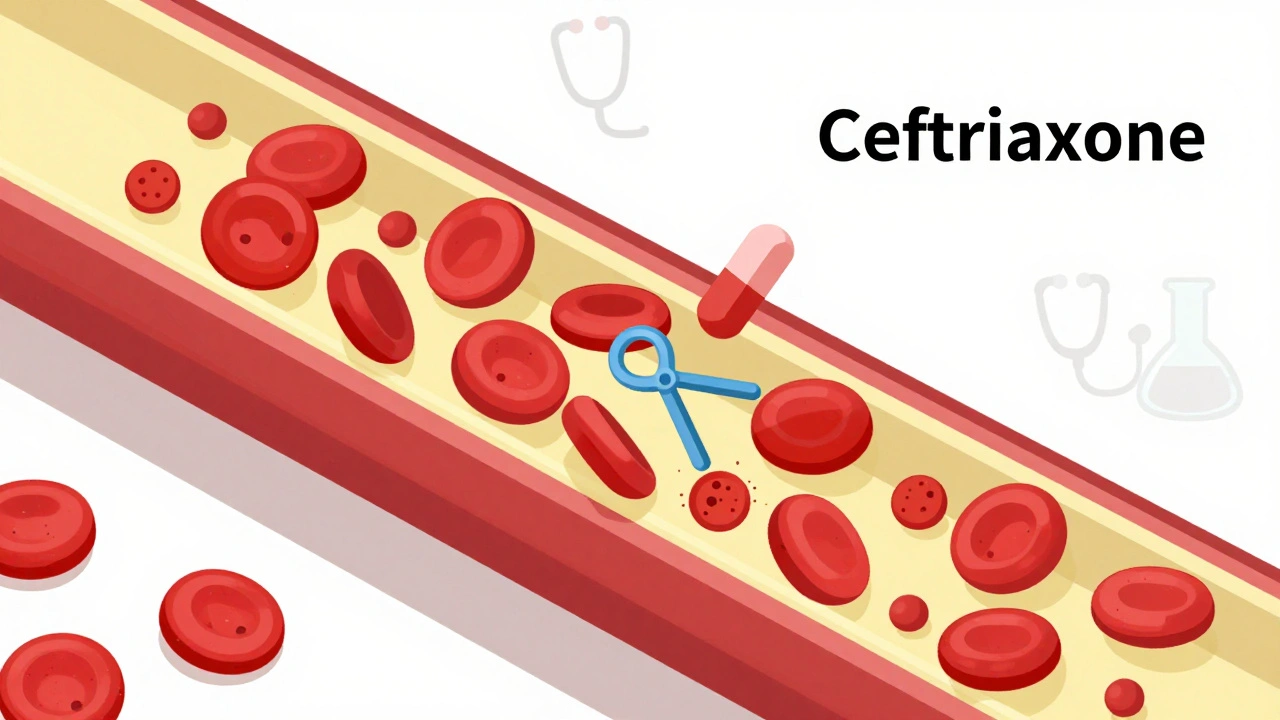
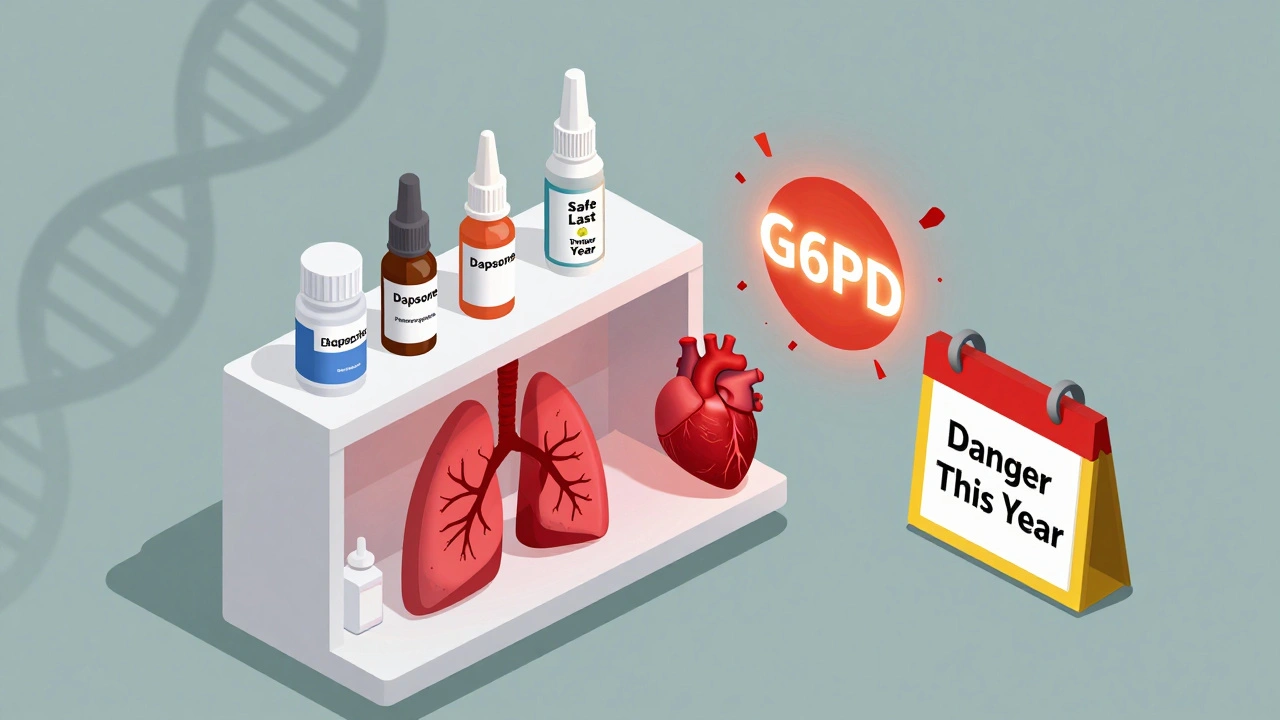
Your red blood cells live about 120 days. They’re built to last. But certain drugs trick your immune system into seeing them as invaders. That’s immune-mediated DIIHA. The drug binds to the surface of your red blood cells like a sticker. Your body thinks that sticker is foreign, so it makes antibodies to rip the cells apart. Cephalosporins-especially cefotetan, ceftriaxone, and piperacillin-are the top culprits today. Together, they cause about 70% of all immune-mediated cases. Then there’s oxidative hemolysis. This one doesn’t involve antibodies. Instead, the drug directly damages the hemoglobin inside your red blood cells. Think of it like rust forming inside the cell. When this happens, hemoglobin clumps into sharp, sticky structures called Heinz bodies. These tear the cell membrane from the inside. People with G6PD deficiency are especially vulnerable. One in seven African American men and up to one in six men of Mediterranean descent carry this genetic trait. Even a small dose of dapsone, phenazopyridine, or benzocaine can trigger massive hemolysis in them.What You’ll Feel-And What Doctors Look For
Symptoms don’t show up overnight. In immune-mediated cases, it usually takes 7 to 10 days of continuous drug use before anything happens. Oxidative hemolysis hits faster-sometimes within 24 hours. You might start with mild fatigue, then notice you’re short of breath climbing stairs. Your skin gets pale. Your eyes turn yellow. Your heart races even when you’re sitting still. Lab tests tell the real story. Hemoglobin drops fast-sometimes 3 to 5 grams per deciliter in just 72 hours. You’ll see high bilirubin (over 3 mg/dL), high LDH (above 250 U/L), and low haptoglobin (under 25 mg/dL). These are the fingerprints of hemolysis. A blood smear might show spherocytes (small, round red cells) in immune cases, or Heinz bodies in oxidative ones. The direct antiglobulin test (DAT) is positive in 95% of immune-mediated cases, but it can be negative early on or with certain drugs. That’s why doctors need to look at the full picture.The Top Drugs That Trigger This Reaction
It’s not just antibiotics. Here’s what actually causes this:- Cephalosporins (cefotetan, ceftriaxone, piperacillin) - most common cause
- NSAIDs (ibuprofen, naproxen) - especially with long-term use
- Penicillin and derivatives - well-known since the 1960s
- Dapsone - used for leprosy and skin conditions
- Phenazopyridine (Pyridium) - common for UTI pain
- Methyldopa - older blood pressure drug, less used now
- Nitrofurantoin - urinary tract antibiotic
- Levodopa - Parkinson’s medication
- Primaquine and sulfa drugs - dangerous in G6PD-deficient people
- Topical benzocaine - found in throat sprays and dental gels
What Happens If You Don’t Stop the Drug
This isn’t something you can wait out. Every hour your red blood cells keep getting destroyed, your heart works harder. Hemoglobin below 6 g/dL can lead to arrhythmias, cardiomyopathy, or heart failure. One study found 8% of severe cases ended in heart failure. That’s not a risk-it’s a likely outcome if the trigger isn’t removed. And here’s the hidden danger: you can get a blood clot. DIIHA makes your blood hypercoagulable. A 2023 study showed 34% of severe cases developed deep vein thrombosis or pulmonary embolism. That’s why even though you’re anemic, you still need blood thinners in many cases.How It’s Treated-And What Doesn’t Work
The first and only guaranteed step? Stop the drug. Immediately. No exceptions. Most people start to recover within 7 to 10 days after stopping the medication. Hemoglobin levels climb back up naturally as your bone marrow replaces the destroyed cells. Blood transfusions are used if hemoglobin falls below 7-8 g/dL or if symptoms are severe. But they’re not a cure. They’re a bridge. The real fix is removing the trigger. Corticosteroids like prednisone are often given, but their benefit is unclear. In many cases, patients improve just by stopping the drug. For cases where antibodies stick around even after the drug is gone-called drug-independent autoantibodies-you need stronger tools. Intravenous immunoglobulin (IVIG) at 1 gram per kilogram for two days can help. If that fails, rituximab (given weekly for four weeks) works in 78% of refractory cases within 3 to 6 weeks. For oxidative hemolysis with severe methemoglobinemia (over 30%), methylene blue is the go-to. But here’s the critical warning: if you have G6PD deficiency, methylene blue can make things worse. It can trigger even more hemolysis. Always test for G6PD before giving it.Testing for G6PD Deficiency-When and How
If you’ve had unexplained hemolysis after taking a drug like dapsone or phenazopyridine, you need G6PD testing. But don’t test during the acute episode. The test measures enzyme activity in older red blood cells-and those are the ones getting destroyed. Your newer cells (reticulocytes) still have normal enzyme levels, so the test can falsely say you’re fine. Wait 2 to 3 months after the hemolytic episode. That gives your body time to replace the damaged cells. Then test. If you’re deficient, you’ll need a lifetime list of drugs to avoid. That list includes sulfa drugs, aspirin in high doses, fava beans, and even some mothballs. Your pharmacist can help you build a personal safety list.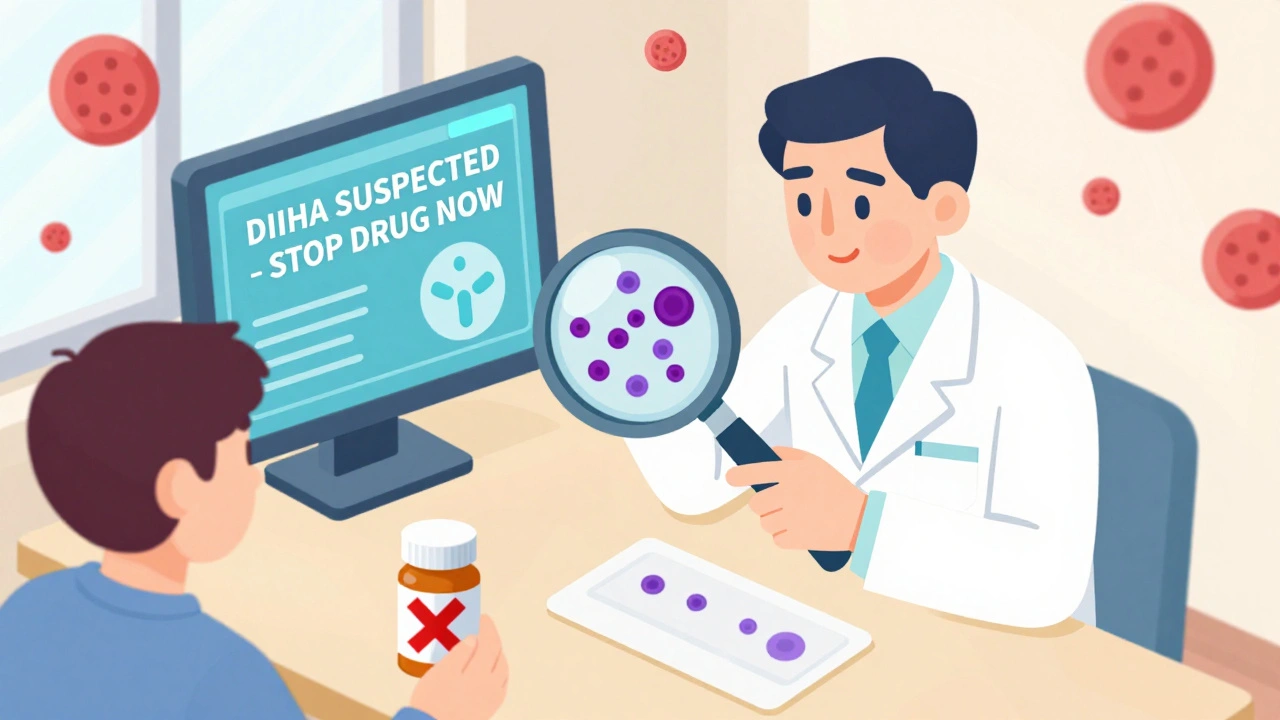
Why This Is So Often Missed
A 2024 study found 43% of DIIHA cases were misdiagnosed at first. Why? Because the symptoms look like everything else: flu, infection, liver disease, or simple anemia. Doctors don’t always connect the dots between a new medication and sudden fatigue. Internal medicine residents correctly identified DIIHA in only 58% of cases on their first try. After targeted training, that jumped to 89%. The key is suspicion. If someone develops anemia within days or weeks of starting a new drug, ask: “What did they start taking?” Don’t assume it’s iron deficiency. Don’t assume it’s chronic disease. Check the timeline. Check the drug list. Check the lab markers.What’s Changing in Diagnosis and Prevention
Hospitals are starting to use electronic alerts. If you’re prescribed ceftriaxone and have a history of hemolytic anemia, the system flags it. One hospital system cut severe DIIHA cases by 32% in 18 months just by adding these alerts. New treatments are also on the horizon. Two 2024 clinical trials showed promise. One tested efgartigimod, a drug that clears antibodies from the blood. It worked in 67% of patients within four weeks. Another studied complement inhibitors to block the immune system’s attack on red cells. These aren’t standard yet-but they’re coming.What You Need to Do Now
If you’re on any of the drugs listed here and feel unusually tired, short of breath, or notice yellowing in your eyes, get tested. Don’t wait. Ask for a complete blood count, reticulocyte count, bilirubin, LDH, haptoglobin, and a peripheral smear. If you’ve had unexplained anemia before, ask about G6PD testing. If you’re a caregiver or a patient with chronic conditions, keep a list of all your medications-including over-the-counter and topical ones. Share it with every doctor. Even a throat spray with benzocaine can be dangerous if you’re G6PD deficient. This isn’t about fear. It’s about awareness. Medications save lives. But they can also turn deadly if we don’t watch for the warning signs. The sooner you recognize hemolytic anemia for what it is, the sooner you stop the damage-and start the recovery.Can over-the-counter drugs cause hemolytic anemia?
Yes. Even common OTC drugs like ibuprofen or naproxen can trigger immune-mediated hemolytic anemia, especially with long-term use. Topical products like benzocaine in throat sprays or dental gels can cause oxidative hemolysis in people with G6PD deficiency. Never assume a drug is safe just because it doesn’t require a prescription.
How long does it take to recover from drug-induced hemolytic anemia?
Most people start improving within 7 to 10 days after stopping the offending drug. Hemoglobin levels typically return to normal in 4 to 6 weeks. Recovery is faster in younger, healthier people. Those with underlying conditions or severe hemolysis may take longer, especially if complications like blood clots or heart strain occur.
Is hemolytic anemia from medications common in children?
It’s rare in children, but when it does happen, it’s often more severe. Pediatric cases typically present with much lower hemoglobin levels-averaging around 5.2 g/dL compared to 6.8 g/dL in adults. Because children can’t always describe symptoms like fatigue or jaundice, parents and doctors need to be extra vigilant after new medications are started.
Can I get tested for G6PD deficiency before starting a new drug?
Absolutely. If you’re of African, Mediterranean, or Southeast Asian descent-or have a family history of anemia after taking certain medications-ask for a G6PD test before starting drugs like dapsone, sulfonamides, or primaquine. The test is simple, quick, and can prevent life-threatening reactions. Don’t wait for a crisis to get checked.
Why is methylene blue dangerous for some people with hemolytic anemia?
Methylene blue is used to treat severe methemoglobinemia, a condition where hemoglobin can’t carry oxygen properly. But in people with G6PD deficiency, methylene blue can trigger massive red blood cell destruction. It’s a paradox: the treatment becomes the cause. Always test for G6PD before giving methylene blue. If you’re deficient, alternative treatments like ascorbic acid or exchange transfusion are safer.
Will I always be at risk if I’ve had drug-induced hemolytic anemia once?
Yes. Once you’ve had it, you’re at risk for recurrence with the same drug-even years later. The immune system remembers. You’ll need to avoid that specific medication for life. Also, if your case was immune-mediated, you may develop drug-independent antibodies, meaning future drugs could trigger the same reaction. Keep a personal list of all drugs that caused problems and share it with every provider.
Harriet Wollaston
December 14, 2025 AT 01:27I had no idea something as simple as ibuprofen could do this. My mom went through a scary episode last year after taking it for her arthritis-she was pale and dizzy for days. Doctors thought it was just dehydration until her labs came back. This post saved her life. Thank you for sharing.
Never assume OTC means safe. I’m going to print this list and hang it on my fridge.
Jade Hovet
December 15, 2025 AT 19:21OMG I JUST TOOK BENZOCAINE FOR MY TOOTHACHE 😱 I’M G6PD DEFICIENT AND DIDN’T EVEN KNOW IT. THANK YOU FOR THIS. GOING TO THE ER NOW. 🚑❤️
John Fred
December 16, 2025 AT 17:14As a hematologist-in-training, I can’t stress this enough: DAT-negative DIIHA is a silent killer. I had a case last month where the patient was on ceftriaxone for 12 days, no signs until Hgb dropped to 5.9. No spherocytes, no jaundice yet-just fatigue and tachycardia. We almost missed it because the DAT was negative on day 5. By day 7, it flipped. Always check LDH and haptoglobin together. If haptoglobin is undetectable and LDH is sky-high? Stop the drug. Now.
Also, methylene blue in G6PD deficiency? Absolute no-go. I’ve seen it turn a manageable crisis into a transfusion-dependent nightmare. Ascorbic acid is underrated here.
Tyrone Marshall
December 17, 2025 AT 08:25There’s a deeper truth here that doesn’t get talked about enough: our medical system rewards speed over suspicion. We rush to diagnose anemia as iron-deficient because it’s easy, cheap, and fits the script. But when a patient walks in with fatigue after a new med, we need to pause. Not just pause-investigate. That’s the real skill.
It’s not about being paranoid. It’s about being precise. And precision saves lives. This isn’t just pharmacology-it’s epistemology. How do we know what we think we know? And who gets left out when we assume too quickly?
I’ve seen brilliant residents miss this because they trusted the algorithm, not the patient. The patient says, ‘I just started this new pill.’ That’s not noise. That’s data.
And yes-this happens in kids too. I had a 7-year-old with hemolysis after amoxicillin. No fever, no rash. Just pale and lethargic. Mom said, ‘He’s been off his game since the ear infection.’ We didn’t connect it until the smear showed Heinz bodies.
Listen to the quiet ones. They’re telling you everything.
nithin Kuntumadugu
December 19, 2025 AT 03:03lol this is just Big Pharma’s way of making you paranoid so you buy more tests. They don’t want you to know that 99% of people take these meds and never get sick. Why do you think they’re pushing G6PD testing? To sell more kits. And methylene blue? Pfft. It’s been used for 100 years. You’re just scared of side effects because you watch too many YouTube docs.
Also, ceftriaxone? That’s a miracle drug. Stop the fearmongering. My cousin took it for pneumonia and lived. You’re just overreacting.
Also, G6PD? That’s just a ‘third world problem.’ Why are you even testing for it in the US? 😂
Yatendra S
December 19, 2025 AT 20:44😔 i feel like this is the universe whispering to me...
every time i take a pill... am i dying slowly?
maybe i’m not sick... maybe i’m just a walking time bomb
we’re all just cells waiting to be betrayed by a prescription
😢
why do we trust chemicals more than our bodies?
is this what enlightenment feels like?... terror with a side of ibuprofen?
🫂
Shelby Ume
December 20, 2025 AT 04:55As someone who works in clinical pharmacy, I’ve seen too many patients get discharged with a new antibiotic and zero warning about hemolytic risk. The system is broken. We don’t embed safety alerts in EHRs consistently. We don’t train nurses to ask, ‘What did you start taking?’ We just check the box for ‘medication education completed.’
But change is happening. Our hospital just rolled out mandatory G6PD screening before prescribing sulfa drugs or dapsone. We’ve had zero cases of drug-induced hemolysis since. Simple. Effective. Human.
Pharmacists aren’t just pill dispensers. We’re frontline safety officers. If you’re on any of these meds, ask your pharmacist for a personalized risk assessment. It takes five minutes. It could save your life.
And yes-topical benzocaine counts. Even if it’s just for a sore throat. It’s absorbed. It matters.
Tom Zerkoff
December 20, 2025 AT 20:08While the clinical details presented are accurate and valuable, it is imperative to underscore the epistemological and ethical implications of pharmacovigilance in contemporary medical practice. The underdiagnosis of drug-induced immune hemolytic anemia (DIIHA) reflects a systemic failure in the integration of pharmacogenomic data into routine clinical workflows. The fact that 43% of cases are initially misdiagnosed indicates a critical deficit in physician education and diagnostic algorithm design.
Furthermore, the assertion that ‘medications can turn deadly’ necessitates a reevaluation of the risk-benefit paradigm in prescribing. The normalization of polypharmacy, particularly in elderly populations, amplifies this risk exponentially. The introduction of electronic alerts, while commendable, remains a reactive, not proactive, intervention.
What is required is a paradigm shift: mandatory pre-prescription pharmacogenetic screening for high-risk populations, standardized patient education protocols, and real-time pharmacovigilance dashboards accessible to all clinicians. Until these structural changes are implemented, DIIHA will remain an iatrogenic tragedy disguised as ‘rare.’
It is not enough to educate patients after the fact. We must prevent the event entirely.