
Tyramine Content Calculator
Calculate Tyramine Content
Estimate tyramine content in foods to avoid dangerous blood pressure spikes while on MAOIs. Input food quantities and see cumulative tyramine levels based on documented data.
Tyramine Calculation
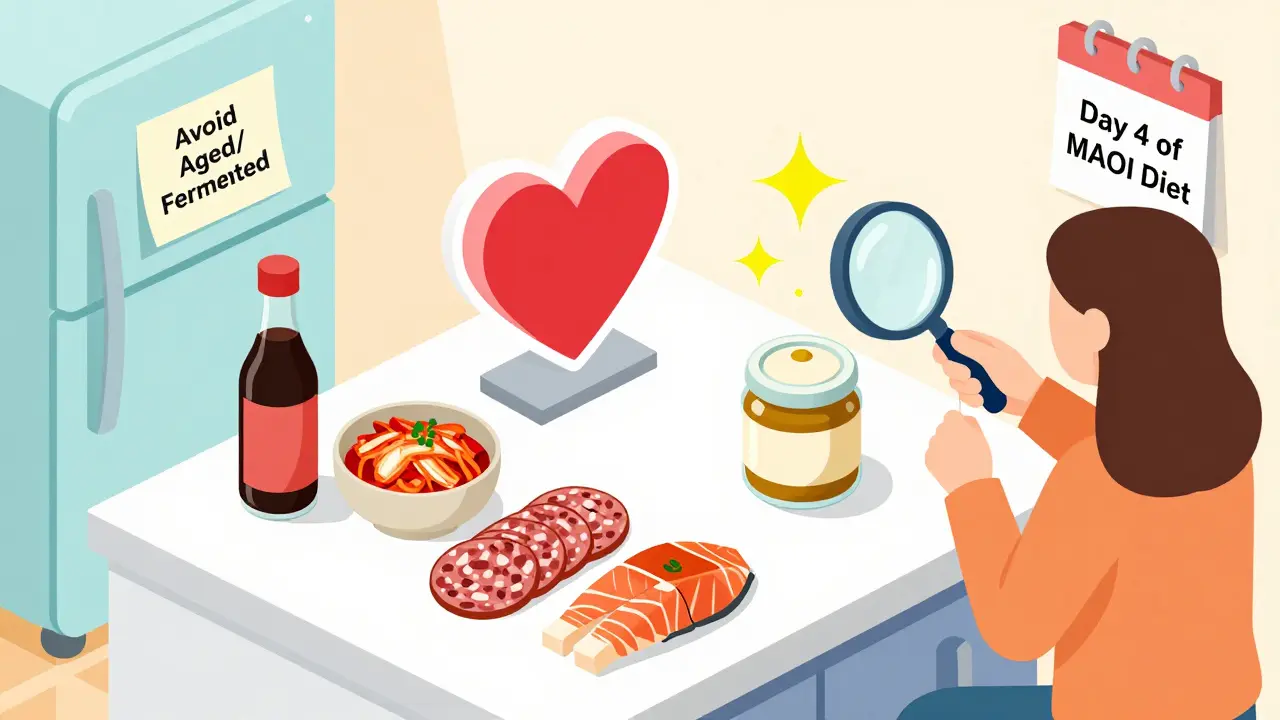
When you're on an MAOI antidepressant, cheese isn't the only food that can send your blood pressure through the roof. Many people think the danger ends with blue cheese or aged cheddar. But the real risk? It’s hiding in plain sight-in your soy sauce, your kimchi, your smoked salmon, even your tomato paste. If you’re taking phenelzine, tranylcypromine, or any other MAOI, understanding tyramine triggers beyond cheese isn’t just helpful-it’s life-saving.
Why Tyramine Is Dangerous With MAOIs
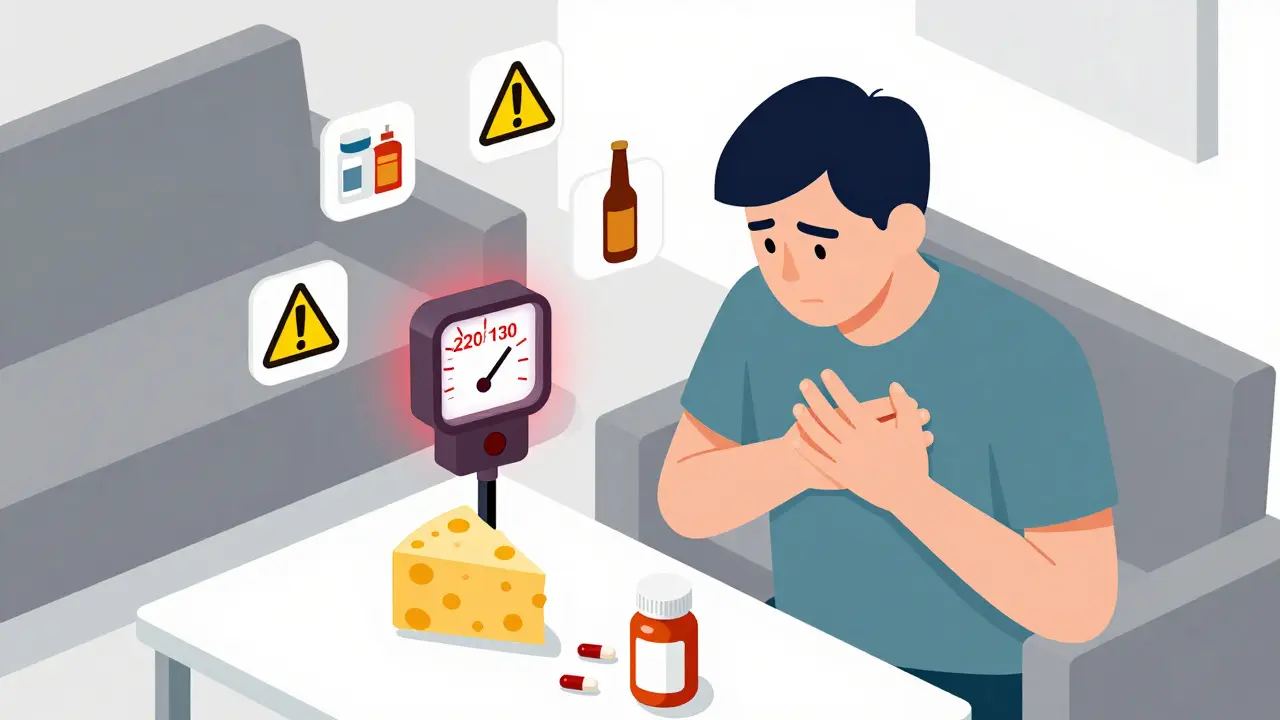
MAOIs work by blocking the enzyme that breaks down neurotransmitters like serotonin, dopamine, and norepinephrine. That’s how they help with depression. But that same enzyme also clears tyramine, a naturally occurring compound formed when proteins break down during fermentation or aging. When MAOIs stop that process, tyramine builds up. And too much tyramine forces your body to release massive amounts of norepinephrine, causing a sudden, dangerous spike in blood pressure. A hypertensive crisis from tyramine can hit fast: headaches, blurred vision, chest pain, nausea, and a systolic pressure over 180 mmHg. In extreme cases, it leads to stroke, heart attack, or death. This isn’t theoretical. Emergency rooms see these cases every year, often from patients who thought they were being careful-just because they avoided cheese.The Hidden Tyramine Sources You Can’t Ignore
Cheese gets all the attention. But here’s what’s actually dangerous:- Dry-aged meats: Salami (95-115 mg/kg), pepperoni (80-100 mg/kg), and cured hams contain tyramine levels that can trigger reactions even in small portions.
- Fermented soy products: Miso paste (60-85 mg/kg), soy sauce (45-70 mg/kg), and tempeh (35-60 mg/kg) are common in Asian cuisine-and often undetected in restaurant meals.
- Pickled and fermented vegetables: Sauerkraut (50-75 mg/kg), kimchi (40-65 mg/kg), and pickled beets (30-55 mg/kg) are healthy foods… unless you’re on an MAOI.
- Fermented condiments: Worcestershire sauce (25-45 mg/kg), fish sauce (35-55 mg/kg), and Marmite (40-60 mg/kg) are used in tiny amounts, but they add up fast.
- Alcohol: Draft beer (15-30 mg/L), red wine (20-40 mg/L), sherry (35-55 mg/L), and vermouth (50-75 mg/L) are riskier than bottled versions because of air exposure during dispensing.
- Overripe or spoiled foods: Bananas, avocados, and even tofu can spike in tyramine after just a few days in the fridge. One study showed tofu’s tyramine level jumped from 5 mg/kg to 25 mg/kg in 72 hours.
These aren’t outliers. These are documented, measurable levels from food science databases like USDA FoodData Central and the European Food Safety Authority. And they’re not rare-these foods are in everyday meals.
Why Restaurants Are a Minefield
You might avoid cheese at home, but what about when you eat out? A 2023 investigation found that 7 out of 10 popular chain restaurants couldn’t tell you whether their menu items contained soy sauce, fish sauce, or Worcestershire sauce-even when asked directly. That’s not incompetence-it’s systemic. Most kitchen staff don’t know what tyramine is, let alone which ingredients contain it. A Reddit user named NeurotransmitterNancy ended up in the ER after eating miso soup at a Japanese restaurant. Her blood pressure hit 210/115. She had no idea miso was a risk. Her doctor hadn’t warned her. The server didn’t know. A 2022 survey of 347 MAOI users found that 32.1% of dietary slips happened because of sauces and condiments. Another 24.5% came from cured meats at restaurants. Social events get canceled. Dates get awkward. People stop eating out altogether.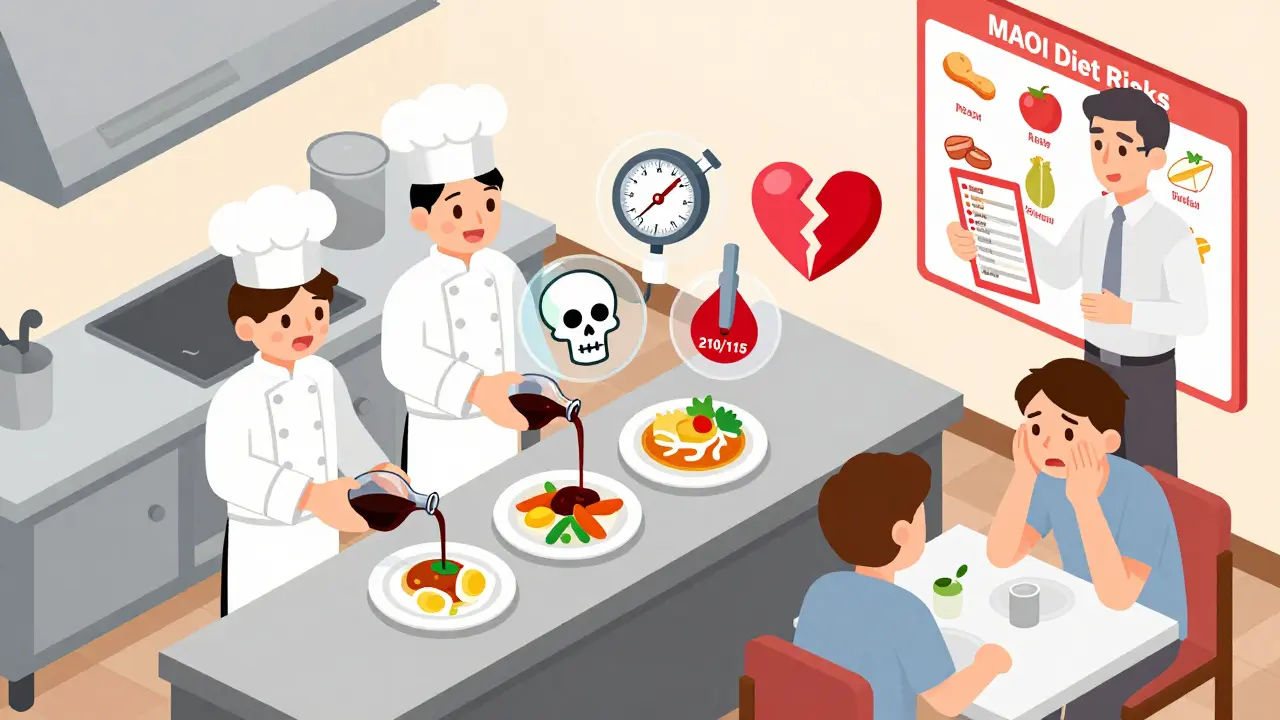
Refrigeration Doesn’t Fix It
Many assume that keeping food cold prevents tyramine buildup. It slows it down-but it doesn’t stop it. Tyramine forms during fermentation and aging, and once it’s there, refrigeration can’t remove it. That’s why even fresh tofu becomes risky after a few days. The same goes for yogurt, pickled vegetables, and aged meats stored in your fridge. The only safe approach? Avoid foods with known high tyramine levels entirely. Don’t rely on storage time. Don’t assume freshness. If it’s fermented, aged, smoked, or cured-assume it’s dangerous.What About Soy Sauce? Can I Have a Little?
This is one of the most debated topics. Some doctors say even a tablespoon of soy sauce is fine. Others say any amount is too much. The truth? It depends on the person. But here’s the reality: there’s no safe threshold proven for everyone. A 2021 clinical review by Dr. Brian Staiger suggested small amounts might be tolerable for some patients. But that was based on observations of 127 people-not controlled trials. Meanwhile, the American Psychiatric Association’s 2023 guidelines say: avoid all high-tyramine foods. No exceptions. If you’re tempted to test the limits, remember: one reaction is all it takes. And once you’ve had a hypertensive crisis, your sensitivity often increases. What was once tolerable becomes dangerous.What You Can Eat Instead
You don’t have to give up flavor. There are safe alternatives:- Use fresh herbs, lemon juice, or vinegar-based dressings instead of soy sauce or Worcestershire.
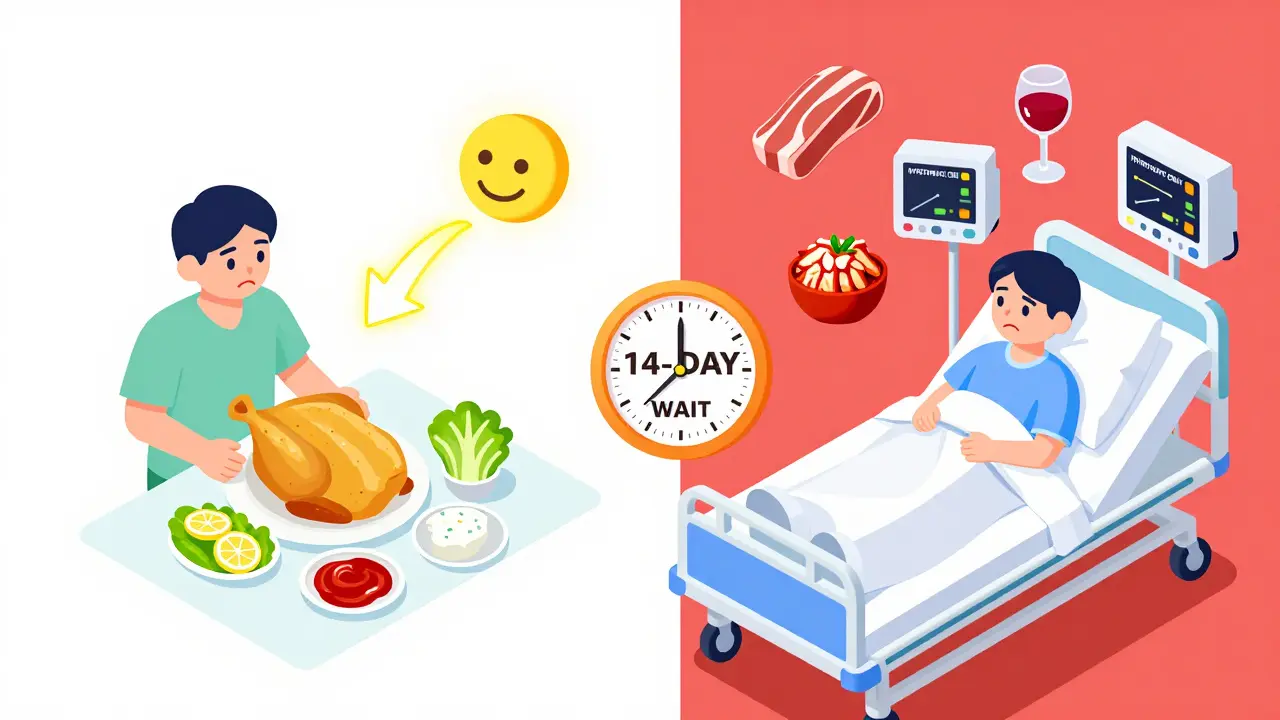
- Choose fresh, unaged meats-like chicken breast, ground turkey, or fresh fish cooked the same day.
- Opt for pasteurized, unfermented dairy: cottage cheese, ricotta, cream cheese, and fresh mozzarella are safe.
- Use fresh vegetables and fruits-just avoid overripe ones. Bananas should be yellow with no brown spots.
- Try non-fermented condiments like ketchup, mustard, and mayonnaise (check labels for hidden yeast extracts).
Companies like NutriMind now offer MAOI-safe meal kits with pre-screened ingredients. Subscription services like these are growing fast-over 12,000 users in 2023. They’re not cheap, but for many, they’re worth the peace of mind.
How to Stay Safe: Practical Steps
If you’re on an MAOI, here’s what you need to do:- Get a full dietary review with a registered dietitian who specializes in psychiatric nutrition. Most major hospitals offer this now.
- Carry a warning card-the kind emergency rooms prefer. It lists your medication and the foods to avoid. Eighty-seven percent of ER doctors say this saves lives.
- Read every label for words like: fermented, aged, cured, smoked, yeast extract, soy sauce, miso, fish sauce, Worcestershire.
- Ask questions at restaurants: “Does this dish contain soy sauce, fish sauce, or aged meats?” Don’t be shy. Your life depends on it.
- Wait 14 days after stopping MAOIs before eating high-tyramine foods. The enzyme doesn’t bounce back instantly.
Most patients take 8 to 12 weeks to get comfortable with the diet. Fermented condiments are the hardest to track. Even after six months, over 60% of people still miss hidden sources.
The Bigger Picture: Why MAOIs Still Matter
MAOIs aren’t first-line treatment anymore. But they’re still the most effective option for treatment-resistant depression-helping 65-70% of people where SSRIs fail. That’s why prescriptions are rising. In 2023, global MAOI use grew 8.7% annually. Newer versions like the selegiline patch (Emsam) allow limited tyramine intake at low doses. And research is underway for enzyme supplements like TyraZyme, which reduced tyramine absorption by 58% in trials. But these aren’t approved as replacements yet. The future is personalized: genetic tests may soon identify who can tolerate small amounts of tyramine based on their natural enzyme activity. Until then, caution is the only proven strategy.Final Reality Check
Yes, the diet is hard. Yes, it limits your choices. Yes, you’ll feel isolated sometimes. But 78.6% of MAOI users surveyed said the benefits outweighed the restrictions. Their depression lifted. Their energy returned. Their lives improved. The alternative? Staying stuck in depression because you were afraid to take the medication that could help. You don’t have to give up food forever. You just have to know what’s safe-and what’s not. Cheese is just the start. The real danger is what you don’t see coming.Can I eat yogurt on MAOIs?
Yes-but only fresh, unaged yogurt. Avoid fermented or probiotic yogurts labeled as "aged," "cultured," or "probiotic-rich." Stick to plain, pasteurized yogurt with no added flavors or fermentation cultures. Check the ingredient list: if it says "live cultures," it’s safer to avoid unless confirmed by your doctor.
Is soy milk safe on MAOIs?
Plain, unfermented soy milk is generally safe. Avoid fermented soy milk products like "soy kefir" or "fermented soy drink." Stick to brands that list only soybeans and water. If it’s labeled as "naturally fermented" or has added cultures, skip it.
What about chocolate?
Dark chocolate and cocoa powder contain small amounts of tyramine and other stimulants. Most people tolerate small amounts (1-2 ounces), but some report blood pressure spikes. If you’re sensitive, avoid it. Milk chocolate is lower risk but still contains trace amounts. When in doubt, skip it.
Can I drink coffee while on MAOIs?
Yes, but limit caffeine. MAOIs can increase sensitivity to stimulants. More than 2-3 cups of coffee a day may raise your heart rate or blood pressure. Switch to decaf if you notice jitteriness or palpitations.
What if I accidentally eat something high in tyramine?
Monitor your symptoms closely: headache, stiff neck, chest pain, rapid heartbeat, sweating, blurred vision. If any appear, call 911 or go to the ER immediately. Do not wait. Keep your MAOI warning card handy. If you have a blood pressure monitor at home, check your reading. Anything over 160/100 is a red flag.
Are there any new medications that don’t require dietary restrictions?
The selegiline transdermal patch (Emsam) at the lowest dose (6 mg/24 hours) allows up to 10 grams of tyramine daily-far more than most people consume. That’s the only MAOI with relaxed restrictions. Other newer drugs like reversible MAOIs are still in trials. For now, oral MAOIs still require strict diet control.
brooke wright
January 16, 2026 AT 03:23I ate kimchi with my ramen last week and woke up with a headache so bad I thought I was having a stroke. My boyfriend had to drive me to urgent care. They asked if I was on MAOIs. I said no. They said I was lucky. I’m not taking any chances now. No more fermented stuff. Ever.
Nick Cole
January 17, 2026 AT 22:46This is the most important post I’ve read all year. I’m on phenelzine and thought I was fine because I avoided cheese. Turns out my go-to stir-fry sauce was basically a tyramine bomb. I switched to coconut aminos and my BP has been stable for three months. If you’re on an MAOI, stop guessing. Start reading labels. Your life isn’t worth the risk.
Travis Craw
January 18, 2026 AT 14:41so i just found out my favorite soy sauce has 70mg/kg of tyramine?? like… i use it in everything. i feel kinda dumb now. but also kinda scared. thanks for the heads up. gonna switch to rice vinegar and hope for the best.
Christina Bilotti
January 19, 2026 AT 00:13Oh sweet mercy. So you’re telling me that my ‘artisanal, small-batch, hand-fermented’ miso ramen from that $24 ‘cultural experience’ restaurant last Tuesday? Yeah. That was a medical emergency waiting to happen. And the server? She didn’t even know what tyramine was. She said ‘it’s just broth.’
Meanwhile, I’m sitting here wondering if my life is now a cautionary tale for people who think ‘natural’ means ‘safe.’
vivek kumar
January 20, 2026 AT 08:27As someone from India where fermented foods like idli and dosa batter are staples, I’m stunned by how little awareness exists. In my family, we ferment rice and lentils daily-no refrigeration, no preservatives. But we also don’t have MAOIs. This post highlights a terrifying gap: global food traditions meet Western psychiatric protocols without any cultural translation. We need dietitians who understand both.
Henry Ip
January 21, 2026 AT 03:36Just started MAOIs last month and this saved me. I was about to order a teriyaki bowl. Now I know to ask for no sauce and get it on the side. I also bought a food scale and started tracking tyramine levels in my journal. It’s a pain but worth it. I’m finally sleeping and not crying all day. Thank you for this
waneta rozwan
January 21, 2026 AT 14:37Let me get this straight. I can’t have my beloved smoked salmon, my kimchi tacos, my homemade kombucha, or even my dark chocolate-covered almonds? And the worst part? My therapist didn’t tell me any of this. She just handed me a script and said ‘take it daily.’
So now I’m the weirdo at dinner parties saying ‘no thanks’ to everything. I’m not just on medication-I’m on a dietary lockdown. And I’m supposed to be grateful? For what? For being scared to eat?
Nicholas Gabriel
January 22, 2026 AT 19:28PLEASE, if you're on an MAOI-get a warning card. Get it from your doctor. Print it. Laminate it. Keep it in your wallet. I saw a guy in the ER last year who had a hypertensive crisis from Worcestershire in his burger sauce. He didn’t know. The nurse didn’t know. He had to be intubated.
And if you’re a doctor? Stop assuming patients know. Tell them. Write it down. Send them links. This isn’t optional. It’s basic care.
Isabella Reid
January 24, 2026 AT 00:15My mom’s from Korea and she makes kimchi every winter. I used to eat it like candy. Now I don’t touch it. But I also don’t tell her why. She’d cry. So I just say I’m on a ‘low-sodium phase.’ She thinks I’m being healthy. I’m just surviving.
It’s weird-how much of this is invisible. You’re not just avoiding food. You’re avoiding culture. Family. Tradition. And nobody talks about that part.
Jody Fahrenkrug
January 25, 2026 AT 07:34Just ate tofu that was in the fridge for 4 days. Didn’t think twice. Now I’m checking the expiration date like it’s a bomb. Thanks for the heads-up. I’m not mad, just… surprised. I thought refrigeration = safe. Nope. Learned the hard way.
Kasey Summerer
January 26, 2026 AT 14:40So I’m on MAOIs, I avoid cheese, I use coconut aminos, I read every label… and I still had a panic attack because I thought I saw a drop of soy sauce in my salad.
My therapist says I’m overreacting.
I say: try living with the fear that your lunch could kill you. 😅