
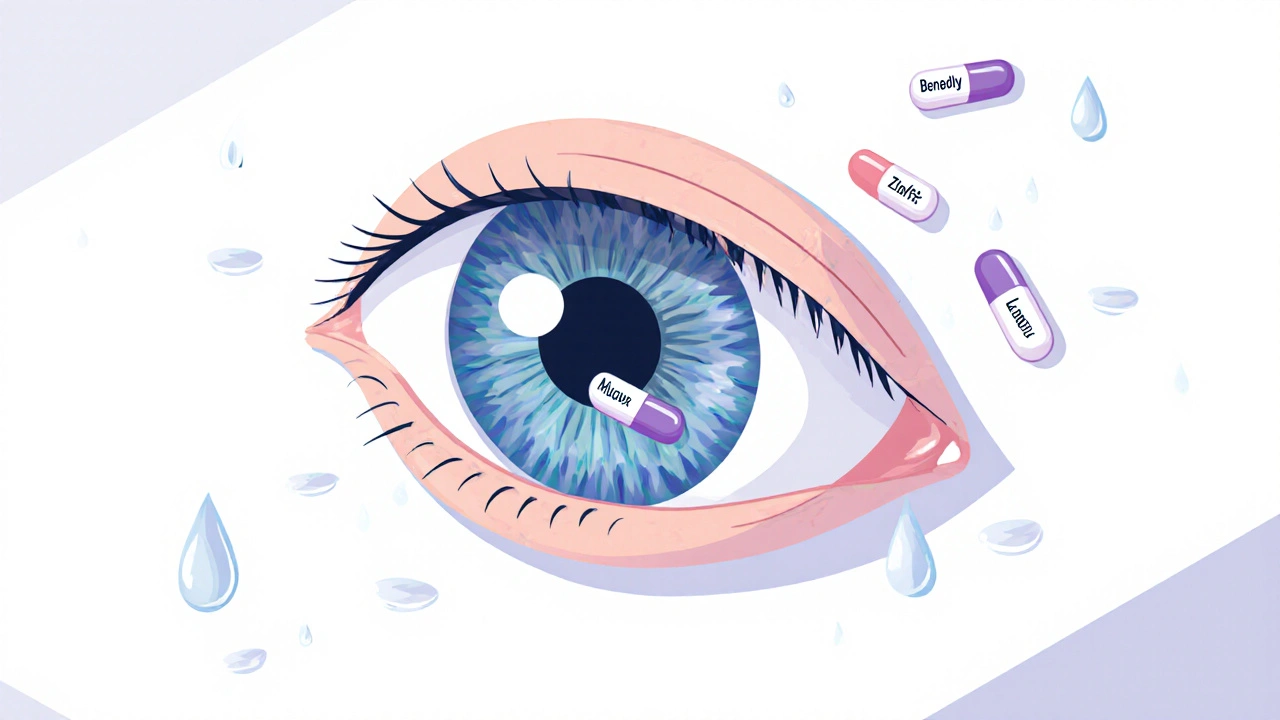
Medication Dry Eye Risk Calculator
Many medications can cause dry eyes, and understanding your risk is the first step toward relief. Answer a few questions to assess your medication-induced dry eye risk level and get personalized recommendations.
Check all medications you're currently taking that are known to cause dry eyes:
Why Your Medications Are Making Your Eyes Feel Like Sandpaper
You’re not imagining it. If your eyes burn, sting, or feel gritty-especially after starting a new pill-you’re not alone. Up to 30% of people with dry eyes have them because of their medications, not aging or screen time. That’s right: your blood pressure pill, antidepressant, or even allergy medicine could be drying out your eyes. It’s not a coincidence. These drugs interfere with your tear system in ways most doctors don’t talk about until the discomfort becomes unbearable.
The tear film isn’t just water. It’s a three-layer sandwich: oil, water, and mucus. Medications can mess with any of these layers. Antihistamines like Benadryl or Zyrtec shut down the signals that tell your tear glands to produce fluid. Antidepressants like Zoloft or Prozac do the same. Diuretics like Lasix make your whole body dehydrated-including your eyes. Even glaucoma drops, which you use daily to protect your vision, can burn your surface because of a chemical called benzalkonium chloride (BAK). In fact, nearly half of people using these drops report dry eye symptoms. Switch to preservative-free versions, and that number drops to 16%.
What Medications Are Most Likely to Cause Dry Eyes?
Not all drugs affect your eyes the same way. Some are worse than others. Here’s what the data shows:
- Antihistamines: Diphenhydramine (Benadryl), loratadine (Claritin), cetirizine (Zyrtec) - block tear production
- Antidepressants: Amitriptyline, nortriptyline, sertraline (Zoloft), fluoxetine (Prozac) - reduce nerve signals to tear glands
- Blood pressure meds: Metoprolol, atenolol, hydrochlorothiazide, furosemide (Lasix) - cause systemic dehydration
- Glaucoma drops: Latanoprost, timolol, dorzolamide (Trusopt) - BAK preservative damages surface cells
- Acne treatments: Isotretinoin (Accutane) - shuts down oil glands in eyelids, leading to rapid tear evaporation
- Chemotherapy drugs: Methotrexate, cisplatin, cyclophosphamide - damage tear-producing cells directly
- Newer drugs: Immune checkpoint inhibitors, DPP-4 inhibitors (like sitagliptin), EGFR inhibitors - cause inflammation and surface damage
If you’re on any of these, especially more than one, your dry eyes aren’t just ‘bad luck.’ They’re a known side effect. The older you are, the higher the risk. Among people over 65 taking five or more medications, up to 40% develop dry eye symptoms.
Lubrication That Actually Works (No Preservatives, No Guesswork)
Not all eye drops are created equal. Most over-the-counter brands contain preservatives like BAK to keep them sterile after opening. But if you’re using them more than four times a day, those preservatives become part of the problem. They irritate your already sensitive eye surface, making dryness worse.
The solution? Preservative-free artificial tears. These come in single-use vials-no preservatives, no buildup. Use them 4 to 6 times a day. For people using glaucoma drops, applying preservative-free tears 15 minutes before and after their medication improves symptoms by 78% in clinical studies.
Here’s how to use them right:
- Tilt your head back slightly.
- Pull down your lower eyelid to form a small pocket.
- Hold the vial above your eye without touching your eyelid or lashes.
- Squeeze one drop in. Close your eye gently for 30 seconds.
- Don’t rub. Don’t blink hard. Just let it settle.
Brands like Systane Ultra Preservative-Free, Refresh Optive Advanced, and Blink Intensive Tears are widely available. Avoid multi-dose bottles unless you’re using them less than 3 times a day.
When Drops Aren’t Enough: Prescription Options
If artificial tears aren’t cutting it after 4 weeks, it’s time to talk to your eye doctor about prescription treatments.
Cyclosporine (Restasis, Cequa) works by calming inflammation in your tear glands. It takes 3 to 6 months to work, but once it does, it increases tear production by 15-20%. Cequa’s newer nanomicellar formula is absorbed 300% better than older versions, meaning lower doses can be just as effective.
Lifitegrast (Xiidra) targets a different pathway-blocking the immune signals that cause irritation. Clinical trials show a 30% reduction in symptoms within 2 weeks, with full results by 12 weeks.
For people with blocked oil glands (common with Accutane or aging), warm compresses and lid massage help. Do this twice a day: apply a warm, damp cloth to closed eyelids for 10-15 minutes, then gently massage your eyelids with your finger, moving from the outer to inner corner. Studies show this improves gland function in 65% of cases.
In severe cases, punctal plugs-tiny silicone or collagen inserts placed in the tear ducts-can trap your natural tears on the eye. Collagen plugs last 3-6 months and dissolve on their own. Silicone plugs are permanent and offer 40-50% more tear volume. Success rates hit 70% for patients who’ve tried everything else.
Lifestyle Changes That Make a Real Difference
Medications aren’t the only culprit. Your environment and habits can make dry eyes ten times worse. Fixing these can give you back comfort without adding another pill.
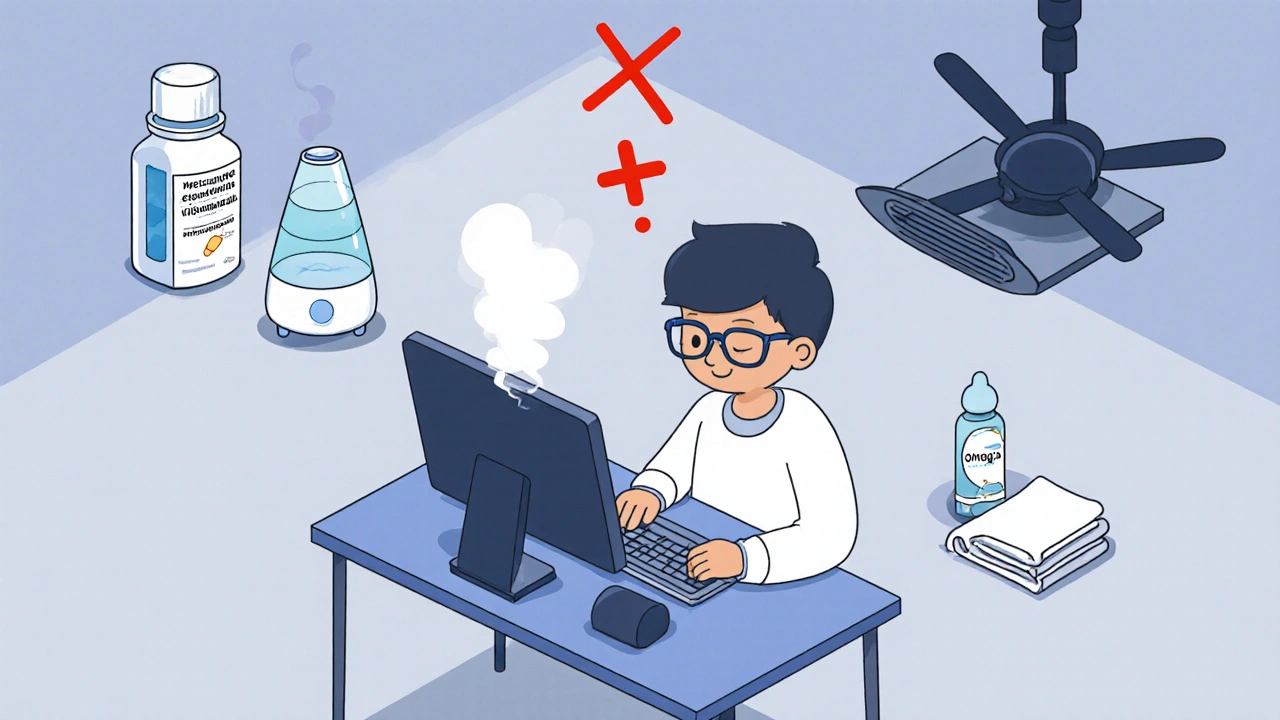
- Humidify your space: Keep indoor humidity between 40-60%. A simple tabletop humidifier reduces tear evaporation by 25%. This is especially important in winter or in air-conditioned offices.
- Follow the 20-20-20 rule: Every 20 minutes, look at something 20 feet away for 20 seconds. This reduces digital eye strain by 35% in people on antihistamines or antidepressants.
- Stop the airflow: Don’t sit directly in front of fans, car vents, or AC units. Air moving faster than 0.15 m/s over your face increases tear evaporation by 30%.
- Take omega-3s: 1,000-2,000 mg daily of EPA and DHA (fish oil) improves tear film stability in 60% of users within 3 months. Look for brands with high concentration and third-party testing.
- Quit smoking: Smoke increases dry eye symptoms by 45% in people on medications. Quitting leads to noticeable improvement in 2-4 weeks.
One user on Reddit, after 3 months on Zoloft, said: “My eyes felt like sandpaper. I switched to preservative-free Systane Ultra and did warm compresses twice daily. Within two weeks, I could read for more than 20 minutes without burning.” That’s not magic. That’s science.
Don’t Stop Your Meds-Talk to Your Doctor
It’s tempting to quit a pill that’s making you miserable. But don’t. Stopping blood pressure meds or antidepressants cold turkey can be dangerous.
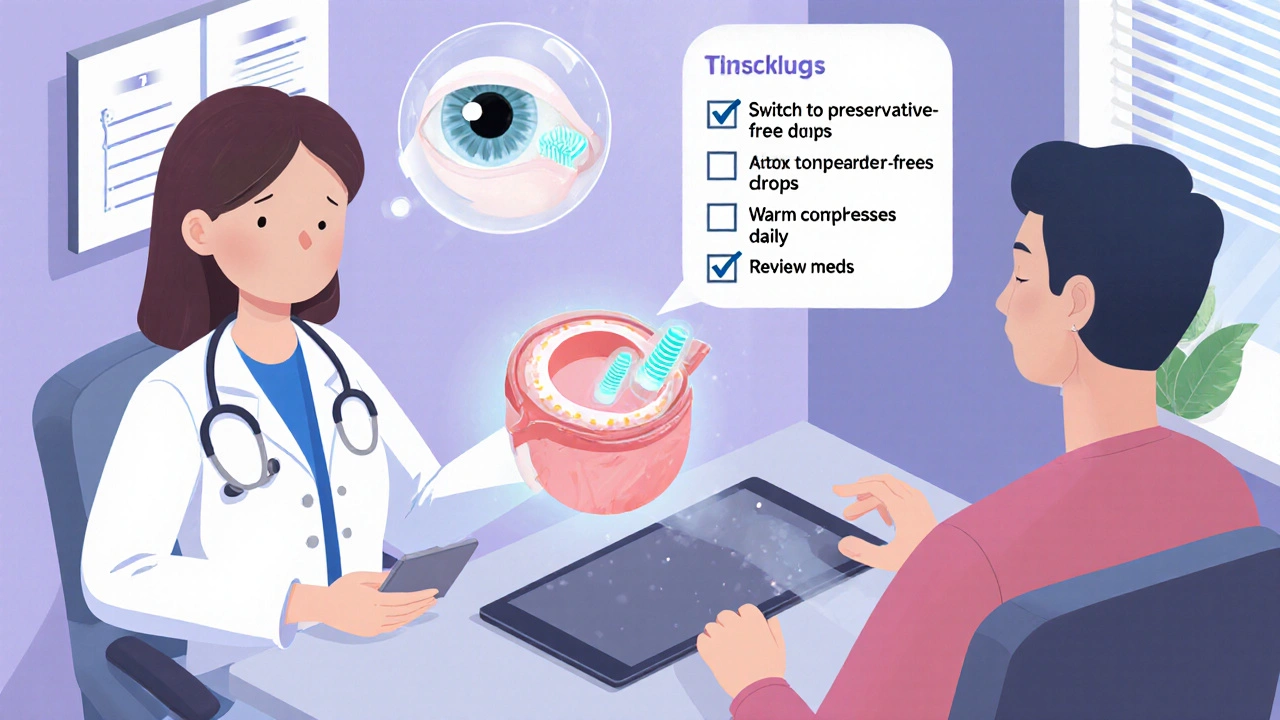
The right move? Schedule a joint appointment with your prescribing doctor and your eye specialist. Together, they can:
- Review every medication you take
- Identify which one is most likely causing the problem
- Check if there’s an alternative with fewer eye side effects
- Adjust the dose-55% of patients see improvement with just a small reduction
For example, switching from a BAK-containing glaucoma drop to a preservative-free version can cut symptoms in half. Or replacing an antihistamine with a nasal spray can remove the eye irritation without losing allergy control.
What to Do If Nothing Seems to Work
Some cases are stubborn. Isotretinoin (Accutane) can permanently damage oil glands. Chemotherapy can destroy tear-producing cells. For these, advanced treatments like iLux thermal pulsation therapy (a device that melts blocked oils in eyelids) can help. One user reported an 80% drop in symptoms after three sessions-even though nothing else worked.
Cost can be a barrier. Restasis runs about $550 a month in the U.S. without insurance. Many insurers still don’t cover dry eye treatments, even when they’re medically necessary. Ask your doctor for samples, patient assistance programs, or generic alternatives.
Also, consider visiting a dry eye clinic. These specialized centers use tools like tear osmolarity tests and meibomian gland imaging to pinpoint the exact cause. They’re now available in 85% of major U.S. cities. If you’re in Sydney, Australia, look for ophthalmology practices with a dry eye focus-they’ve been offering these services for years.
How Long Until You Feel Better?
Be patient. This isn’t a quick fix.
- Preservative-free tears: Noticeable relief in 2-4 weeks
- Warm compresses and lid hygiene: Improvement in 3-6 weeks
- Cyclosporine or lifitegrast: 3-6 months for full effect
- Omega-3 supplements: 8-12 weeks for measurable change in tear quality
Success depends on consistency. Studies show 60% of people who stick to the full plan-drops, compresses, diet, humidity-see major improvement. Those who skip steps? Symptoms linger or get worse.
What’s Next for Dry Eye Treatment?
The field is changing fast. The FDA now encourages drugmakers to develop preservative-free formulations. New lipid-based eye drops are being tested specifically for Accutane users. Nanomicellar tech is making cyclosporine more effective at lower doses. And doctors are finally starting to ask: “What meds are you on?” before prescribing eye drops.
In five years, we may see fewer cases of medication-induced dry eye-not because the drugs are gone, but because doctors and patients are better equipped to manage them.
Right now, your best tools are awareness, consistency, and communication. Know your meds. Know your symptoms. Talk to your team. You don’t have to live with burning eyes.
Can my allergy medicine cause dry eyes?
Yes. Common antihistamines like Benadryl, Claritin, and Zyrtec block the nerves that tell your tear glands to produce fluid. This leads to reduced tear volume and dryness. If you notice irritation after starting one, switch to a nasal spray or non-sedating option like loratadine, and use preservative-free artificial tears to manage symptoms.
Are preservative-free eye drops worth the extra cost?
If you’re using eye drops more than 4 times a day, yes. Preservatives like BAK can irritate your eyes and make dryness worse over time. Single-dose preservative-free vials cost more per drop, but they’re safer for long-term use. Many brands offer subscription plans or bulk packs to reduce the price. For people on multiple medications, they’re not a luxury-they’re necessary.
Can I use lubricating eye drops with my glaucoma medication?
Yes, but timing matters. Wait at least 15 minutes between applying your glaucoma drops and your artificial tears. Applying them too close together can wash out the glaucoma medication before it works. Use preservative-free tears for this. If you’re using multiple glaucoma drops, ask your doctor about switching to preservative-free versions-they’re just as effective and gentler on your eyes.
Why do my eyes feel worse in the morning?
At night, your tear production drops, and your eyelids don’t fully close during sleep-especially if you have a history of dry eye. This causes your eyes to dry out overnight. Morning grittiness is common. Try using a thick gel or ointment before bed (like Refresh PM) and a humidifier in your bedroom. Warm compresses right after waking can also help unblock oil glands.
Will drinking more water fix dry eyes from medications?
Hydration helps, but it won’t fix the root cause. If your medication is blocking nerve signals to your tear glands or damaging your oil glands, drinking water won’t restore that function. It can improve overall tear volume slightly, but you still need targeted treatments like preservative-free drops, omega-3s, and warm compresses. Think of water as support-not a cure.
Is dry eye from medication permanent?
Usually not. If the medication is stopped or changed, symptoms often improve within weeks to months. However, some drugs like isotretinoin can cause long-term damage to oil glands, leading to chronic dry eye. In these cases, ongoing management is needed. The key is catching it early-once inflammation and gland damage become severe, reversal is harder. Don’t wait until it’s unbearable.
Final Thought: You’re Not Alone
Dry eyes from medications are common, underdiagnosed, and often dismissed. But they don’t have to be your new normal. With the right combination of lubrication, lifestyle tweaks, and smart communication with your doctors, you can get back to reading, driving, and staring at screens without pain. Start with one change today-switch to preservative-free drops, add a humidifier, or schedule a meds review. Small steps lead to big relief.
Monica Lindsey
November 29, 2025 AT 18:26Jennifer Wang
December 1, 2025 AT 05:42stephen idiado
December 3, 2025 AT 00:22Subhash Singh
December 4, 2025 AT 01:12Geoff Heredia
December 5, 2025 AT 00:47gerardo beaudoin
December 5, 2025 AT 22:11Joy Aniekwe
December 6, 2025 AT 10:01Latika Gupta
December 6, 2025 AT 18:56