
Drug Holiday Safety Calculator
Is Your Drug Holiday Safe?
This tool helps determine if a temporary pause from your medication is safe based on your specific situation. Drug holidays can be beneficial for some medications but dangerous for others. Always consult your doctor before making changes to your medication regimen.
Stopping your medication might sound like a bad idea-until you’re dealing with constant nausea, sexual dysfunction, or a child who can’t sleep because of stimulant side effects. That’s when the idea of a drug holiday starts to make sense. But here’s the catch: not all drug holidays are created equal. Some can help. Others can land you in the ER. The difference? Planning, timing, and medical supervision.
What Exactly Is a Drug Holiday?
A drug holiday isn’t just skipping pills because you feel fine. It’s a planned, temporary pause in medication-done under a doctor’s watch. The goal? To give your body a break from side effects, reset tolerance, or see if you still even need the drug. These breaks can last from a couple of days to a few months, depending on the medicine and why you’re doing it.It’s not new. The idea took off in the 90s with HIV treatment, but the landmark SMART trial in 2006 proved that for HIV meds, skipping doses increased the risk of serious infections and heart problems by over 50%. That shut the door on drug holidays for most HIV patients. But for other conditions? The story’s different.
Where Drug Holidays Actually Work
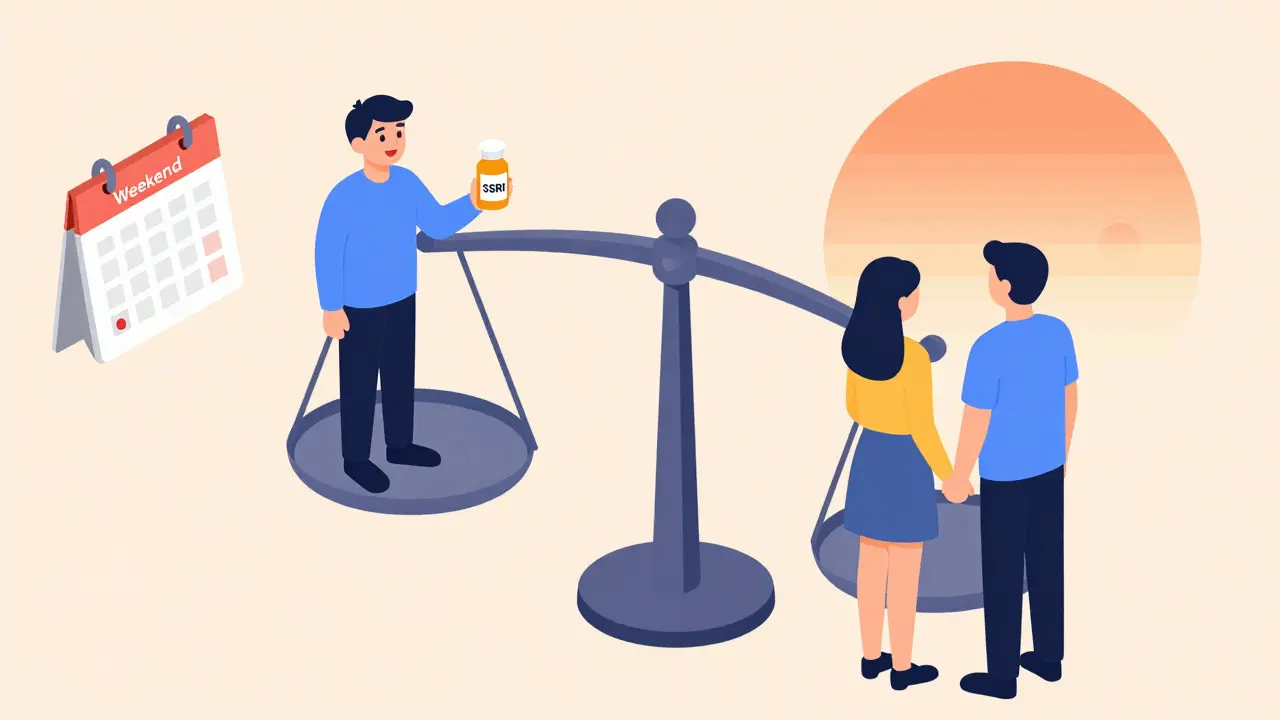
The clearest wins come from antidepressants-specifically SSRIs like fluoxetine (Prozac) and sertraline (Zoloft). Many people take these for years without issue, but sexual side effects? They’re common. Up to 70% of users report lowered libido, delayed orgasm, or erectile dysfunction. That’s not just inconvenient-it can wreck relationships.Enter the weekend drug holiday. Take your SSRI Monday through Friday, skip Saturday and Sunday. For drugs with a long half-life like fluoxetine (which sticks around for 4-6 days), this works. Studies show 65% of users report improved sexual function without a drop in mood. One patient on PatientsLikeMe said, “Two days off Prozac restored intimacy without noticeable mood changes.” That’s the sweet spot: short, controlled, and monitored.
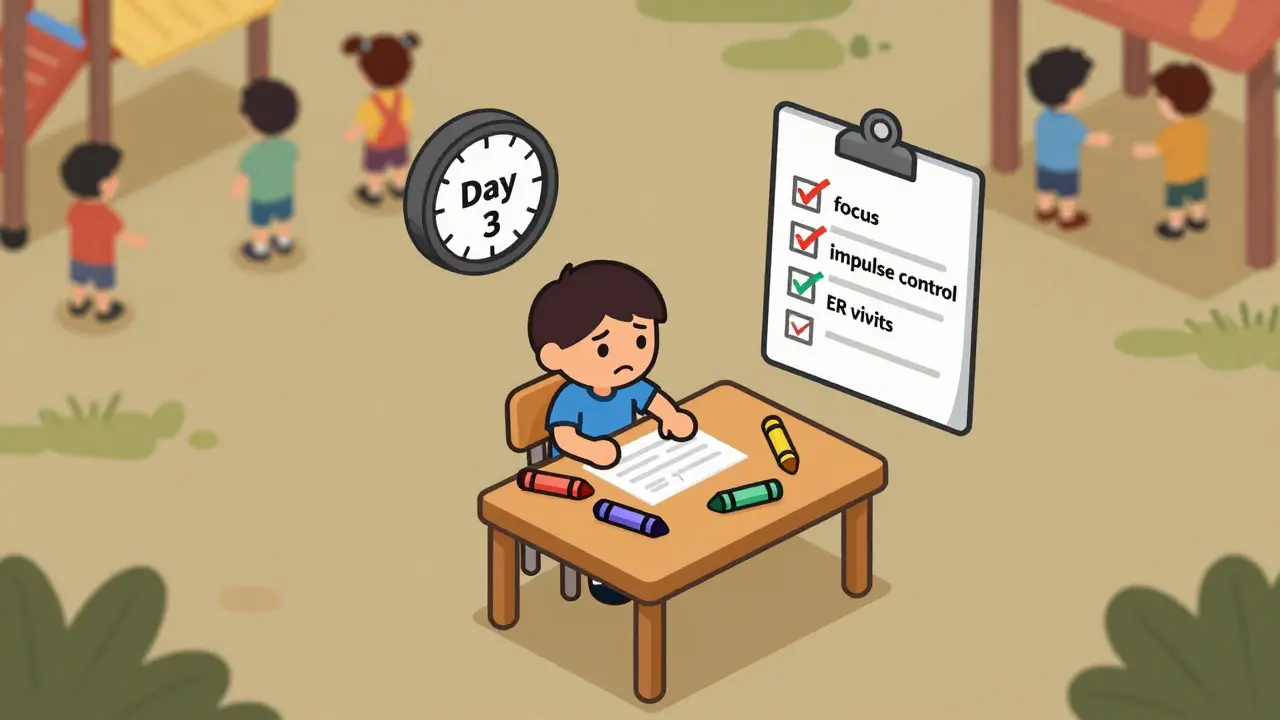
Another group that benefits? People on long-term stimulants for ADHD. Methylphenidate (Ritalin) and amphetamines (Adderall) can suppress appetite and slow growth in kids. Some parents opt for summer breaks-or breaks during school holidays-to let their child’s body catch up. The Child Mind Institute found 15-20% of children show improved growth during these breaks. But here’s the trade-off: 78% of kids experience symptom rebound. That means more outbursts, trouble focusing, even accidents. One mom told them her son got into three ER visits over summer because he couldn’t control his impulses without meds.
Where Drug Holidays Are Dangerous
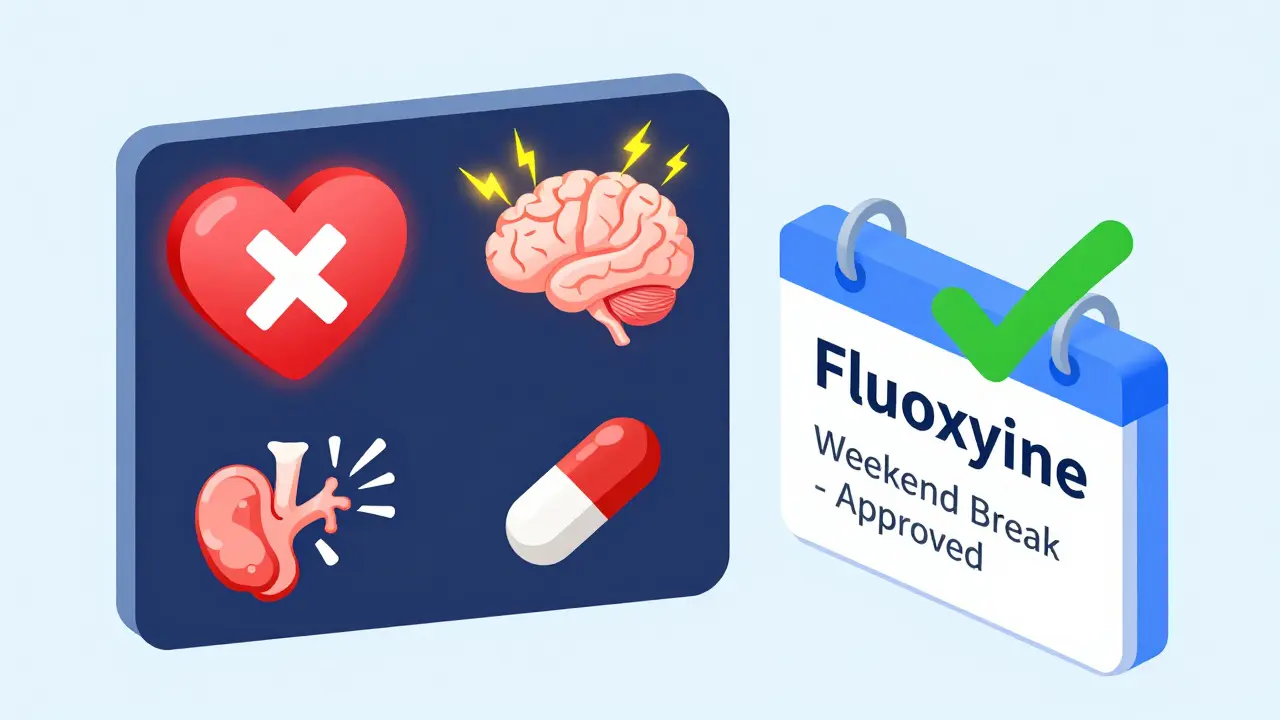
Some drugs don’t play nice with breaks. Stop them suddenly, and you risk serious harm.Take beta-blockers for high blood pressure. Skip a dose, and your heart rate can spike dangerously. Anticonvulsants for epilepsy? One missed day can trigger a seizure. Corticosteroids like prednisone? Abrupt stops can cause adrenal crisis-your body can’t produce enough natural steroids fast enough. These aren’t risks you gamble with. No drug holiday here.
Even in psychiatry, not all meds are safe to pause. Paroxetine (Paxil), another SSRI, has a half-life of just 21 hours. That means it clears your system fast-and withdrawal symptoms like brain zaps, dizziness, and nausea hit hard. A 2023 Drugs.com survey found 41% of users experienced these symptoms during unplanned breaks. And antidepressants in general? A 2020 meta-analysis showed 33% of people with multiple prior depressive episodes had symptoms return within 14 days of stopping.
And then there’s Parkinson’s. In the 80s, doctors tried drug holidays to “reset” dopamine receptors. The result? Severe tremors, freezing episodes, and a 22% spike in hospitalizations. That approach is dead now. The body doesn’t reset-it rebels.
How to Do a Drug Holiday Right
If you’re thinking about a break, don’t wing it. Here’s how to do it safely:- Wait until you’re stable. Most guidelines say at least 6 months of consistent symptom control before even considering a break. Jumping in too early increases relapse risk.
- Track your symptoms. For 4-8 weeks before the break, log mood, sleep, energy, side effects. This gives you a baseline to compare against.
- Choose the right drug. Long half-life meds like fluoxetine are safer. Short-acting ones like venlafaxine (half-life 5 hours)? Avoid breaks entirely.
- Plan the duration. Weekend breaks (48-72 hours) work for SSRIs. For ADHD, summer breaks (6-12 weeks) are common-but only if you’ve got a solid plan to manage rebound.
- Set hard return rules. What triggers you to restart? If your child can’t focus at camp. If your anxiety spikes. If you’re having panic attacks. Write these down. Don’t wait for things to get worse.
- Have a backup plan. Keep your prescription handy. Schedule a follow-up within 72 hours after restarting. Tell your family what to watch for.
Doctors are starting to use tech to help. Epic and Cerner EHR systems now have built-in holiday tracking tools. Some clinics even use AI to predict who’s at risk for relapse based on past patterns. It’s not magic-but it’s better than guessing.
The Real Cost of Skipping
It’s tempting to think, “I feel fine, why keep taking it?” But for many meds, feeling fine is the result of the drug-not your natural state.One parent on Reddit said, “I thought my 10-year-old was doing better without Adderall. Turns out, he was just quieter because he was exhausted from trying to focus all day.” That’s the hidden cost: the brain works harder without meds, and burnout follows.
And then there’s the social impact. Kids without ADHD meds during summer camp? 82% show worse behavior. That affects friendships, self-esteem, even future opportunities. One baseball coach asked a mom to restart meds after seeing her son’s performance drop. “He used to be the guy who made the catch,” she said. “Now he just stands there.”
On the flip side, adults on SSRIs who took weekend breaks reported 78% satisfaction with their quality of life. Not because they were cured-but because they got back something they’d lost: intimacy, spontaneity, joy.
What the Experts Say
Dr. Michael Craig Miller from Harvard says drug holidays can “give the body a chance to recover systems suppressed by the drug.” That’s true-for some, in some cases.But Dr. Alan Ravitz from the Child Mind Institute warns: “For ADHD, the social and behavioral costs of skipping meds far outweigh the growth benefits.” The American Academy of Child and Adolescent Psychiatry agrees: even if growth improves, accident rates jump 45% during breaks.
And Dr. David Healy’s research shows relapse isn’t rare. For people with three or more past depressive episodes, stopping antidepressants is like lighting a fuse. It might not blow up right away-but it will.
The bottom line? Structured holidays have a 68% success rate when done with a plan. Ad hoc ones? Only 22%. That’s not a gamble you want to take.
What’s Changing in 2025
The field is evolving. In 2023, the FDA approved a new extended-release version of bupropion designed with built-in “holiday windows”-a pill that slowly tapers off over 48 hours, making weekend breaks safer for SSRI users.The NIH’s SPRINT trial is now testing personalized drug holidays using genetic testing. If your DNA shows you metabolize sertraline slowly, you might be a good candidate for a break. If you’re a fast metabolizer? Probably not.
Telehealth platforms like Done and Cerebral are seeing 40% year-over-year growth in holiday consultations. More people are asking-but they’re also being guided better.
Still, the CDC reports 61% of emergency visits tied to medication issues involve people stopping on their own. That’s the real problem: lack of communication. Not the idea of a break.
So if you’re thinking about a drug holiday-talk to your doctor. Bring your symptom log. Ask: “Is this safe for me? What are the signs I need to restart? What happens if I skip too long?”
Medication isn’t a one-size-fits-all tool. Sometimes, the best way to make it work is to pause it-on purpose, with a plan, and under supervision.
Can I take a weekend break from my SSRI for sexual side effects?
Yes-but only if you’re on a long-acting SSRI like fluoxetine (Prozac) and have been stable for at least 6 months. Weekend breaks (48-72 hours) are clinically supported and help 65% of users with sexual side effects without triggering relapse. Avoid short-acting SSRIs like paroxetine (Paxil), as withdrawal symptoms can be severe.
Is it safe to stop ADHD meds during summer break?
It’s possible, but risky. While some children show improved growth during summer breaks, 78% experience symptom rebound-poor focus, impulsivity, and emotional outbursts. Studies show a 45% increase in accidents and social setbacks. Only consider this if you have a clear plan for monitoring behavior, and restart meds if your child struggles at camp, sports, or family events.
What medications should never be stopped suddenly?
Never stop beta-blockers, anticonvulsants, or corticosteroids without medical supervision. Abrupt discontinuation can cause heart attacks, seizures, or adrenal crisis. Even some antidepressants like venlafaxine can trigger dangerous withdrawal symptoms. Always check with your doctor before pausing any prescription.
How do I know if I need to restart my medication after a break?
Predefine your triggers before starting the break. For ADHD, that might mean: “If my child can’t follow simple instructions for 3 days straight, restart.” For depression: “If I’ve had 2 straight days of low energy and hopelessness, restart.” Write these down. Don’t wait for a crisis.
Are drug holidays covered by insurance?
Insurance doesn’t cover the holiday itself-but it does cover the consultations, monitoring, and follow-ups. Many clinics now offer structured medication management programs as part of value-based care. Ask your provider if they have a formal protocol in place. Telehealth platforms like Cerebral and Done also offer guided holiday plans billed as behavioral health services.
Can I do a drug holiday on my own?
No. Unsupervised medication breaks are the leading cause of emergency visits related to psychiatric drugs. The CDC reports 61% of these cases involve people stopping on their own. Even if you feel fine, your body may not be. Always work with a prescriber to design a safe, personalized plan.
John Hay
December 21, 2025 AT 11:22My kid was on Adderall for two years. Summer break? He lost three friends because he kept screaming at camp counselors. We restarted after two weeks. No regrets. The growth bump wasn't worth the social collapse.
Jon Paramore
December 22, 2025 AT 21:00Pharmacokinetics dictate feasibility. Fluoxetine’s t1/2 of 4–6 days permits weekend washout without serotonergic destabilization. Paroxetine? Half-life of 21 hours-CYP2D6 poor metabolizers face withdrawal syndromes with >80% penetrance. Don’t confuse pharmacodynamics with clinical safety.
Stacey Smith
December 23, 2025 AT 21:39Stop being so weak. If you can’t handle your meds, you shouldn’t be on them. America’s getting soft. My dad took beta-blockers for 30 years and never missed a day. No drug holiday needed.
Theo Newbold
December 25, 2025 AT 11:19Let’s be real. The 65% improvement stat for weekend SSRI breaks is cherry-picked from tiny cohorts. The real data? 41% of people report brain zaps, 29% get rebound anxiety, and 18% end up hospitalized. This isn’t a hack-it’s a gamble with your neurochemistry.
Cara C
December 26, 2025 AT 01:16I’ve been on sertraline for 8 years. Took a 72-hour break last month-just Friday to Monday. My partner said I smiled more. No mood dip. But I tracked my sleep, mood, and energy for two weeks before. If you’re going to try this, do it right. Talk to your doctor. Log everything.
Michael Ochieng
December 26, 2025 AT 17:07In Kenya, we don’t have access to this level of medical nuance. Many people stop meds because they can’t afford them. But I’ve seen what happens: seizures, relapses, families broken. If you’re lucky enough to have a doctor, use them. This isn’t a luxury-it’s survival.
Erika Putri Aldana
December 26, 2025 AT 22:25Why are we even talking about this? It’s just drugs. People used to live without SSRIs. ADHD? Just let kids be kids. You’re medicating normal behavior because you’re too lazy to parent. The real problem isn’t the meds-it’s our culture of instant fixes.
Orlando Marquez Jr
December 28, 2025 AT 18:32It is imperative to underscore that the clinical governance of pharmacological interventions necessitates the presence of a licensed prescriber. The absence of structured oversight constitutes a violation of standard-of-care protocols, as delineated in the 2022 APA Guidelines on Psychopharmacological Management.
Jackie Be
December 29, 2025 AT 15:37My husband took a weekend off his antidepressant and cried for 48 hours straight I thought he was having a breakdown but it was just the zaps and the nausea and the feeling like his brain was melting I begged him to restart and he did and now he says he feels like himself again for the first time in years
Swapneel Mehta
December 29, 2025 AT 19:03My cousin in India stopped his anticonvulsant for a week because he couldn’t afford it. Had a seizure at work. Now he’s on disability. Don’t take chances. If you’re thinking about a break, talk to someone first. It’s not weakness-it’s wisdom.
Sandy Crux
December 29, 2025 AT 23:51...And yet, one must question the underlying epistemological framework that permits such a notion-i.e., the commodification of mental health as a ‘manageable variable’-when, in fact, neurochemical equilibrium is neither modular nor easily recalibrated... The very premise of a ‘drug holiday’ implies a Cartesian separation of mind and body, which is, frankly, archaic and ethically suspect.