

Most people don’t think about earwax until it starts causing trouble-muffled hearing, a feeling of fullness, or even dizziness. But earwax isn’t dirt. It’s a natural, protective substance made by your body to trap dust, bacteria, and debris. The problem comes when it builds up too much and gets stuck. That’s where cerumenolytics come in. These are ear drops designed to soften and break down hardened earwax so it can drain out naturally or be removed safely with irrigation. And yes, you can use them at home-correctly.
What Are Cerumenolytics, Really?
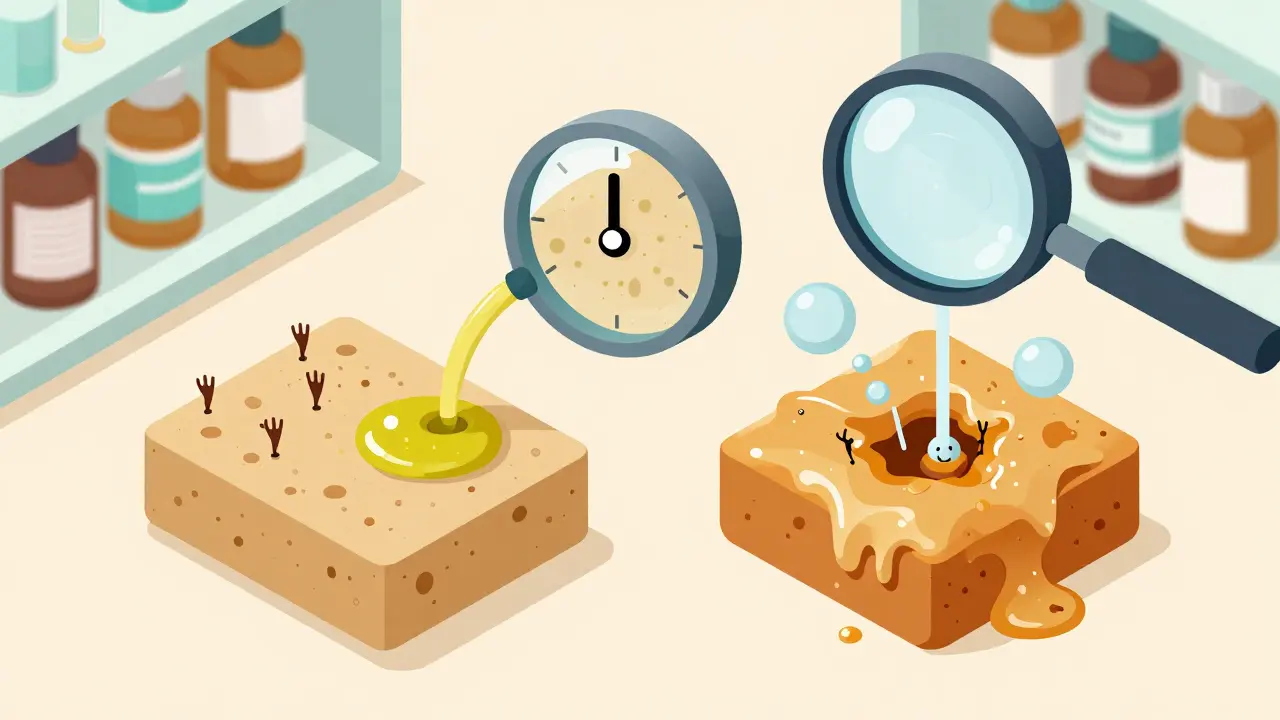
Cerumenolytics are not miracle cures. They’re not ear picks, syringes, or cotton swabs. They’re chemical solutions that work on the physical structure of earwax. Think of them like a dish soap for your ear canal: they don’t scrub or dig-they loosen, dissolve, and make it easier to rinse away. There are four main types you’ll find in pharmacies:- Carbamide peroxide (Debrox, Murine): breaks down into hydrogen peroxide and urea. Creates a gentle bubbling action that helps lift wax.
- Hydrogen peroxide (3% solution, diluted): effervescent, good for moist or sticky wax, but can sting if used straight.
- Mineral oil, baby oil, olive oil: lubricates and slowly softens dry, hard wax over several days.
- Baking soda solution (15% concentration): alkaline, helps dissolve wax, especially when mixed with sterile water.
Which One Works Best? A Real-World Comparison
Not all earwax is the same. Some people have dry, flaky wax. Others have thick, sticky stuff that clings like glue. The best cerumenolytic depends on your wax type and how long you’re willing to wait.| Product Type | Active Ingredient | Typical Use Duration | Effectiveness | Best For |
|---|---|---|---|---|
| Debrox / Murine | 6.5% carbamide peroxide | 5-10 drops, 2x daily for 3-7 days | 65% success rate | Sticky, moist wax |
| Hydrogen peroxide (diluted) | 3% H₂O₂ + equal sterile water | 5-10 drops, once daily for 1-2 days | 60-70% success rate | Wax with moisture content |
| Mineral or olive oil | Oil-based lubricant | 3-6 drops nightly for 3-4 days | 58% success rate | Dry, hardened wax |
| Baking soda solution | 15% sodium bicarbonate in sterile water | 2x daily for 4 days | 60% success rate | Stubborn, compacted wax |
How to Use Cerumenolytics the Right Way
It’s not enough to just put drops in your ear. If you don’t use them correctly, they won’t work. Here’s the exact method backed by Seattle Children’s Hospital and Mayo Clinic:- Warm the bottle in your hand for 1-2 minutes. Cold drops can cause dizziness.
- Lie on your side with the affected ear facing up.
- Use the dropper to put in 5-10 drops (follow label instructions).
- Stay still for 5-10 minutes. Gently tug on your earlobe to help the drops sink in.
- Turn your head to let the drops drain out. Wipe away any excess with a clean cloth.
- Repeat as directed-usually once or twice daily for 3 to 7 days.
When It Won’t Work-and When to Stop
Cerumenolytics aren’t magic. About 25% of earwax blockages are too hard, too deep, or too compacted to dissolve at home. If after 7 days you still feel blocked, or if you notice:- Increased pain
- Drainage from the ear
- Fever or ringing that gets worse
- Loss of hearing
- An active ear infection
- A history of ear surgery
- A known perforated eardrum
- Ear tubes
What People Actually Say About Home Treatments
Reddit threads and Amazon reviews give you the real story-not the marketing. One user, u/AudiologyTech, shared: “I tried Debrox for three days. Nothing. Then I switched to olive oil for five nights. The next day, I irrigated gently with warm water and 90% of the wax came out. No pain. No mess.” Another, u/EarPainSurvivor, said: “I used straight hydrogen peroxide from the bottle. Big mistake. Burning for 20 minutes. My ear felt like it was on fire. Now I dilute it 50/50 with water.” The pattern is clear: patience and proper dilution matter. People who rush or use too strong a solution report irritation. Those who follow the timing and position instructions report success.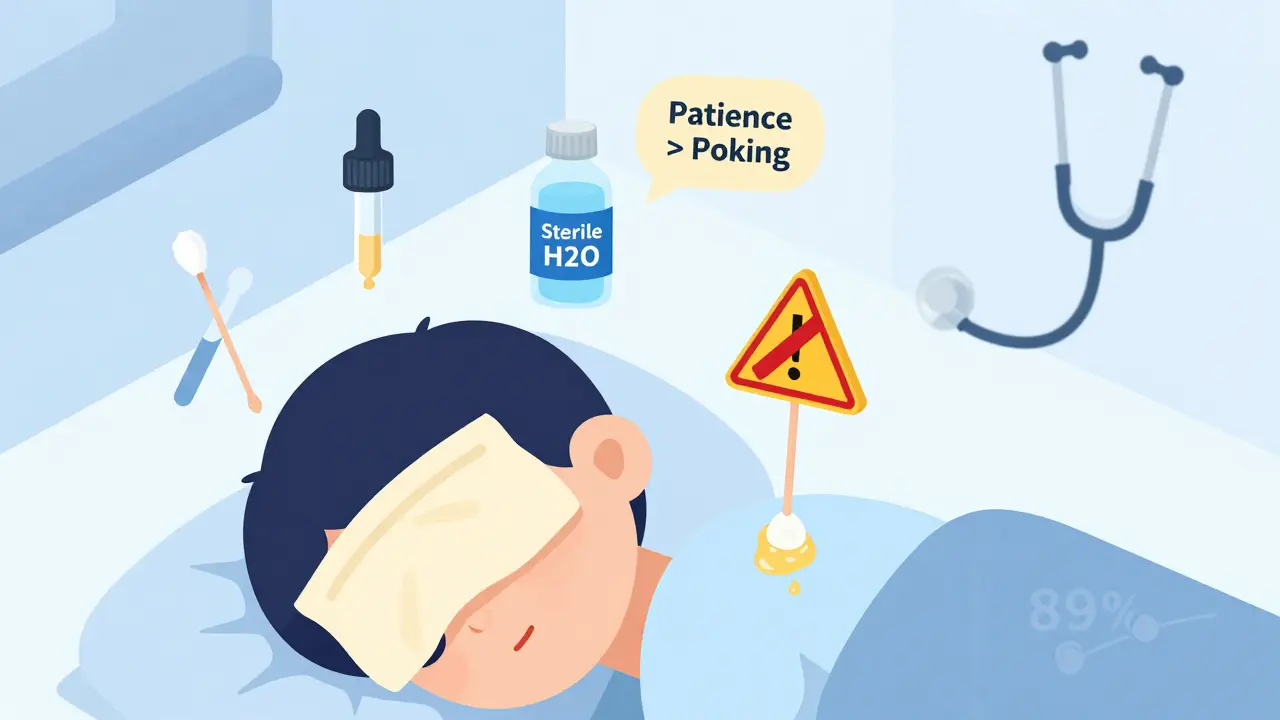
What’s New in Earwax Treatment (2026)
The field isn’t standing still. In January 2023, Debrox launched “Debrox Max,” a time-release formula that stays in the ear canal 30% longer than the original. Early trials showed 27% better clearance rates. The FDA also approved a new combination formula in 2022: 2.5% hydrogen peroxide with 86% glycerin. Glycerin helps the solution stick to the wax longer, reducing the need for multiple applications. Researchers at the University of Washington found an even smarter approach: use mineral oil for three nights to soften, then one irrigation with diluted hydrogen peroxide. That combo cleared 89% of cases-better than either method alone. There’s also growing interest in personalized treatment. Some clinics now analyze the texture and color of earwax to determine whether it’s dry, oily, or infected-and recommend the best softener accordingly.Why This Matters More Than Ever
We’re using in-ear headphones more than ever. AirPods, earbuds, hearing aids-they all push wax deeper into the canal. ENT clinics report a 22% rise in earwax impaction cases since 2019. And it’s expensive. In the U.S., over 12 million doctor visits each year are for earwax removal. That costs the system $116 million. Home treatment with cerumenolytics can cut that number dramatically. The market for these drops is growing at 4.7% per year. Why? Because people want to avoid pain, avoid doctors, and avoid the risk of poking their ear with a Q-tip.Final Tips for Safe Home Use
- Always use sterile or distilled water if you’re making your own solution. Tap water can carry bacteria.
- Never insert anything deeper than the first knuckle into your ear canal.
- Don’t use ear candles. They don’t work. They’re dangerous.
- Wait at least 24 hours after using drops before irrigating. Let the wax fully soften.
- Keep the drops in a cool, dry place. Heat can break down the active ingredients.
Can I use olive oil instead of commercial ear drops?
Yes. Olive oil, mineral oil, and baby oil are safe, effective, and much cheaper than branded products. Use 3-6 drops at bedtime for 3-4 nights. Lie on your side for 10 minutes each time. It works slower than carbamide peroxide but is gentler and better for dry, hardened wax.
How long should I wait before trying to flush out the wax?
Wait at least 3 days with daily drops, or up to 7 days for stubborn wax. Rushing to irrigate too soon means the wax hasn’t softened enough, and you’ll just push it deeper. Most people see improvement after 4-5 days. If you still feel blocked, see a professional.
Is hydrogen peroxide safe for ears?
Only if diluted. Never use 3% hydrogen peroxide straight from the bottle. Mix it equally with sterile water. Even then, it can sting. If you feel burning, stop. It’s not helping-it’s irritating. People with sensitive skin should avoid it altogether.
Can cerumenolytics damage my eardrum?
Not if used correctly and if you don’t have an existing injury. But if you have a perforated eardrum, ear tubes, or an active infection, using any ear drop can cause serious harm. Always check with a doctor first if you’ve had ear problems in the past.
Why does my ear feel clogged even after using drops?
The wax may not be fully softened yet, or it may be impacted too deeply. It can take up to 7 days. If you’ve followed the instructions and still feel blocked, you may need professional irrigation or suction. Don’t force it. A doctor can remove it safely in minutes.
Shweta Deshpande
January 26, 2026 AT 05:47OMG I finally found a post that actually makes sense about earwax! I’ve been using olive oil for weeks after my audiologist told me to stop using Q-tips, and honestly? It’s been a game-changer. I used to feel like my ears were stuffed with cotton balls, but after 4 nights of 3 drops before bed, I could hear my cat purring again. 🐱 No more muffled TV, no more asking people to repeat themselves. I’m not even mad that it takes a few days-patience is a virtue, right? Also, I love that it’s cheap. I used the same bottle of extra virgin olive oil I cook with. No fancy bottles needed. Thank you for sharing this so clearly!
Aishah Bango
January 27, 2026 AT 18:17People still use oil? In 2026? Honestly, if you’re not using carbamide peroxide, you’re just wasting time. And don’t even get me started on baking soda solutions-those are for people who think ‘natural’ means ‘effective.’ This isn’t a yoga retreat, it’s your ear canal. Follow the science, not your grandma’s advice.
Simran Kaur
January 28, 2026 AT 14:38Oh my heart!! I’m from Mumbai and we’ve been using warm sesame oil for earwax since my grandmother’s time-but I never knew it had a *scientific name*! 🥹 I cried when I read ‘mineral oil’ because I thought I was just being old-fashioned. Now I feel so validated! And the part about lying still for 10 minutes? That’s exactly what my mom used to say: ‘Breathe slow, like the river.’ I didn’t know it was medicine, I thought it was meditation. Turns out, Indian grandmas were ahead of the curve. 🙏❤️
Neil Thorogood
January 30, 2026 AT 10:52So let me get this straight… you’re telling me I don’t need to stick a Q-tip in my ear and pray to the earwax gods? 🤯 And instead I just… drip oil? And wait? Like a normal human? I feel like I’ve been living in a horror movie for the last 10 years. Also, why does Debrox Max cost $14? I could buy a whole jar of olive oil for $5. The pharmaceutical industry is running a scam, folks. 🙃
Jessica Knuteson
January 31, 2026 AT 23:47Effectiveness rates are meaningless without control variables. Sample sizes? Confounding factors? Who funded the 2022 Seattle study? Also, ‘gentler’ is a subjective term. You’re conflating tolerance with efficacy. The body doesn’t care if it stings. It cares if wax is removed. And you’re ignoring the placebo effect of ‘natural’ remedies. Oil doesn’t dissolve wax. Physics does. And physics doesn’t care about your feelings.
Robin Van Emous
February 2, 2026 AT 01:06Thanks for this. I really appreciate how you broke it down without making anyone feel dumb. I’ve been scared to try anything because I had a bad experience with ear irrigation years ago. I’m going to try the olive oil method this weekend-I’ve got a bottle in my kitchen right now. And I promise I won’t stick anything deeper than my knuckle. I learned that lesson the hard way. 🙏
Angie Thompson
February 3, 2026 AT 06:00YESSSSS I’ve been using the oil + diluted peroxide combo since I saw that UW study on TikTok!! 🎧 It’s wild how much better my hearing is now. I used to think my AirPods were glitching-but nope, it was just wax jammed in there like a clogged drain. I did the 3 nights oil, then one irrigation with 50/50 H2O2 and water. Felt like a wizard. My dog even looked at me like I’d grown a second head. Worth it. Also, I bought the new glycerin formula-it’s like a velvet hug for your ear. 💖
SWAPNIL SIDAM
February 4, 2026 AT 06:05My uncle in Delhi used to put warm mustard oil in his ears every morning. Said it helped his tinnitus. I never believed him… until I tried it. Now I do it too. Not because of science. Because it feels good. And my ears don’t feel like they’re full of sand anymore. Sometimes, simple works.
Geoff Miskinis
February 4, 2026 AT 17:49How quaint. You’ve managed to turn a physiological process into a wellness cult. The fact that you’re recommending ‘baking soda solution’ as if it were a boutique essential oil blend is frankly embarrassing. Earwax is not a metaphysical blockage. It’s a biological byproduct. And the notion that ‘patience’ is a virtue here is a dangerous myth. If it doesn’t clear in 48 hours, see a specialist. Stop romanticizing ignorance.
Sally Dalton
February 6, 2026 AT 13:56oh my gosh i just tried the olive oil thing last night and i forgot to lie on my side for 10 mins and i stood up right away and now my ear feels weird?? did i mess it up?? i feel so dumb 😭 i’m gonna try again tonight and actually follow the steps this time… also can i use coconut oil? i have it in my kitchen but i’m scared it’s too ‘natural’??
Betty Bomber
February 6, 2026 AT 18:56Wow. This is the first time I’ve read something about earwax and not felt like I’m being sold something. Also, I’ve been using Debrox for a month and nothing happened. Then I tried oil. Two nights. Boom. Wax came out like a little brown sludge. I didn’t even need to irrigate. I just tilted my head. Mind blown.
Mohammed Rizvi
February 7, 2026 AT 22:09People still use Q-tips? Bro. You’re not cleaning your ears. You’re just pushing wax further in like a stubborn toddler. I used to do it too. Then I got an ear infection. Now I use olive oil and a towel. That’s it. No drama. No science. Just stop poking it.
eric fert
February 8, 2026 AT 03:16Let’s be real. This entire post is just a marketing funnel disguised as medical advice. Carbamide peroxide? That’s just diluted hydrogen peroxide with urea-something you can make at home for pennies. And the ‘Debrox Max’ time-release formula? That’s not innovation. That’s corporate greed dressed in lab coats. And don’t even get me started on the ‘personalized wax analysis’ nonsense. Your earwax isn’t a personality quiz. It’s just wax. The real problem? We’ve been conditioned to fear our own bodies. We’ve forgotten that evolution gave us ears for a reason-and they’re not broken just because they make wax. The solution isn’t more drops. It’s less fear. And less capitalism.