

Living with asthma isn’t just about occasional wheezing. For millions, it’s a daily balancing act between breathing easily and avoiding triggers that can turn a normal day into an emergency. Whether you’re newly diagnosed or have been managing asthma for years, understanding the types of asthma, what sets off your symptoms, and how medications like inhalers and oral drugs actually work can make all the difference.
What Exactly Is Asthma?
Asthma is a chronic condition where the airways become inflamed and narrow, making it harder to breathe. You might notice coughing, especially at night, a tight chest, wheezing when you exhale, or shortness of breath during activity. These symptoms don’t happen all the time - they flare up. And when they do, it’s because something triggered your airways to react.
The good news? Asthma is manageable. The key is knowing your type, recognizing your triggers, and using the right tools to keep symptoms under control. Most people with asthma can live full, active lives - if they have the right information and treatment.
How Asthma Is Classified: Severity vs. Type
There are two main ways doctors describe asthma: by how severe it is, and by what kind it is.
The severity-based system (used by the National Institutes of Health) breaks it into four levels:
- Mild intermittent: Symptoms up to twice a week, nighttime symptoms no more than twice a month.
- Mild persistent: Symptoms more than twice a week, but not daily. Nighttime symptoms more than twice a month.
- Moderate persistent: Daily symptoms, nighttime symptoms more than once a week.
- Severe persistent: Symptoms throughout the day, frequent nighttime symptoms, and limited physical activity.
But severity alone doesn’t tell the whole story. That’s why doctors also look at asthma types - which are based on what causes the flare-ups. The most common types include:
- Allergic asthma: Triggered by pollen, dust mites, pet dander, or mold. This is the most common type.
- Exercise-induced asthma: Symptoms show up during or right after physical activity. Even elite athletes get this.
- Occupational asthma: Caused by workplace irritants like chemicals, dust, or fumes. Think factory workers, cleaners, or bakers.
- Aspirin-induced asthma: A reaction to NSAIDs like ibuprofen or aspirin. People with this type often also have nasal polyps.
- Cough-variant asthma: The only symptom is a chronic dry cough - no wheezing. Often misdiagnosed as a lingering cold.
- Nighttime asthma: Symptoms worsen between midnight and early morning. Linked to body position, temperature changes, or allergens in bedding.
- Steroid-resistant asthma: Doesn’t respond well to standard inhaled corticosteroids. Often linked to a specific inflammatory pathway.
Behind these types are biological differences called endotypes. Researchers now know asthma isn’t one disease - it’s several. The biggest ones are:
- Eosinophilic: High levels of eosinophils (a type of white blood cell) in the airways. This responds well to inhaled steroids and biologics.
- Neutrophilic: High neutrophils, often linked to smoking or pollution. Harder to treat with standard inhalers.
- Mixed: Both eosinophils and neutrophils present.
- Non-inflammatory (paucigranulocytic): Little to no inflammation. Often triggered by cold air or stress.
This matters because treatment isn’t one-size-fits-all. If you have eosinophilic asthma, a biologic like mepolizumab might cut your flare-ups in half. But if you have neutrophilic asthma, that same drug won’t help.
Common Asthma Triggers - And Why They Hit Different People Differently
Triggers aren’t the same for everyone. What sets off one person’s asthma might leave another completely fine.
Here are the most common ones:
- Allergens: Pollen, dust mites, pet hair, mold spores. These are the #1 trigger for allergic asthma.
- Respiratory infections: Colds, flu, even COVID-19 can make asthma worse.
- Physical activity: Especially in cold, dry air. Running outside in winter? That’s a recipe for a flare-up.
- Weather changes: Cold air, humidity, or sudden drops in pressure.
- Air pollution: Smog, smoke, diesel fumes. Even low levels can trigger symptoms.
- Strong odors: Perfume, cleaning products, paint fumes.
- Stress and strong emotions: Laughing too hard, crying, or anxiety can change your breathing pattern and trigger symptoms.
- Medications: Aspirin, ibuprofen, and beta-blockers (used for high blood pressure or heart issues).
Some triggers hit fast - like inhaling cat dander. Others creep in slowly. A dusty bedroom might not cause symptoms right away, but over weeks, it builds up and leads to nighttime coughing. That’s why tracking your symptoms matters. Keep a simple log: What were you doing? Where were you? What did you eat or take? Over time, patterns emerge.
Inhalers: The First Line of Defense
If you have asthma, chances are your doctor will start you on an inhaler. And for good reason.
Inhalers deliver medication straight to your lungs - where it’s needed. That means less medicine gets into your bloodstream, and fewer side effects.
There are two main kinds:
- Rescue inhalers (SABAs): Like albuterol. These work in 5 minutes to open your airways during an attack. They’re your emergency tool - but not meant for daily use.
- Preventive inhalers: These include inhaled corticosteroids (ICS) like fluticasone or budesonide. They reduce swelling in your airways over time. Used daily, even when you feel fine.
- Combination inhalers: ICS + long-acting beta-agonist (LABA), like fluticasone-salmeterol (Advair). Used for moderate to severe asthma.
One big win? A 2022 study showed that inhaled steroids cause about 70% fewer side effects than oral steroids. That’s why they’re the gold standard for daily control.
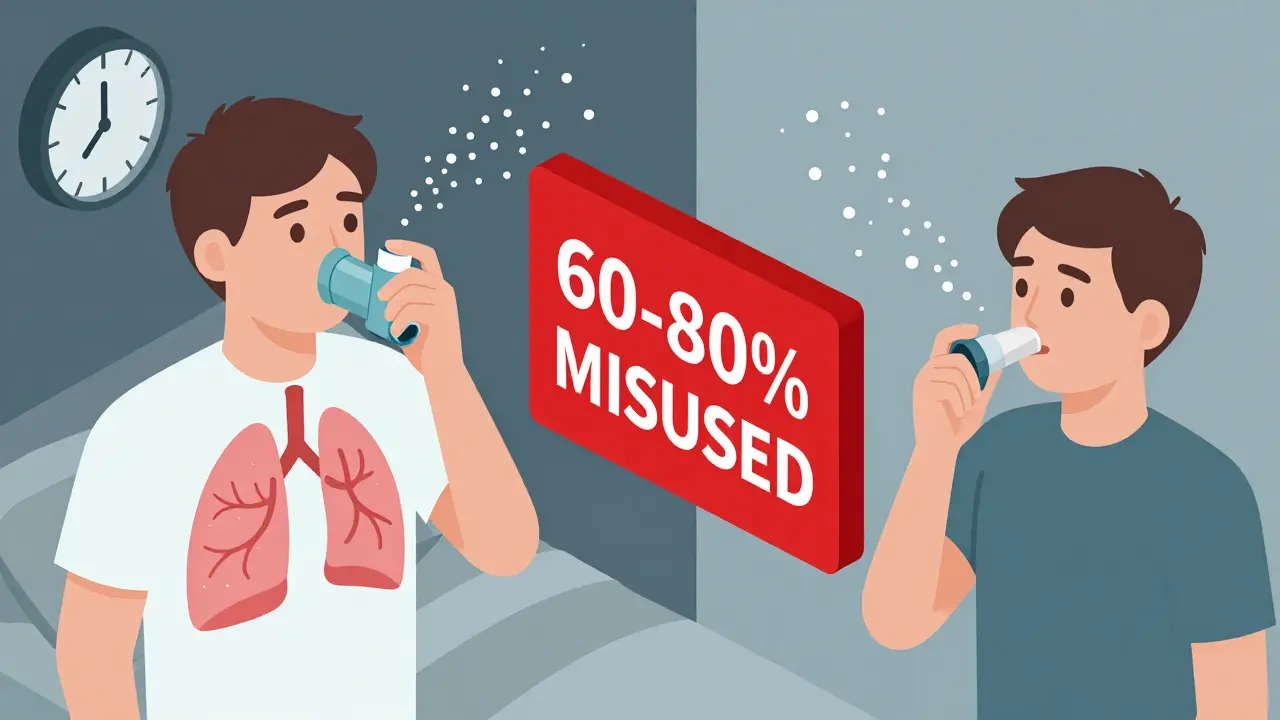
But here’s the catch: most people use inhalers wrong. A 2023 study found 60-80% of users make at least one critical mistake - like not breathing in slowly enough, or not holding their breath after inhaling. That means only 30-50% of the medicine actually reaches the lungs.
Use a spacer. It’s a simple plastic tube that attaches to your inhaler. It holds the medicine so you can inhale it slowly. It’s especially helpful for kids and during flare-ups. Ask your pharmacist to show you how to use yours correctly. Practice in front of a mirror. It takes minutes, but it changes everything.
Oral Medications: When Inhalers Aren’t Enough
Oral medications are usually reserved for two situations:
- Severe asthma flare-ups (like an ER visit).
- Chronic, uncontrolled asthma that doesn’t respond to high-dose inhalers.
The most common oral drug is prednisone, a corticosteroid. It’s powerful - but it comes with serious trade-offs.
Long-term use of oral steroids (more than 3 months) can cause:
- Weight gain (68% of users)
- Bone thinning (30-50% higher fracture risk)
- High blood sugar or new-onset diabetes (5-10% of users)
- Mood swings, insomnia, and fluid retention
One Reddit user wrote: “My prednisone course last month gave me insomnia, mood swings, and made me gain 8 pounds in 2 weeks.” That’s not rare. A 2023 survey of 2,500 severe asthma patients found 62% said oral steroids significantly hurt their quality of life.
That’s why doctors avoid them for daily use. The Global Initiative for Asthma (GINA) explicitly says: Do not use oral steroids as maintenance therapy.
But there’s one exception: montelukast (Singulair). It’s an oral leukotriene modifier. It doesn’t have the same side effects as prednisone. It’s often added to inhalers for people with allergic asthma or exercise-induced symptoms. Studies show it can improve control by 15-20% when used with an ICS.
Biologics: The New Frontier
If you have severe asthma and still struggle despite using high-dose inhalers, biologics might be your next step.
These are injectable drugs - given monthly or every few weeks - that target specific parts of the immune system. They’re not for everyone. They’re for people with specific inflammatory patterns.
- Mepolizumab (Nucala): For eosinophilic asthma. Reduces flare-ups by 50-60%.
- Tezepelumab (Tezspire): Works even if you don’t have high eosinophils. Cut exacerbations by 56% in trials.
On PatientsLikeMe, 82% of users on biologics reported “substantial improvement” compared to their old steroid regimens. And side effects? Usually just soreness at the injection site.
They’re expensive - around $1,900 per dose - but many insurance plans cover them for severe cases. Talk to your allergist if you’re still having frequent attacks despite optimal inhaler use.

Cost, Access, and Real-World Challenges
Let’s be honest: asthma meds aren’t cheap.
Brand-name inhalers can cost $300-$400 a month without insurance. Generic versions? Sometimes under $50. But many people still ration because they can’t afford them. A 2023 study found 25% of U.S. asthma patients skip doses because of cost.
Oral meds like prednisone or montelukast? Often $10-$30 a month. That’s why some people stick with them - even though they’re not ideal long-term.
And access isn’t equal. While 78% of the global asthma drug market is made up of inhalers, 80% of the world’s asthma burden is in low- and middle-income countries. In those places, only 30% of people have reliable access to basic inhalers. That’s not just a health issue - it’s a justice issue.
What’s New in Asthma Care?
The field is changing fast.
- SMART therapy: One inhaler that works as both a daily controller and a rescue inhaler (budesonide-formoterol). Simplifies treatment and cuts flare-ups.
- Smart inhalers: Devices with sensors (like Propeller or Hailie) that track when you use them and remind you. A 2023 study showed they improve adherence by 35% and cut attacks by 22%.
- As-needed low-dose ICS: For mild asthma, GINA now recommends using a low-dose ICS-formoterol inhaler only when needed - instead of daily SABA. This cuts severe attacks by 61%.
The goal? Keep you off oral steroids. The future is personalized: testing your blood or sputum to see which inflammatory pathway you have - then matching you to the right drug.
Final Takeaways
- Not all asthma is the same. Your type and endotype matter for treatment.
- Inhalers are safer, more effective, and should be your first choice - if used correctly.
- Oral steroids are powerful, but their side effects make them a last resort for long-term use.
- Biologics are a game-changer for severe, uncontrolled asthma - if you qualify.
- Proper inhaler technique is more important than the brand you use.
- Cost and access are real barriers. Ask about generics, patient assistance programs, or spacers.
Asthma doesn’t have to control your life. With the right tools - and the right knowledge - you can breathe easier, every day.
Can you outgrow asthma?
Some children do outgrow asthma, especially if their symptoms are mild and linked to early childhood infections. But for many, asthma persists into adulthood. Even if symptoms fade, the airways remain sensitive. Triggers like smoke, cold air, or stress can bring them back. Never assume asthma is gone - always keep your rescue inhaler handy.
Is it safe to use an inhaler if you don’t have asthma?
No. Rescue inhalers like albuterol can cause side effects like rapid heartbeat, shaking, or anxiety - even in people without asthma. Preventive inhalers (steroids) can suppress your immune system and raise blood sugar. Never use someone else’s inhaler. If you’re unsure whether you have asthma, get tested with a spirometry exam.
Why do I still wheeze even though I take my inhaler every day?
You might be using it wrong. Or your asthma type may not respond well to your current medication. Maybe you’re still exposed to triggers like mold or pollution. Or you have a different condition - like COPD or heart failure - that mimics asthma. Talk to your doctor. You may need a different inhaler, a biologic, or a lung function test.
Are generic inhalers as good as brand-name ones?
Yes - for most people. Generic inhalers contain the same active ingredients and work the same way. The main difference is the delivery device. Some generics feel different to use. If you notice your symptoms aren’t improving, ask your pharmacist to help you test it. Always use a spacer to ensure proper delivery, regardless of brand.
Can diet or supplements help with asthma?
There’s no magic food or supplement that cures asthma. But some studies suggest vitamin D, omega-3s, and magnesium might help reduce inflammation slightly. Still, they don’t replace medication. If you’re thinking about supplements, talk to your doctor. Some can interfere with asthma drugs. Focus on avoiding triggers and using your prescribed treatment.
What should I do if I have an asthma attack and no inhaler?
Stay calm. Sit upright. Breathe slowly - inhale through your nose, exhale through your mouth. Move away from triggers like smoke or strong smells. If symptoms don’t improve in 5-10 minutes, call emergency services. Don’t wait. Even if you’ve never needed help before, a severe attack can escalate fast. Keep a list of emergency contacts and your asthma action plan handy.
Rachidi Toupé GAGNON
February 11, 2026 AT 19:48Sophia Nelson
February 13, 2026 AT 06:25Reggie McIntyre
February 14, 2026 AT 10:36Carla McKinney
February 16, 2026 AT 07:22Ojus Save
February 17, 2026 AT 11:01Pat Mun
February 17, 2026 AT 21:46Skilken Awe
February 19, 2026 AT 13:09andres az
February 21, 2026 AT 11:08steve sunio
February 23, 2026 AT 00:23Neha Motiwala
February 24, 2026 AT 23:42Alyssa Williams
February 25, 2026 AT 12:36Jack Havard
February 25, 2026 AT 19:27