
When you’re on antiretroviral therapy (ART) to manage HIV, you’re not just taking one drug - you’re managing a whole system. And that system doesn’t live in isolation. It bumps into hundreds of other medications, supplements, and even over-the-counter painkillers. Some of these interactions are harmless. Others? They can land you in the hospital - or worse. The truth is, if you’re on ART and taking anything else, you need to know which combinations are dangerous. This isn’t theoretical. It’s happening right now to people your age, in your community, in Sydney, in the U.S., everywhere.
Why Some ART Drugs Are More Dangerous Than Others
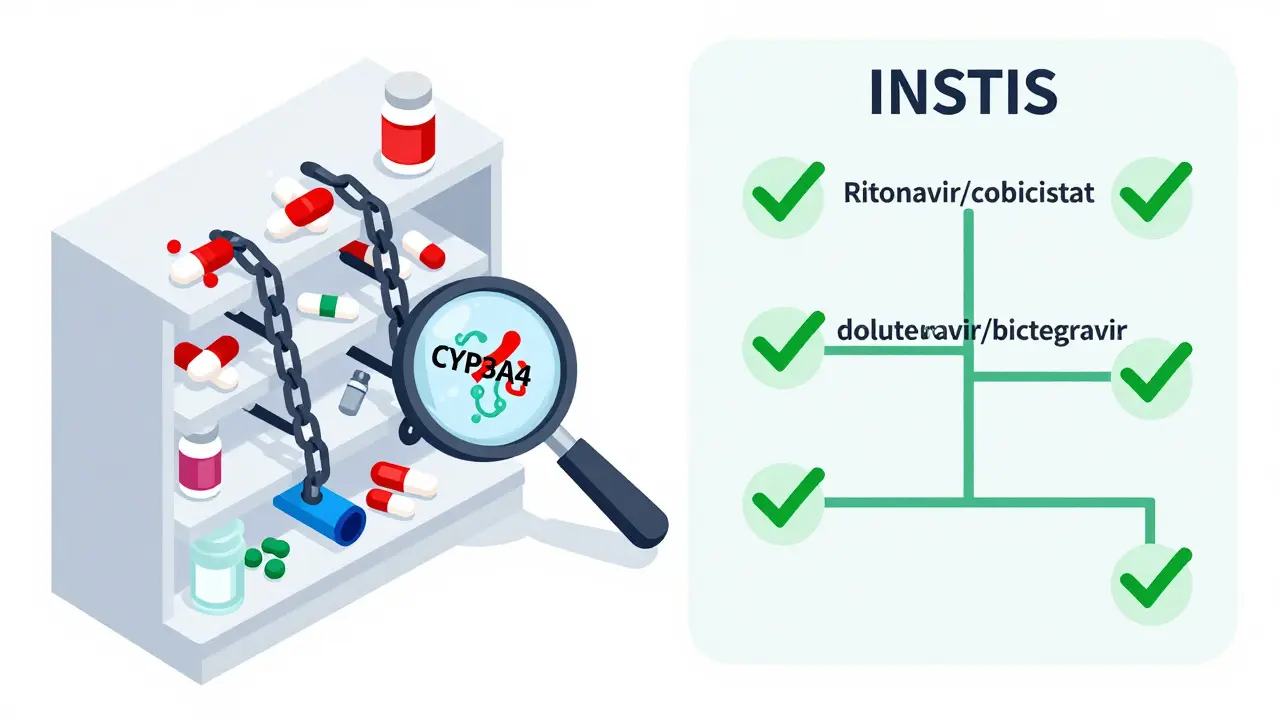
Not all antiretrovirals are created equal when it comes to drug interactions. The biggest culprits? Protease inhibitors (PIs) boosted with ritonavir or cobicistat. These drugs are powerful. They stop HIV from replicating. But they also slam the brakes on your liver’s ability to break down other medicines. Specifically, they block an enzyme called CYP3A4. That’s the same enzyme your body uses to process common drugs like statins, blood pressure meds, and even some allergy pills.Take ritonavir. It’s a booster, not usually the main drug. But it’s in so many HIV regimens because it makes other drugs work better. The problem? It’s also a master inhibitor. According to the University of Liverpool’s HIV Drug Interactions Checker, ritonavir has over 217 documented interactions. That’s more than most drugs on the planet. Compare that to dolutegravir, an integrase inhibitor. It has fewer than 10 major interactions. That’s why doctors now recommend INSTIs like dolutegravir or bictegravir as first-line treatment - not just because they’re effective, but because they’re simpler to manage.
Then there are the NNRTIs. Efavirenz? It’s the opposite of ritonavir. Instead of blocking enzymes, it speeds them up. That means drugs like birth control pills, antidepressants, or even some heart medications can get flushed out of your system too fast. The result? Treatment fails. You might not even realize it until your viral load spikes.
The Deadliest Combinations You Must Avoid
Some interactions aren’t just risky - they’re deadly. And they happen more often than you think.First, statins. If you’re on a ritonavir-boosted regimen and taking simvastatin or lovastatin, you’re at serious risk. These statins can build up in your blood by 20 to 30 times their normal level. That leads to rhabdomyolysis - a condition where muscle tissue breaks down and floods your kidneys with toxic proteins. It can kill. The HHS Guidelines say it’s absolutely contraindicated. But people still take them. Why? Because their doctor didn’t know. Or they didn’t tell their doctor they were taking a cholesterol pill.
Second, steroids. Inhaled corticosteroids like fluticasone (used for asthma or COPD) or budesonide nasal spray (for allergies) are safe on their own. But when combined with ritonavir or cobicistat, they can cause adrenal insufficiency - your body stops making its own cortisol. That means low blood pressure, nausea, confusion, even coma. A study from the University of Washington found that 17% of patients on boosted PIs who used these inhalers ended up hospitalized.
Third, erectile dysfunction drugs. Sildenafil (Viagra) can be used - but only at 25mg every 48 hours, not the usual 50 or 100mg. Avanafil (Spedra)? Completely off-limits. The concentration spikes 4 to 5 times. That’s not just risky - it’s dangerous. And no one tells you this unless you ask.
Fourth, SSRIs. Fluoxetine (Prozac), sertraline (Zoloft), and others can trigger serotonin syndrome when paired with ritonavir. That’s when your brain gets flooded with serotonin. Symptoms? Tremors, high fever, rapid heartbeat, seizures. There are documented cases where patients needed ICU care. The fix? Reduce the SSRI dose by half - or switch to an antidepressant that doesn’t interact, like bupropion.
What About the ‘Safe’ Drugs? They’re Not Always Safe
People assume that because INSTIs are low-risk, they’re risk-free. That’s a myth.Dolutegravir, for example, is one of the safest ART drugs out there. But it has one sneaky interaction: metformin. If you’re diabetic and on dolutegravir, your metformin levels drop by 33%. That means your blood sugar could spike. You might think your diabetes is getting worse - but it’s the drug interaction. The fix? Monitor your glucose more closely. Your doctor may need to bump up your metformin dose.
And what about bictegravir? It’s often paired with other drugs in one pill. Sounds simple. But if you’re taking rifampin - a tuberculosis drug - bictegravir levels crash by 71%. That’s enough to let HIV rebound. If you have TB and HIV, your treatment plan needs to be rebuilt from scratch.
Even lenacapavir, a new long-acting injectable given every six months, has a warning. It inhibits CYP3A, so it can’t be used with colchicine (used for gout). That interaction can cause fatal toxicity. You’d think you’re getting a clean slate with a new drug. But the rules change again.
It’s Not Just Prescription Drugs
You think you’re being careful because you only take pills your doctor gave you? Think again.Over 38% of dangerous interactions involve non-prescription stuff. That includes:
- St. John’s Wort - a popular herbal supplement for depression. It cuts efavirenz levels by 50-60%. HIV rebounds. Fast.
- Calcium channel blockers like amlodipine. Ritonavir increases their concentration by 1.6-fold. That can cause your blood pressure to drop dangerously low.
- NSAIDs like ibuprofen or naproxen. They’re usually fine, but if you’re also on tenofovir (a common ART drug), you risk kidney damage. The combo doesn’t cause interaction per se - but it stresses the same organ.
- Recreational drugs - ketamine, MDMA, cocaine. Ritonavir slows how your body clears them. That means longer, stronger, more dangerous effects. One patient in Sydney ended up in the ER after taking ketamine while on a boosted PI. He didn’t know the risk.
And don’t forget supplements. Magnesium? Zinc? Vitamin D? They’re generally safe. But if you’re taking them with antiretrovirals that require an empty stomach - like rilpivirine - they can block absorption. Your meds stop working.
Who’s Most at Risk? (And Why It’s Getting Worse)
It’s not just about the drugs. It’s about who you are.Half of all people living with HIV in the U.S. are now over 50. That’s up from 12% in 2005. These folks aren’t just on ART. They’re on blood pressure meds, diabetes pills, cholesterol drugs, arthritis painkillers, sleep aids, antidepressants - sometimes nine or ten medications at once. The Department of Veterans Affairs found veterans over 65 with HIV take an average of 9.2 medications. Each extra pill increases your risk of a dangerous interaction by 18%.
And here’s the kicker: HIV itself increases your risk of heart disease, diabetes, and kidney problems. So you need more meds to treat those - which means more chances for bad interactions. A 2023 study showed people on PI-based ART plus antipsychotics like olanzapine had over three times the risk of developing metabolic syndrome than those on INSTIs.
The longer you’ve had HIV, the higher your risk. Each year since diagnosis adds 7% more chance of a harmful interaction. That’s why someone who’s been on ART for 15 years is far more likely to have a problem than someone who started last year.
How to Stay Safe - Step by Step
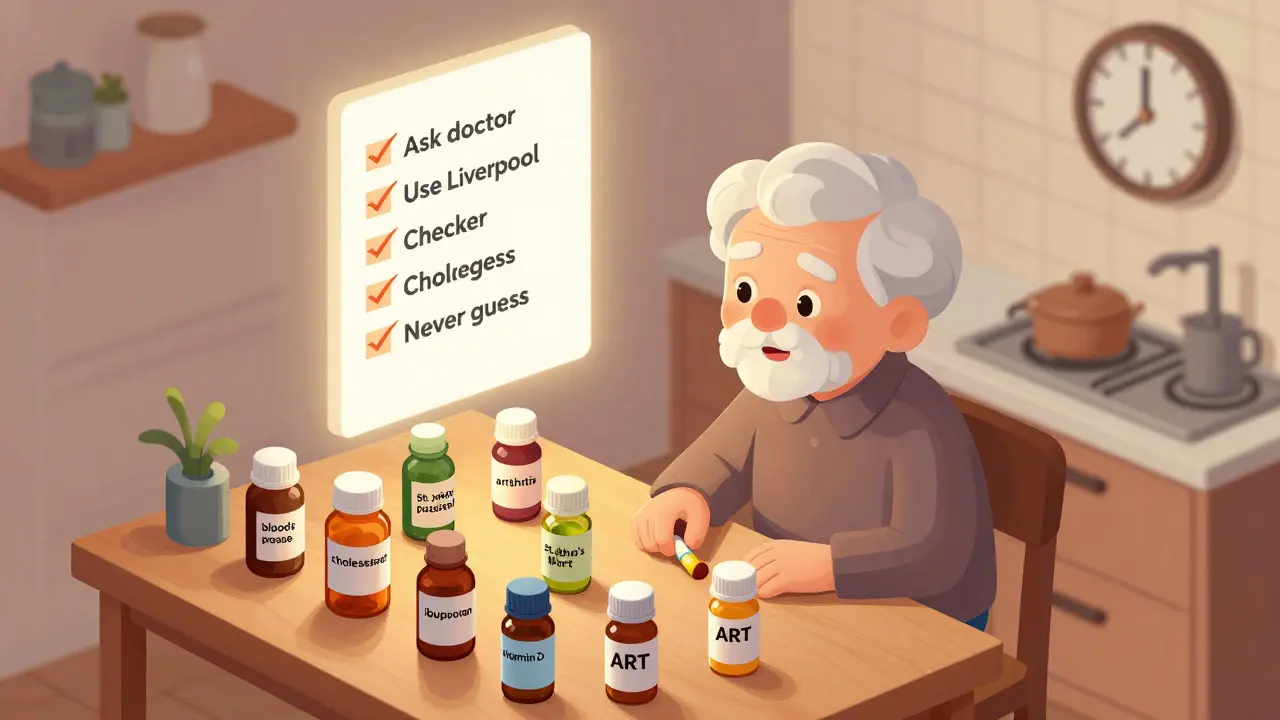
You can’t just guess. You need a system.- Make a full list - every pill, patch, capsule, herbal tea, and supplement. Include what you buy over the counter. Even the one you take ‘only when I feel bad’.
- Use the Liverpool HIV Drug Interactions Checker - it’s free, updated monthly, and the most trusted tool in the world. Type in your ART and every other drug. It tells you if it’s safe, risky, or contraindicated.
- Bring your list to every appointment - not just your HIV doctor. Your cardiologist, endocrinologist, even your dentist. Ask: ‘Could this interact with my HIV meds?’
- Never start or stop anything without talking to your HIV provider - not even melatonin or turmeric.
- Know your regimen - if you’re on a boosted PI, assume everything interacts until proven otherwise. If you’re on dolutegravir or bictegravir, you’re safer - but not invincible.
- Get trained - the American Academy of HIV Medicine offers an 8-hour certification course. Clinicians who take it reduce interaction-related hospitalizations by 42%.
And if you’re switching regimens? That’s when things get messy. If you move from a ritonavir-boosted PI to dolutegravir, your other meds may need to be adjusted. Tacrolimus (used after transplants) might need a 75% dose cut. Your doctor might not know this unless they’re up to date.
What’s Changing? The Future Is Simpler
The good news? The field is moving fast.New drugs like lenacapavir and other capsid inhibitors are being designed with minimal enzyme interference. The NIH has allocated $12.7 million in 2024 just to build safer ART drugs. By 2030, experts predict next-gen regimens will have 80% fewer interactions than today’s boosted PIs.
For now, the best strategy is simple: choose an INSTI-based regimen if you can. Avoid ritonavir and cobicistat unless absolutely necessary. Keep your medication list updated. Talk to your pharmacist. And never assume something is safe just because it’s ‘over the counter’ or ‘natural’.
HIV is no longer a death sentence. But it’s still a complex system. And if you don’t manage the interactions, you’re playing Russian roulette with your health.
Can I take ibuprofen with my ART meds?
Ibuprofen is generally safe with most antiretrovirals. But if you’re taking tenofovir (common in Truvada or Descovy), combining it with ibuprofen can increase your risk of kidney damage. Use the lowest effective dose for the shortest time. Always check with your provider if you’re on multiple kidney-stressing drugs.
Is St. John’s Wort ever safe with HIV meds?
No. St. John’s Wort reduces levels of efavirenz, nevirapine, and rilpivirine by 50-60%. This can cause HIV to rebound, leading to drug resistance. Even small amounts can trigger this. Avoid it completely. There are safer herbal options for mood support - ask your pharmacist.
Why is simvastatin banned with ART but pitavastatin okay?
Simvastatin is broken down by CYP3A4 - the same enzyme that ritonavir blocks. That causes toxic buildup. Pitavastatin is processed differently, mostly through other liver pathways. It’s not affected by CYP3A4 inhibition. That’s why pitavastatin (4mg daily) and fluvastatin (80mg daily) are the safest statin choices for people on boosted PIs.
Do I need to stop my birth control if I’m on ART?
It depends. Efavirenz can reduce hormone levels in birth control pills, patches, or rings - making them less effective. If you’re on efavirenz, use a backup method like condoms or an IUD. Newer drugs like dolutegravir or bictegravir don’t affect birth control. Always confirm with your provider - don’t assume.
What should I do if I accidentally took a dangerous combo?
Call your HIV provider immediately. If you can’t reach them, go to the nearest emergency room. Bring your medication list. Symptoms like muscle pain, dark urine, confusion, or chest pain could mean a serious reaction. Don’t wait. Early intervention saves lives.
Spenser Bickett
February 24, 2026 AT 16:09Christopher Wiedenhaupt
February 24, 2026 AT 21:09John Smith
February 25, 2026 AT 19:21Shalini Gautam
February 27, 2026 AT 08:51Natanya Green
February 28, 2026 AT 16:40Steven Pam
March 2, 2026 AT 00:41Timothy Haroutunian
March 2, 2026 AT 04:57Michael FItzpatrick
March 2, 2026 AT 12:26Brandice Valentino
March 4, 2026 AT 01:22Larry Zerpa
March 5, 2026 AT 20:46