
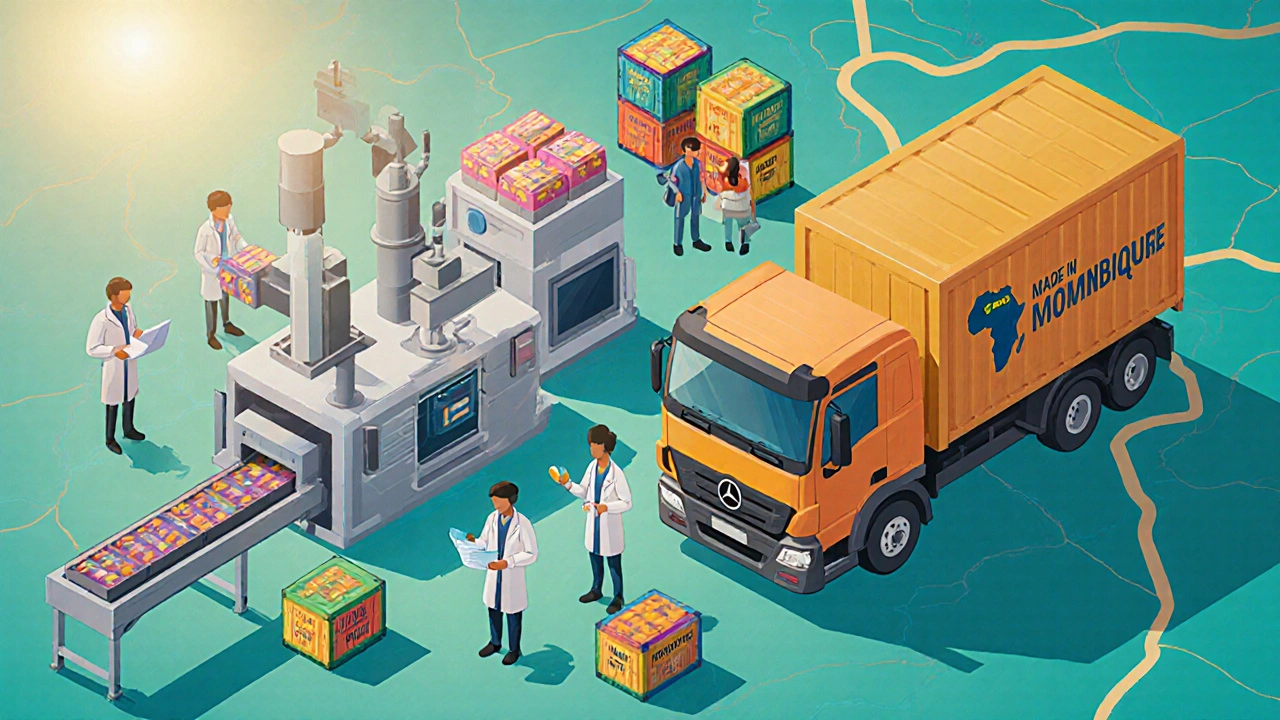
For decades, Africa relied on medicine shipped from overseas to treat HIV. A person in rural Mozambique or Uganda might wait months for a refill. Supply chains broke during pandemics. Prices stayed high. But something changed in May 2025. For the first time ever, the Global Fund bought antiretroviral generics made in Africa - not India, not Europe - and delivered them to Mozambique. This wasn’t just a new shipment. It was a turning point.
Why African-Made HIV Drugs Matter
Sub-Saharan Africa carries 65% of the world’s HIV cases. Yet it produces less than 3% of its own medicines. That imbalance meant delays, shortages, and dependence on foreign suppliers. When COVID-19 hit, borders closed. Air freight stopped. Millions faced treatment interruptions. The system was fragile.
Now, African manufacturers are changing that. Universal Corporation Ltd in Kenya became the first African company to get WHO prequalification for TLD - a first-line HIV pill combining tenofovir, lamivudine, and dolutegravir. This isn’t just any drug. Dolutegravir is more effective, has fewer side effects, and blocks resistance better than older regimens. And now, it’s being made in Africa, for Africa.
The impact? One shipment of TLD from Universal Corp can treat over 72,000 people a year. That’s not a drop in the bucket. That’s a lifeline scaled up.
The Global Fund’s New Strategy
The Global Fund didn’t just buy African-made drugs out of goodwill. They did it because it works - and because it’s sustainable. Historically, most ARVs came from India, where generics brought costs down from $10,000 per patient per year in 2000 to under $100 by 2015. That was huge. But relying on one region created risks.
Now, the Global Fund is using procurement as a market-shaping tool. By guaranteeing demand for African-made products, they’re giving manufacturers the confidence to invest in factories, hire engineers, train quality control teams, and upgrade labs. Dr. Meg Doherty from WHO called this move a milestone for strengthening supply chains across the continent.
It’s not just about price. It’s about reliability. When a country needs 500,000 pills next month, having them made 2,000 kilometers away instead of 10,000 makes all the difference. Fewer customs delays. Less risk of spoilage. Faster restocking.
Beyond Pills: Diagnostics and Long-Acting Injectables
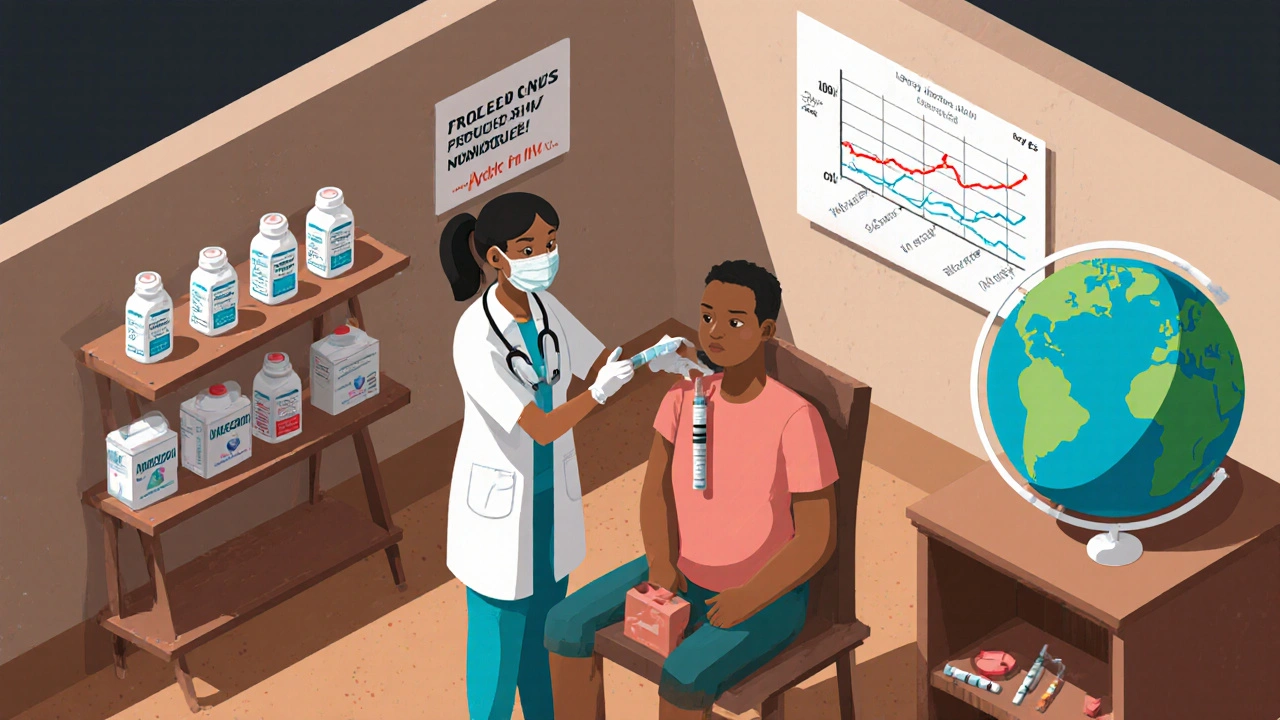
Treatment isn’t just about pills. You need to know who has HIV first. That’s where Codix Bio in Nigeria comes in. They’re now producing HIV rapid diagnostic tests under a license from SD Biosensor, thanks to WHO’s technology transfer program. These tests cost pennies and give results in minutes. No lab needed. No electricity. Just a finger prick.
And now, the next frontier: long-acting injections. South Africa became the first African country to register cabotegravir long-acting - a shot that works for two full years. Six African companies have licenses to make generic versions. Experts say prices could drop 80-90% below the brand name. That means fewer clinic visits. Less stigma. Better adherence.
Gilead Sciences is also helping. They’ve signed deals with the U.S. State Department and the Global Fund to supply lenacapavir, a new PrEP drug, at no profit until generics arrive. By the end of 2025, they plan to submit regulatory applications in 18 high-burden African countries. This isn’t charity. It’s a bridge to local production.
The Numbers Behind the Progress
In 2010, 1.3 million people died from AIDS-related causes globally. In 2022, that number dropped to 630,000 - a 52% decline - thanks mostly to better access to antiretrovirals. But the numbers aren’t even across Africa.
Eastern and Southern Africa: 93% know their status, 83% are on treatment, 78% have suppressed virus. Western and Central Africa? 81%-76%-70%. The gap is real. And it’s not just about drugs. It’s about testing, counseling, follow-up, and health system integration.
Africa needs about 15 million person-years of first-line ARVs every year. Today, African manufacturers can cover maybe 5-10% of that. But new factories are coming online by Q4 2025. With funding from Unitaid, the Gates Foundation, and CIFF, that number could jump to 20-30% by 2030.
Challenges Still Remain
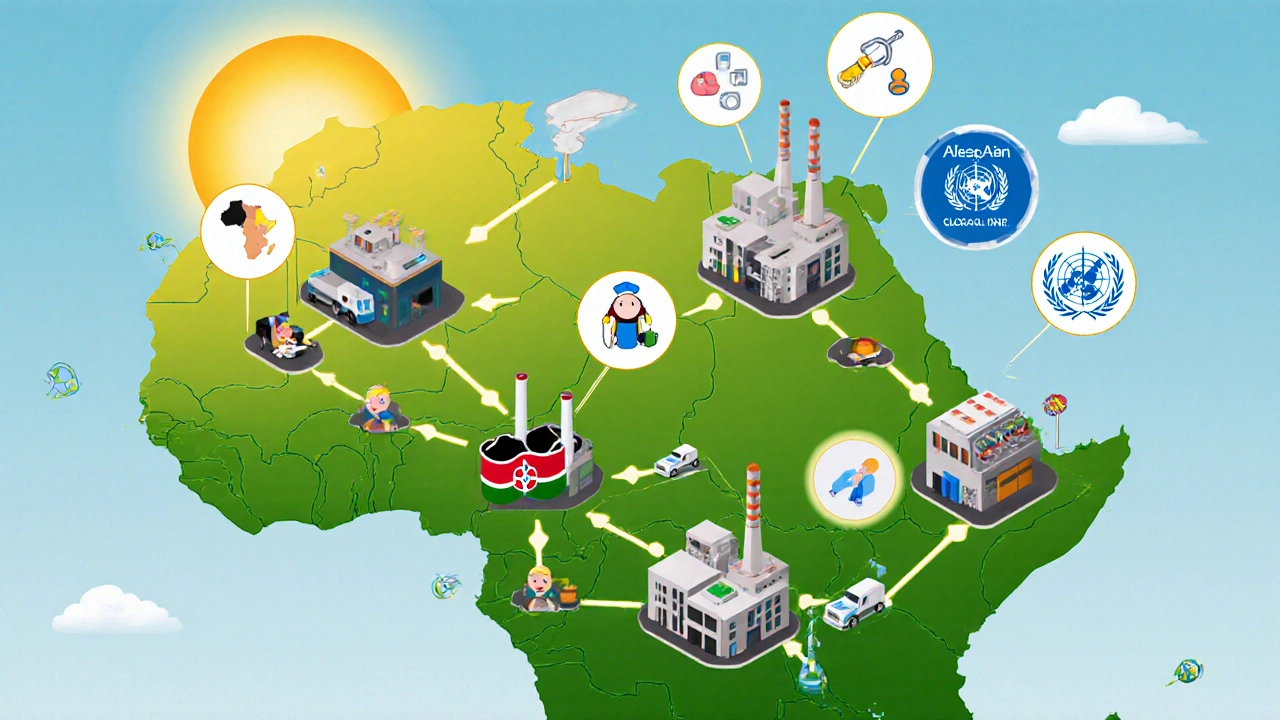
Progress isn’t automatic. Regulatory systems vary wildly. One country’s approval doesn’t mean another will accept it. The African Union’s Pharmaceutical Manufacturing Plan for Africa (PMPA) wants local production to hit 40% by 2040. That’s ambitious. It needs harmonized standards, trained inspectors, and stable funding.
Manufacturing isn’t just about machines. It’s about skilled workers, consistent power, clean water, and supply chains for raw materials. Many African countries still import active pharmaceutical ingredients (APIs) from Asia. That’s a vulnerability.
There’s also the question of leadership. Who designs the next HIV drug for African populations? Too often, research is done elsewhere, then adapted. Calls are growing to “Africanize” research - to let African scientists lead trials, set priorities, and design treatments that match local needs.
What This Means for the Future
This isn’t just about HIV. It’s about health sovereignty. When a country can make its own medicines, it gains control. It can respond faster to outbreaks. It can negotiate better prices. It can create jobs. It can build trust.
The TLD pill made in Kenya isn’t just medicine. It’s proof that Africa can lead its own health future. It’s not about replacing Indian generics - it’s about adding African capacity. More suppliers. More competition. Lower prices. Fewer delays.
And it’s working. Mozambique’s Health Minister, Dr. Ussene Hilário Isse, said it best: “Africa’s growing capacity to locally produce lifesaving medications marks a strategic shift.”
The next step? Scaling up. Getting more manufacturers WHO-prequalified. Expanding production of long-acting injectables. Building regional supply hubs. Integrating HIV services into primary care so people don’t have to choose between treatment and food, work, or school.
This is the new normal. No more waiting. No more begging. Just medicine made where it’s needed, by people who understand the need.
Are African-made antiretroviral drugs safe?
Yes. All African-made ARVs approved for Global Fund procurement must meet WHO prequalification standards - the same rigorous benchmarks used by the FDA or EMA. Universal Corporation Ltd’s TLD formulation underwent full clinical and manufacturing audits before approval. WHO prequalification ensures safety, efficacy, and quality are equivalent to top international brands.
How much cheaper are African-made ARVs than imported ones?
African-made TLD costs roughly 15-25% less than imported versions from India, depending on volume and logistics. But the real savings come from reduced transport time, fewer import taxes, and lower risk of stockouts. When a country doesn’t have to wait six months for a shipment, they avoid costly emergency orders and lost treatment days.
Can African countries produce all the HIV drugs they need?
Not yet. Today, African manufacturers cover a small fraction of the continent’s 15 million person-year annual demand. But new facilities are opening. By 2030, local production could meet 20-30% of needs - enough to significantly reduce import dependency. The goal isn’t to replace all imports overnight, but to build resilient, diversified supply chains.
What’s the role of international donors in this shift?
Donors like the Global Fund, Unitaid, and the Gates Foundation are critical enablers. They provide upfront funding for factory upgrades, technical training, and regulatory support. They also guarantee purchase agreements, giving manufacturers the confidence to invest. Without this market-shaping support, African companies couldn’t compete with established global players.
Why is local production better than relying on India?
India remains a vital supplier. But relying solely on one region creates risk - as seen during COVID-19. African production cuts delivery time from weeks to days, reduces shipping costs, and builds local expertise. It also means treatments can be tailored to African epidemiology - like combining drugs that work better with common co-infections like TB.
What’s next for HIV treatment in Africa?
The focus is shifting from daily pills to long-acting injectables and combination therapies. South Africa’s approval of the twice-yearly injection is a sign of things to come. Generic versions are already in development. The next decade will see more African-made diagnostics, vaccines, and even oral PrEP formulations. The goal: end HIV as a public health threat by making treatment simple, accessible, and local.
Tionne Myles-Smith
November 28, 2025 AT 10:03This is the kind of news that actually gives me hope. African scientists, African factories, African solutions - it’s about time we stopped treating the continent like a charity case and started seeing it as a leader. TLD made in Kenya? Yes please. This isn’t just medicine, it’s dignity.
Leigh Guerra-Paz
November 28, 2025 AT 14:39Oh my gosh, I’m literally crying right now! This is so beautiful! Think about it - a little factory in Nairobi, with engineers who’ve trained for years, producing pills that keep moms alive, that keep kids in school, that stop transmission - and it’s all happening RIGHT NOW! And the long-acting shots? Two years? One injection? No more daily pills? That’s not just innovation - that’s liberation! I’m so proud of the African scientists who made this happen! We need to celebrate them like rockstars!
Jordyn Holland
November 29, 2025 AT 16:35Oh wow, another feel-good story about Africa ‘taking charge.’ Meanwhile, the same countries that ‘manufacture’ these drugs can’t even fix their own power grids or train enough nurses. This is just Western donor theater dressed up as sovereignty. The real ‘local production’? It’s still importing APIs from China and India. Cute slogan. Not a revolution.
Jasper Arboladura
December 1, 2025 AT 14:58WHO prequalification doesn’t equate to FDA-grade GMP compliance. The audit trails for African facilities are still inconsistent. The data transparency is lacking. And the regulatory harmonization across ECOWAS and SADC? Still a joke. This is progress, yes - but don’t confuse optimism with quality assurance.
Joanne Beriña
December 2, 2025 AT 11:40So now we’re letting Africans make our medicine? What’s next? Let them pilot our fighter jets? This is how the West gets exploited - by pretending local production is ‘empowerment’ when it’s just outsourcing with a PR twist. India’s been doing this for decades. Why are we suddenly impressed?
ABHISHEK NAHARIA
December 3, 2025 AT 13:59India has been the backbone of global ARV supply for over two decades. African production is a symbolic gesture. The infrastructure, scale, and cost efficiency cannot be replicated overnight. The Global Fund’s strategy is politically expedient but economically naive. Supply chain resilience requires industrial maturity - not goodwill.
Hardik Malhan
December 4, 2025 AT 06:03API dependency remains the critical bottleneck. Even with local formulation capacity, most African manufacturers rely on imported active ingredients from Asia. Until there’s vertical integration - from chemical synthesis to finished dosage - the narrative of sovereignty is overstated. The real metric is API self-sufficiency, not pill assembly.
Casey Nicole
December 5, 2025 AT 00:02Let’s be real - this is just a fancy way of saying ‘we’re outsourcing to Africa so we can feel better about ourselves.’ You think the Kenyan factory workers are getting paid a living wage? You think the regulators have the bandwidth to inspect every batch? This is performative solidarity. The real power still sits in Geneva and Washington.
shelly roche
December 5, 2025 AT 23:14My aunt in Uganda used to walk 12km for her meds. Now her clinic gets a shipment from Nairobi every two weeks. No more delays. No more panic. No more begging. This isn’t charity - it’s justice. And the injectables? My cousin who’s been on ARVs for 15 years just got his first shot. He cried. Said he felt like a person again, not a patient. That’s what this is really about.
Ron Prince
December 6, 2025 AT 20:22so like... africa makes drugs now? cool. but did they invent them? no. did they discover dolutegravir? no. so stop acting like this is some kind of genius breakthrough. india made the first cheap pills. this is just copying.
King Splinter
December 7, 2025 AT 11:45Let’s not get carried away. We’re talking about a few factories in Kenya and Nigeria. The continent still imports 90% of its medicines. This is like saying ‘oh look, one person in Detroit built a bike, now America’s self-sufficient in cars.’ It’s a nice step, but it’s not a transformation. The real story is still the same: Africa needs help. And donors love to fund feel-good projects that look good on reports.
Kristy Sanchez
December 8, 2025 AT 00:56Oh so now Africa’s ‘leading its own health future’? Funny, because the same people who are making these pills can’t get clean water to their clinics. And who’s really running the show? The Gates Foundation. The Global Fund. The U.S. State Dept. This isn’t sovereignty - it’s a sponsored content campaign with better PR.
Michael Friend
December 8, 2025 AT 12:10Let’s quantify the actual impact. How many lives saved? How many stockouts prevented? How many patients actually switched from Indian to African-made TLD? Where’s the longitudinal data? Where’s the cost-benefit analysis by country? This feels like a press release masquerading as policy. Numbers, not narratives.