
QT Prolongation Risk Calculator
Your Risk Level
Understanding Your Results
QT prolongation risk is influenced by multiple factors. Your calculated score reflects your individual risk profile based on:
- Age over 65: 2.3x higher risk
- Female gender: 1.7x higher risk
- Low potassium (<3.5 mmol/L): 28% of cases
- Multiple QT-prolonging drugs
Remember: QTc > 500 ms is a red flag. Your result shows your risk level for developing this dangerous condition.
When someone is prescribed an antipsychotic for schizophrenia or severe psychosis, the goal is clear: reduce hallucinations, calm agitation, and prevent self-harm. But hidden beneath that benefit is a quiet, potentially deadly risk-QT prolongation. This isn’t just a lab curiosity. It’s a real, measurable change in the heart’s electrical rhythm that can trigger a life-threatening arrhythmia called torsade de pointes. And it’s not rare. In fact, nearly every antipsychotic can do it-some more than others. The real question isn’t whether the risk exists, but how to manage it without leaving patients untreated.
What Exactly Is QT Prolongation?
The QT interval on an ECG measures how long it takes the heart’s ventricles to recharge between beats. When that interval stretches too long, the heart becomes electrically unstable. That’s QT prolongation. A corrected QT interval (QTc) over 500 milliseconds is a red flag. At that point, the chance of torsade de pointes-where the heart quivers instead of pumps-goes up sharply. And torsade can turn into sudden cardiac arrest, especially in people already at risk.
It’s not just about the antipsychotic. Many heart medications, antibiotics, and even anti-nausea drugs can also prolong the QT interval. When you stack them together-say, haloperidol plus a common antibiotic like azithromycin-the risk multiplies. That’s why polypharmacy is one of the biggest warning signs. Studies show over two-thirds of QT prolongation cases involve at least two drugs that affect the heart’s rhythm.
Which Antipsychotics Carry the Highest Risk?
Not all antipsychotics are created equal when it comes to cardiac risk. The difference isn’t subtle-it’s dramatic. Thioridazine, for example, was pulled from the U.S. market in 2005 because it could lengthen the QT interval by up to 35 milliseconds. That’s more than six times the effect of some newer drugs.
Here’s how the risk breaks down, based on real-world data from the FDA and multiple clinical studies:
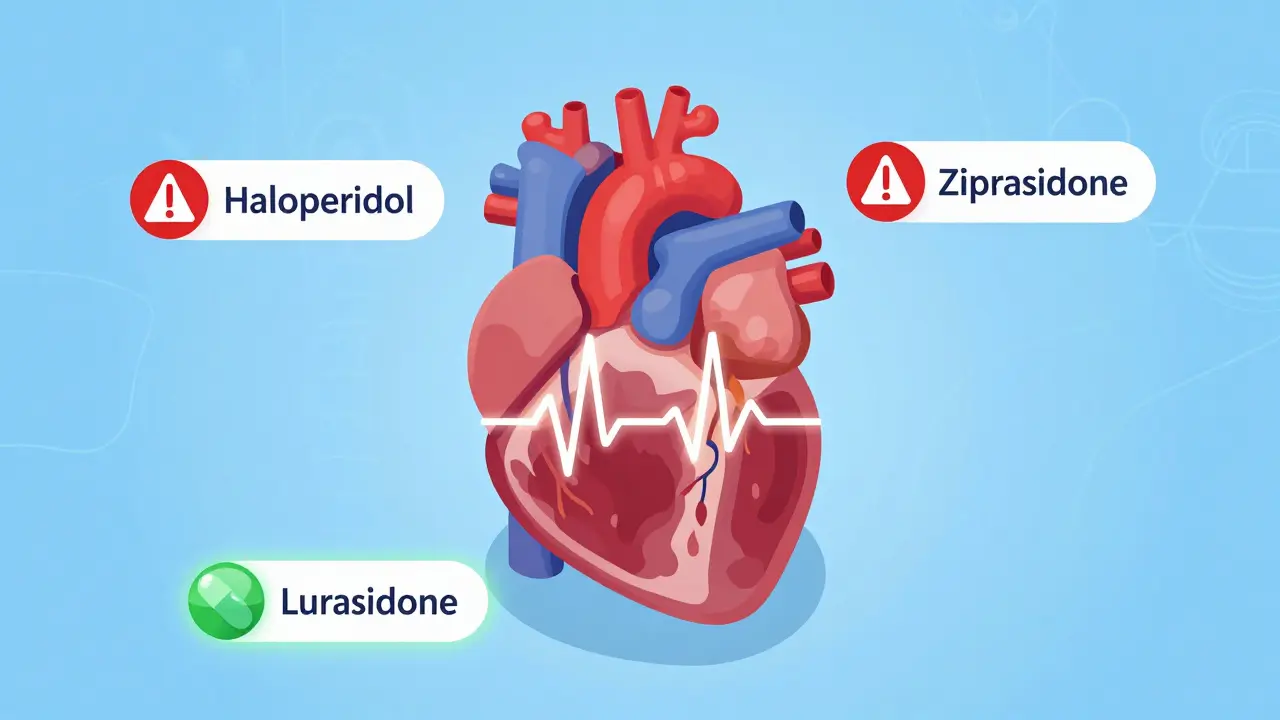
- High-risk: Haloperidol (4-6 ms), Ziprasidone (10-15 ms), Thioridazine (35 ms-no longer available)
- Moderate-risk: Risperidone, Quetiapine, Iloperidone (5-10 ms)
- Low-risk: Aripiprazole, Brexpiprazole, Lurasidone, Paliperidone (under 5 ms)
Lurasidone stands out. A 2023 pharmacovigilance study found its reporting odds ratio for QT prolongation was just 1.2-barely above background noise. That’s why it’s increasingly becoming the go-to choice for patients with heart conditions or multiple risk factors.
Who’s Most at Risk?
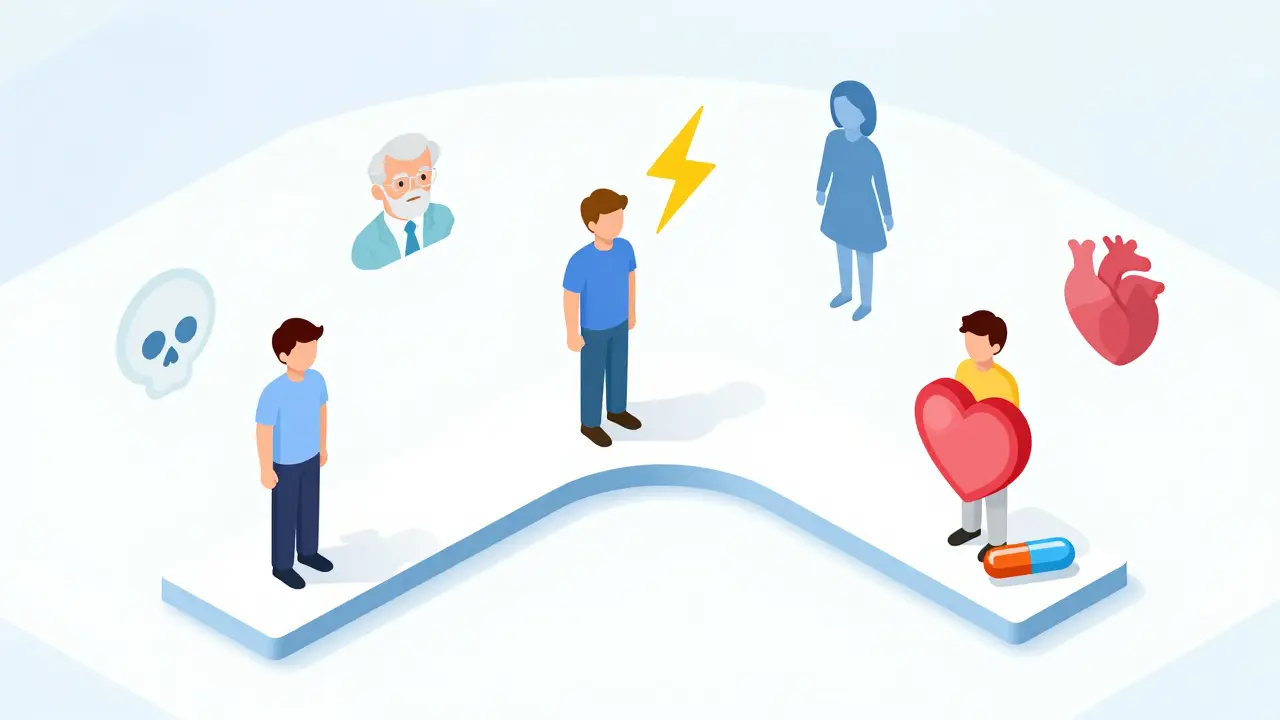
It’s not just about the drug. The person taking it matters just as much. Certain factors stack the deck:
- Age over 65: Odds of QT prolongation rise by 2.3 times.
- Female sex: Women have a 1.7 times higher risk than men.
- Low potassium or magnesium: Hypokalemia (potassium under 3.5 mmol/L) was found in 28% of cases with prolonged QT.
- Heart disease: Prior arrhythmias, heart failure, or a history of QT prolongation.
- Multiple QT-prolonging drugs: Over 60% of cases involve two or more.
One study of 1,200 psychiatric inpatients found that nearly 19% developed a QTc over 500 ms. Most of them were on more than one medication that affected the heart. That’s not a coincidence-it’s a pattern.
How Do Doctors Monitor This?
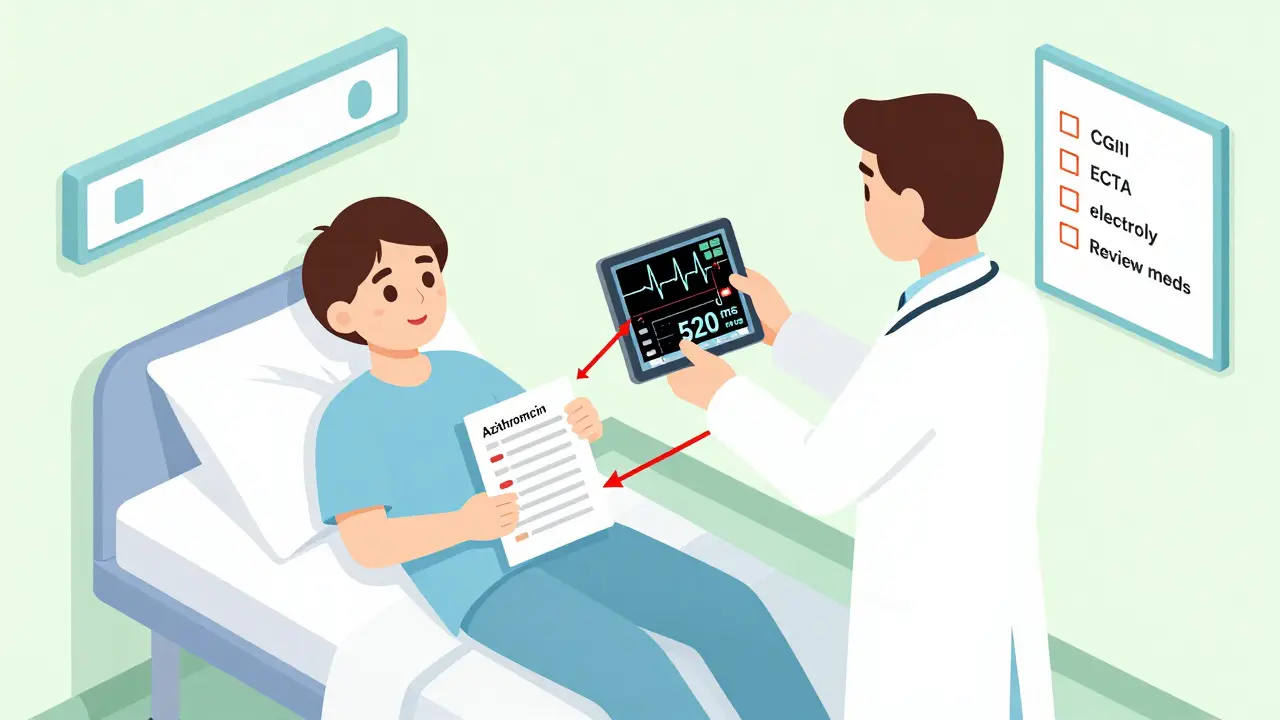
Monitoring isn’t optional-it’s standard. The British Heart Rhythm Society and other major guidelines agree: get an ECG before starting any antipsychotic. For high-risk drugs like haloperidol or ziprasidone, repeat the ECG within a week of reaching the full dose. After that, annual checks are recommended.
But here’s the problem: only 73% of psychiatrists routinely order baseline ECGs for high-risk drugs. Only 32% do it for moderate-risk ones. That’s not because they’re careless. It’s because many aren’t trained to read ECGs accurately. One study found that 68% of non-cardiologists misread the QT interval without specialized training.
What should a good protocol look like?
- Baseline ECG before starting the drug.
- Repeat ECG within 7 days of reaching therapeutic dose.
- Check potassium and magnesium levels-aim for potassium >4.0 mmol/L and magnesium >1.8 mg/dL.
- Review all other medications for QT-prolonging effects.
- If QTc exceeds 500 ms or increases by more than 60 ms from baseline, consider switching or reducing the dose.
- If QTc goes above 550 ms, stop the drug immediately.
For hospitalized patients on high-risk antipsychotics, continuous cardiac monitoring during the first few days is a smart move. Outpatients need close follow-up-no more than two weeks between visits until stability is confirmed.
What Happens When You Stop the Drug?
Some clinicians hesitate to prescribe antipsychotics because they fear the heart risk. But avoiding them can be deadlier. People with schizophrenia have a 5% lifetime risk of suicide and a 12% higher chance of accidental death. Studies show those who take antipsychotics have 40% lower overall mortality than those who don’t.
The key is balance. There’s a U-shaped curve: patients on no medication or very high doses have the worst outcomes. The sweet spot? Low to medium doses, carefully monitored. A 2023 JAMA Network Open study of 566 ICU patients found no increase in fatal arrhythmias from haloperidol or ziprasidone when QTc was under 550 ms at baseline. That means risk isn’t absolute-it’s contextual.
When QT prolongation happens, it’s often reversible. In one case series, 62% of patients improved with dose reduction, 28% with a switch to a lower-risk drug, and 57% with electrolyte correction. You don’t always have to stop the medication-you just have to manage it better.
How Is This Changing in 2026?
Prescribing patterns are shifting. Sales of lurasidone grew 14.2% in 2022 while haloperidol sales dropped 3.7%. Why? Because doctors are learning. Eighty-nine percent of U.S. psychiatrists now consider QT prolongation when choosing a drug. For patients with heart conditions or multiple meds, cardiac risk accounts for nearly 40% of the decision.
Hospitals are adapting too. Over 60% of U.S. academic medical centers now have formal QT risk-based prescribing protocols. The FDA now requires all new antipsychotics to pass a thorough QT (TQT) study in healthy volunteers before approval. Three drug candidates were rejected between 2015 and 2020 because their cardiac risk was too high.
By 2026, ECG monitoring for antipsychotic users is expected to rise by 22%. Telemedicine ECGs are making it easier for patients in rural areas to get timely checks. The goal isn’t to avoid antipsychotics-it’s to use them smarter.
What Should You Do?
If you’re a patient on an antipsychotic:
- Ask if your drug is on the high-risk list.
- Request an ECG before starting, and again after reaching your full dose.
- Get your potassium and magnesium checked-especially if you’re on diuretics or have digestive issues.
- Tell every doctor you see about your antipsychotic, even if they’re treating something else.
If you’re a clinician:
- Use CredibleMeds to classify your drug’s risk level.
- Don’t assume a patient is low-risk just because they’re young or healthy.
- When in doubt, choose lurasidone, aripiprazole, or brexpiprazole.
- Train your team to read ECGs. Misinterpretation is common-and dangerous.
The bottom line: antipsychotics save lives. But they can also harm the heart if used carelessly. The solution isn’t fear-it’s awareness, monitoring, and smart choices.
Allison Priole
March 20, 2026 AT 22:20PS: His potassium was at 3.2. Gave him bananas like crazy. Weird how such a simple fix saves your life.
Casey Tenney
March 22, 2026 AT 06:13Sandy Wells
March 23, 2026 AT 13:59Also potassium? Like we dont have a million supplements for that
Bryan Woody
March 24, 2026 AT 17:58Meanwhile in the real world, psych floors are understaffed, nurses are juggling 15 patients, and the ECG machine is broken. You think they’re gonna check QTc on everyone? Nah. They’ll just give the meds and hope.
And yeah, lurasidone’s great. But it costs $1200 a month. So guess who gets the haloperidol? The poor ones. The ones with no insurance. The ones nobody cares about.
Stop pretending this is a medical issue. It’s a funding issue. And you? You’re just scrolling while someone’s heart stops.
Chris Dwyer
March 24, 2026 AT 19:21My mom’s on risperidone and had a weird fainting spell last month. We got her ECG done-QTc was 480. We switched to aripiprazole in 3 days. No more dizziness. No more panic.
Also, potassium checks? Game changer. She’s been on a diuretic for years and never knew. Now she eats bananas like they’re going out of style.
Doctors need to stop acting like this is rare. It’s not. It’s just ignored. Thanks for shining a light on it.
Timothy Olcott
March 26, 2026 AT 10:11Why are we letting Big Pharma dictate our meds? This is all a scam. The real solution is fasting and sunbathing. 🌞🍌
Desiree LaPointe
March 27, 2026 AT 04:09Did you also include the 2019 meta-analysis on CYP2D6 polymorphisms affecting haloperidol metabolism? Or the 2021 Canadian guidelines on QT monitoring in geriatric patients?
No? Then this is just performative medicine. Aesthetic risk assessment. You’re not helping-you’re curating.
Jackie Tucker
March 29, 2026 AT 03:44QT prolongation isn’t a lab value-it’s a metaphor. A symptom of our collective disconnection from the body. We treat the heart like a machine, not a pulse. Not a whisper. Not a rhythm that remembers trauma.
Perhaps the real question isn’t ‘which drug prolongs QT?’ but ‘what are we prolonging when we ignore the soul?’
Thomas Jensen
March 29, 2026 AT 23:30I know a guy who died after his ECG. He was fine before. The machine was hacked. I’ve got screenshots. You’re being watched right now.
matthew runcie
March 31, 2026 AT 02:52One guy on haloperidol had a QTc of 530. We switched him. He cried. Said he didn’t want to lose his meds because ‘it’s the only thing that quiets the voices.’
We found out he was on azithromycin for a sinus infection. No one told us.
Just… talk to your patients. Even if they’re quiet.
shannon kozee
March 31, 2026 AT 14:05Doctors don’t check electrolytes. Patients don’t know to ask.
Simple fix. Why isn’t it standard?
Nishan Basnet
April 1, 2026 AT 09:20But here’s what’s changed: I now ask every patient, ‘Have you ever fainted? Any chest pain? Any family history of sudden death?’
One man said yes-his brother died at 28. Turned out he was on haloperidol and a common anti-malarial. We switched him. He’s stable now.
It’s not about fancy protocols. It’s about asking. One question. That’s all it takes.
And yes, lurasidone is expensive here. But we get generics now. They’re working.
Thank you for writing this. We need more like it-in languages we speak, not just English.
trudale hampton
April 1, 2026 AT 15:43I’ve been on quetiapine for 8 years. Never had an ECG. Just got one last month-QTc 490. Switched to brexpiprazole. No side effects. No hallucinations. Just… better.
Why didn’t my doctor do this sooner? I don’t know. But I’m glad I found this.