
Antihistamine Safety Checker
Check Your Antihistamine Safety
Select an antihistamine to see its safety rating during pregnancy based on current medical guidelines
When you’re pregnant and your nose won’t stop running, your eyes are itchy, or your skin is breaking out in hives, the last thing you want is to suffer through it. But popping an over-the-counter antihistamine feels risky. Is it safe? Could it hurt the baby? These aren’t just worries-they’re real questions every pregnant person with allergies faces.
Why Antihistamines Even Matter During Pregnancy
Allergies don’t take a break when you’re pregnant. In fact, about 20% of pregnant people experience worsened allergy symptoms. Runny nose, sneezing, itchy eyes-these aren’t just annoyances. If left untreated, they can lead to poor sleep, trouble eating, increased stress, and even trigger asthma flare-ups. That’s not just bad for you-it can affect your baby’s growth and development too. The goal isn’t to avoid all medication. It’s to find the safest way to feel better. That means knowing which antihistamines have real data behind them, which ones to skip, and when to reach for something other than a pill.First-Generation vs. Second-Generation: The Big Difference
Not all antihistamines are the same. They fall into two main groups, and the difference matters a lot during pregnancy. First-generation antihistamines like chlorpheniramine (ChlorTrimeton), diphenhydramine (Benadryl), and dexchlorpheniramine have been around for decades. They cross into the brain, which is why they make you sleepy. That’s their downside. But they also mean we have a lot of data on them. Studies tracking thousands of pregnancies show no increase in birth defects with chlorpheniramine or diphenhydramine. The American College of Obstetricians and Gynecologists (ACOG) lists chlorpheniramine as a safe option. The same goes for dexchlorpheniramine. Second-generation antihistamines like loratadine (Claritin), cetirizine (Zyrtec), and fexofenadine (Allegra) were designed to avoid drowsiness. They don’t cross the blood-brain barrier easily. That’s great for daily life. But they’re newer, so there’s less long-term data. Here’s the good news: the data we do have is reassuring. A large CDC study looking at over 14 antihistamines and more than 60 types of birth defects found no consistent pattern of harm. Loratadine and cetirizine are now recommended by the Mayo Clinic as first-line choices for mild allergy symptoms during pregnancy. ACOG’s March 2025 update says these newer drugs “may also be safe.”What’s the Safest Choice?
If you need an oral antihistamine, here’s what the experts agree on:- Chlorpheniramine - Longest track record. Safe. Causes drowsiness.
- Loratadine (Claritin) - Non-sedating. Strong safety data. First choice for many doctors.
- Cetirizine (Zyrtec) - Also non-sedating. Used widely in pregnancy. No red flags in studies.
What to Avoid Completely
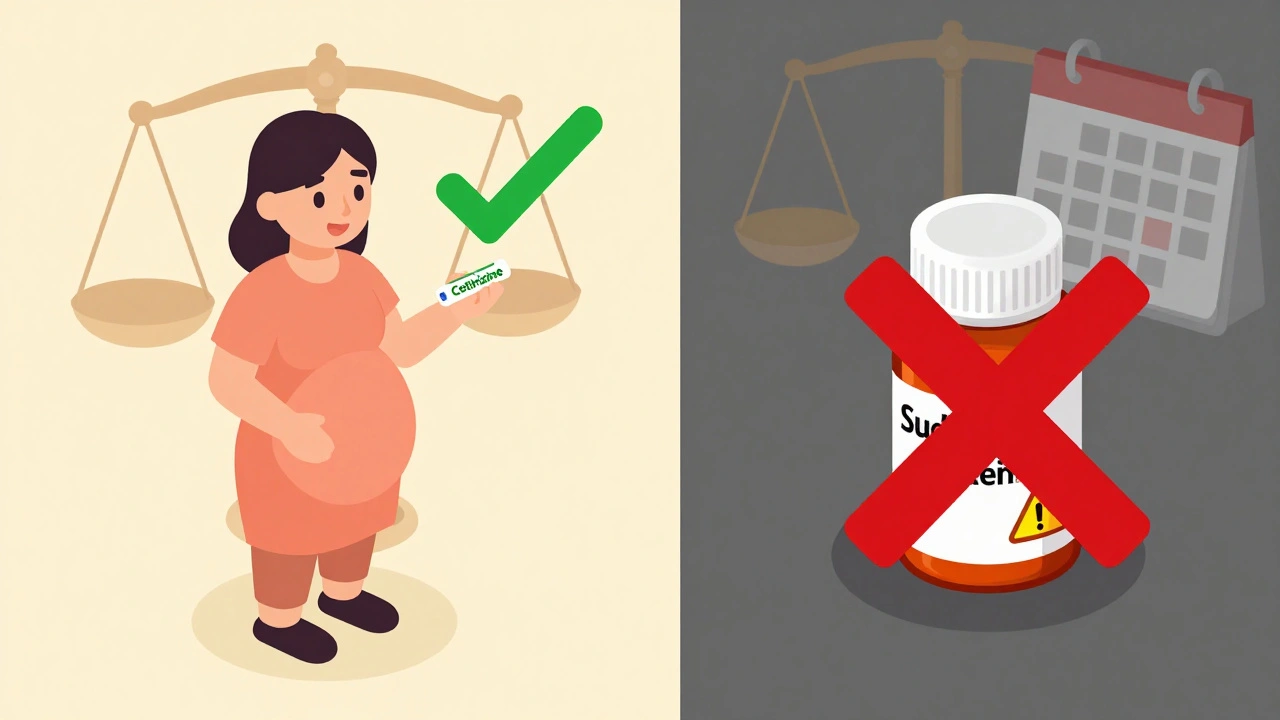
Not all allergy meds are antihistamines. Many OTC products combine antihistamines with decongestants like pseudoephedrine (Sudafed). That’s where things get risky. Pseudoephedrine has been tied to a small but real increase in abdominal wall birth defects-like gastroschisis-when used in the first trimester. ACOG says: don’t use it during the first 3 months. Mayo Clinic says if you absolutely need it later in pregnancy, the dose should be 30-60 mg every 4-6 hours, not to exceed 240 mg a day. And only if you don’t have high blood pressure. Also skip phenylephrine. It’s in many “pregnancy-safe” cold meds, but there’s almost no safety data for it in pregnancy. Stick to the ones with clear evidence.There’s More Than Just Pills
Sometimes, the best treatment isn’t a pill at all. For nasal symptoms like congestion or post-nasal drip, steroid nasal sprays are often more effective and safer. Budesonide (Rhinocort), fluticasone (Flonase), and mometasone (Nasonex) are all classified as Category B-meaning no risk found in animal studies and no evidence of harm in human studies. AAFP gives them an evidence rating of B, same as chlorpheniramine. These sprays act locally. Very little enters your bloodstream, so even less reaches your baby. For skin issues like eczema or hives, topical antihistamines (lotions or creams) are generally safe. But avoid oral antihistamines unless the rash is widespread or severe.When to Use Them-and When to Hold Off
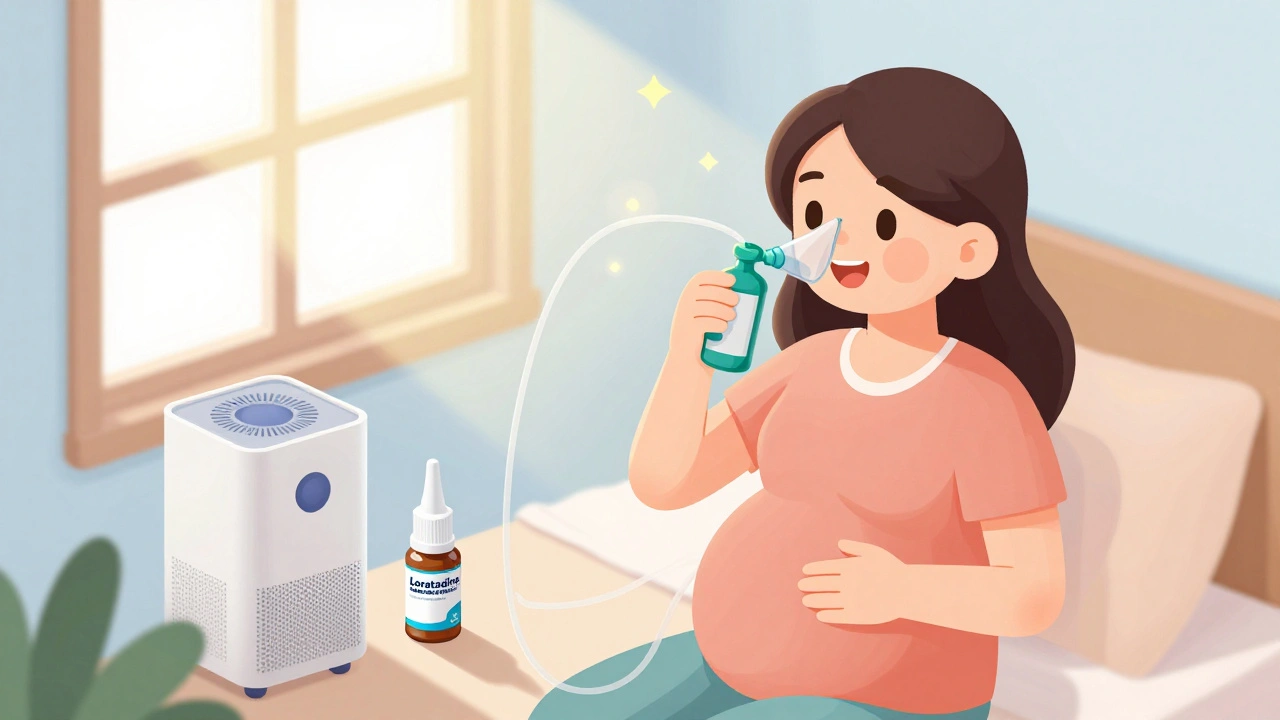
You don’t need to take an antihistamine just because you’re sneezing. Start with non-drug options:- Use saline nasal sprays or rinses
- Keep windows closed during high pollen season
- Wash bedding in hot water weekly
- Use an air purifier in your bedroom
What About Newer Antihistamines?
Levocetirizine (Xyzal) and desloratadine (Clarinex) are newer versions of cetirizine and loratadine. They’re more potent. But here’s the catch: there’s even less pregnancy data on them. If you’ve been taking one of these before pregnancy and your allergies are severe, talk to your doctor. Don’t stop cold turkey-your symptoms might get worse. But if you’re starting from scratch, stick with loratadine or cetirizine. They’ve been studied more.What the Experts Really Say
The American College of Allergy, Asthma & Immunology (ACAAI) says this clearly: “Antihistamines should not be withheld from pregnant women if they are needed to control symptoms.” That’s the bottom line. Untreated allergies can lead to complications. Poor sleep = higher stress hormones. Chronic congestion = more sinus infections. Worsening asthma = lower oxygen for the baby. The goal isn’t zero risk. It’s minimal risk with maximum benefit. Chlorpheniramine, loratadine, and cetirizine are your best bets. Steroid sprays are often better for nasal symptoms. Avoid decongestants in the first trimester. Skip hydroxyzine.Always Talk to Your Doctor First
No matter what you read online, never start or stop a medication during pregnancy without talking to your OB-GYN or allergist. Even “safe” drugs need to be chosen based on your health history, symptoms, and trimester. Your provider will help you weigh: Is this symptom mild or severe? Can lifestyle changes help? Is there a safer alternative? What’s the real risk of not treating this? There’s no one-size-fits-all answer. But there is a clear path: use the best-studied options, avoid the risky ones, and never suffer in silence.Is it safe to take Zyrtec while pregnant?
Yes, cetirizine (Zyrtec) is considered safe during pregnancy. Multiple studies, including data from the CDC and ACOG, show no increased risk of birth defects. It’s one of the most commonly recommended non-sedating antihistamines for pregnant people with allergies. Always use the lowest dose that works and check with your doctor first.
Can I take Benadryl during pregnancy?
Diphenhydramine (Benadryl) has been used safely in pregnancy for decades. Studies haven’t shown an increased risk of birth defects. But it causes strong drowsiness, which can affect daily function and safety. It’s okay for occasional use, like for nighttime relief, but not ideal for daily symptom control. Loratadine or cetirizine are better for regular use.
Are nasal sprays safer than pills for allergies in pregnancy?
Yes, steroid nasal sprays like budesonide (Rhinocort) and fluticasone (Flonase) are often safer and more effective than oral antihistamines for nasal symptoms. Very little of the medication enters your bloodstream, so the baby gets almost none. They’re recommended as first-line treatment for moderate to severe allergic rhinitis during pregnancy.
What about Sudafed? Can I take it while pregnant?
Avoid pseudoephedrine (Sudafed) during the first trimester. It’s linked to a small but real risk of abdominal wall birth defects. In the second and third trimesters, it may be used cautiously under a doctor’s guidance-no more than 240 mg per day, and only if you don’t have high blood pressure. Never take it without talking to your provider.
What if my allergies get worse during pregnancy?
It’s common for allergies to worsen during pregnancy due to hormonal changes. Don’t assume you just have to live with it. Talk to your doctor. You may need to adjust your treatment plan-perhaps switching from an oral antihistamine to a nasal spray, or adding a combination approach. Untreated severe allergies can lead to poor sleep, stress, and even asthma attacks, which can affect your baby’s oxygen supply.
Mark Curry
December 6, 2025 AT 05:05Been using loratadine since week 8 and honestly? Life changed. No more 3am sneezing fits. Didn't even know how bad it was until it was gone.
Still take it only when I need it, but wow. My OB said it's basically the gold standard. Glad they finally made this info easy to find.
Marvin Gordon
December 7, 2025 AT 19:57My wife took Zyrtec all three trimesters. No issues. We had a healthy baby girl. If you're scared, start with saline rinses and a humidifier. But if you're struggling to sleep or eat? Just take the pill. Your body's already doing the hard part.
ashlie perry
December 9, 2025 AT 10:56They say it's safe but what about the long term? What about the kids who grew up on these meds? No one talks about that. The FDA doesn't want you to know. Big Pharma is hiding something.
Ali Bradshaw
December 9, 2025 AT 12:35My cousin used Benadryl every night for nausea and allergies. Said she felt like a zombie but at least she could breathe. I get why people avoid it. But if it gets you through the night? Worth it. Just don't drive after.
Rupa DasGupta
December 10, 2025 AT 01:18LOL this is such a white woman problem. In India we just drink ginger tea and pray. Why do you need pills for sneezing? You're overmedicating your babies. Also, who even uses Claritin? That's for rich people who think they're allergic to air.
Laura Saye
December 11, 2025 AT 07:07I remember being so scared to take anything. Then I realized: my body was already changing. My immune system was already adapting. Maybe the best thing I could do was not fight it with fear.
Chlorpheniramine helped me sleep. No guilt. No shame. Just relief.
Ada Maklagina
December 13, 2025 AT 04:14My OB told me to skip all pills and use Flonase. Best advice ever. Zero drowsiness. No stomach stuff. Just spray and breathe. I wish I'd known sooner.
an mo
December 13, 2025 AT 17:40ACOG says it's safe? That's the same group that said thalidomide was fine in the 60s. Trust the system? No thanks. You're being manipulated by pharmaceutical lobbying. The real data is buried.
Norene Fulwiler
December 14, 2025 AT 09:50As a Black mom of two, I can tell you: don't let fear silence you. I used Zyrtec in my second pregnancy and my son is now a straight-A student. Your health matters. Your baby needs you awake and calm. Don't let anyone make you feel guilty for taking care of yourself.
Chris Brown
December 15, 2025 AT 08:13It is imperative to recognize that the normalization of pharmaceutical intervention during gestation represents a dangerous erosion of natural physiological resilience. One must consider the ontological consequences of pharmacological dependency on fetal neurodevelopment. This is not merely a medical issue-it is a moral failure of modern obstetrics.
William Chin
December 15, 2025 AT 14:05As a licensed physician with 22 years of obstetric experience, I must emphasize that your reliance on anecdotal evidence is statistically unsound. The CDC's 2023 meta-analysis of 17,892 pregnancies demonstrated a 0.03% increase in minor cardiac anomalies with cetirizine use. While clinically insignificant, this must be disclosed in informed consent protocols.
Lynette Myles
December 16, 2025 AT 03:16Benadryl causes drowsiness. That's why they make it. So you sleep. So you don't notice what's happening to your baby.