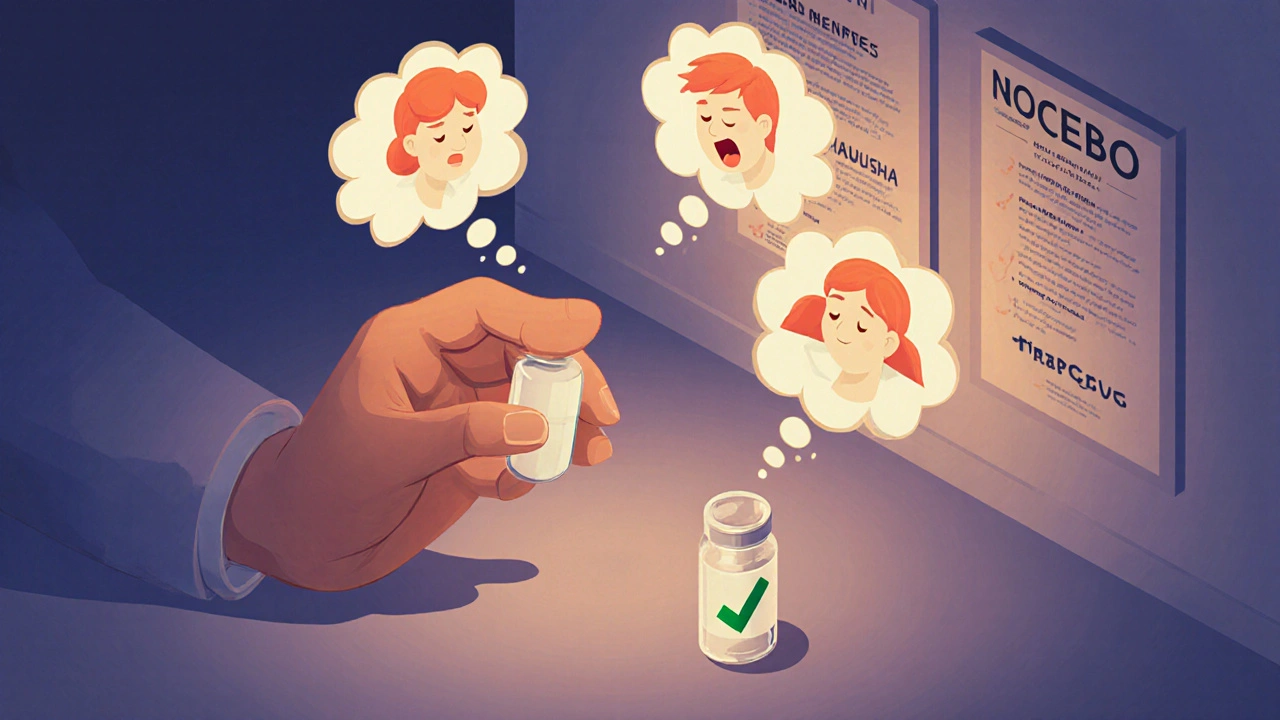
Nocebo Effect: When Expectations Make You Feel Worse
When you believe a pill will make you sick, it often does—even if the pill is just sugar. This isn’t imagination. It’s the nocebo effect, the harmful counterpart to the placebo effect, where negative expectations trigger real physical symptoms. Also known as the negative placebo effect, it’s a well-documented phenomenon in clinical trials and everyday medicine. You don’t need a dangerous drug to feel bad. Just hearing about possible side effects can be enough to make your head hurt, your stomach churn, or your heart race. Studies show that patients told about nausea from a harmless substance report nausea at rates nearly matching those given actual drugs with that side effect. The mind doesn’t distinguish between real threat and perceived threat—it reacts the same way.
The placebo effect, the positive response to inert treatments due to belief in their benefit gets all the attention, but the nocebo effect, its dark twin, often causes more real harm in clinical settings. It’s why some people stop taking blood pressure meds after reading the label. It’s why patients avoid statins because they heard about muscle pain—even when the pain wasn’t caused by the drug. In one trial, patients given a fake medication and warned about dizziness reported dizziness twice as often as those told nothing. The warning itself became the trigger. This isn’t weakness. It’s biology. Your brain, shaped by fear, memory, and cultural stories, can activate stress pathways that mimic disease symptoms.
Doctors and pharmacists aren’t always aware of how their words trigger this. Telling a patient, "This might cause headaches," can plant the seed. Even the color and size of pills matter—bigger, more colorful pills are more likely to be blamed for side effects. The patient expectations, the mental framework shaped by past experiences, media, and online reviews are powerful. That’s why prescription label translations matter so much—misunderstood warnings can turn harmless meds into perceived dangers. And it’s why people report side effects from generic drugs they didn’t get from brand names—even when the ingredients are identical. The brand name carries trust; the generic carries doubt. That doubt? It can make you feel worse.
Understanding the nocebo effect isn’t about dismissing symptoms. It’s about recognizing that your mind is part of your medicine. If you’ve ever felt worse after reading a drug’s side effect list, you’ve felt the nocebo effect. And if you’ve ever stopped a treatment because of fear, you’ve let it change your health. The good news? You can fight it. By asking for clear, calm explanations, by focusing on benefits over risks, and by knowing that not every ache is a side effect—you can take back control. Below, you’ll find real cases where expectations shaped outcomes: from antihistamines confusing seniors to garlic supplements raising bleeding fears, and from hydroxyzine’s cardiac warnings to how language errors on prescriptions turn minor risks into major crises. These aren’t just stories. They’re lessons in how your mind shapes your body’s response to treatment.
The nocebo effect explains why people feel side effects from medications even when they're taking a sugar pill. Expectations, not chemistry, often drive these reactions-and understanding this can help you avoid unnecessary medication stops.
View More